Why Your Carpet Is Still Damp After Cleaning
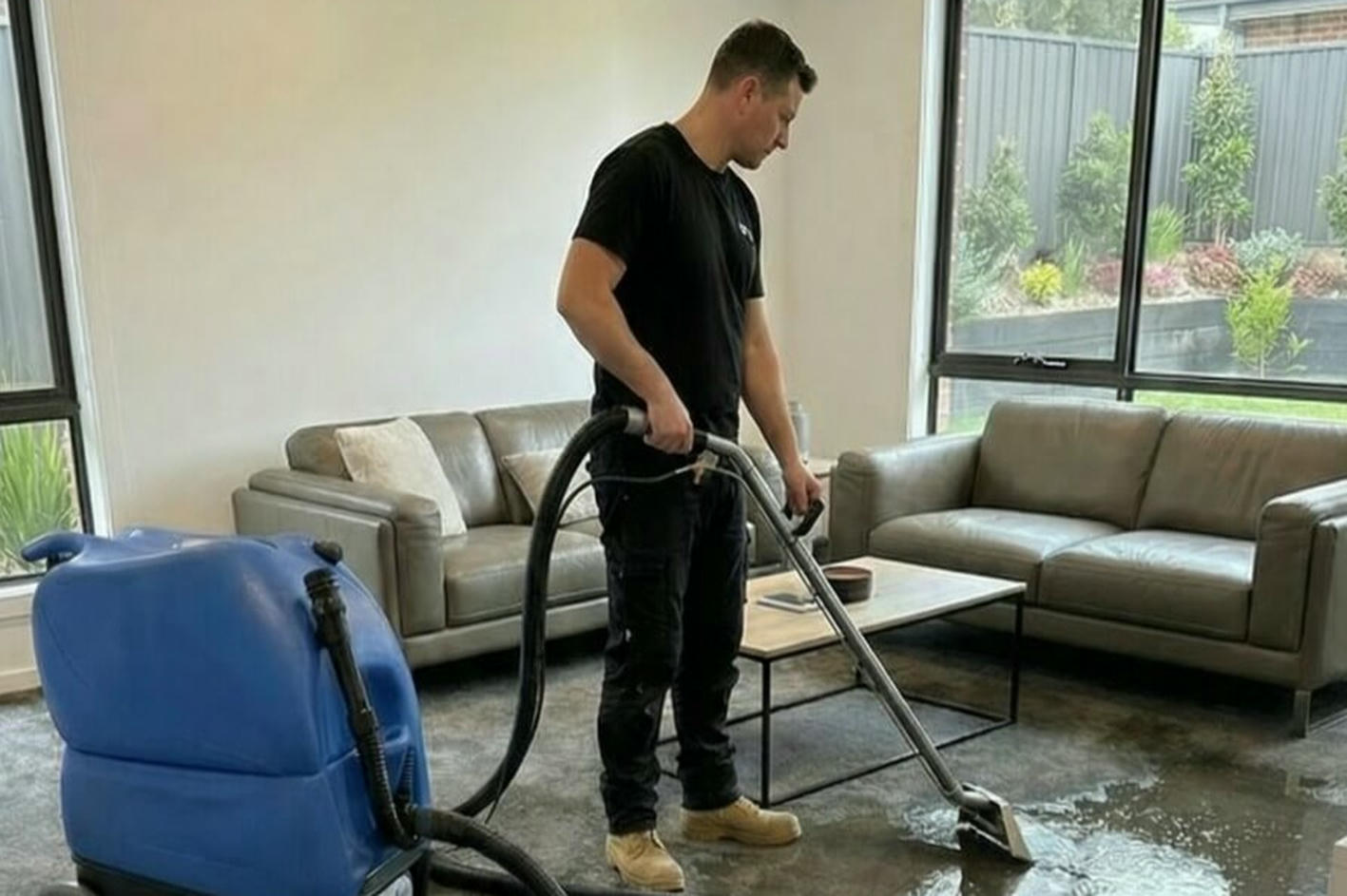
You paid for a clean, or you spent Saturday doing it yourself. Either way, the carpet should be dry by now, and it isn’t.
The room smells faintly damp. It’s cool underfoot in patches. There’s a darker line along the seam where two rooms meet. And nobody warned you that a freshly cleaned carpet could feel wetter 24 hours later than it did when the machine stopped.
This happens more than the carpet cleaning industry likes to admit. Hot water extraction and steam cleaning both work by pushing water into the carpet, then pulling most of it back out. Most is the problem word.
This guide covers why carpet stays damp after cleaning, how long each method should actually take to dry, what to do if yours hasn’t, and how to tell when the dampness was never a cleaning problem in the first place.
Why Your Carpet Is Still Damp After Cleaning
Carpet is not one material. It’s a stack: the pile on top, the primary backing the fibres are tufted into, a secondary backing glued beneath, then the underlay, then your subfloor.
A clean wets all of it. A hot water extraction machine injects heated solution at pressure through the pile, down to the base. The extraction pass then pulls water back up through the wand. On a well-run job, that recovers the large majority of what went in. It never recovers all of it.
So you end up with a carpet where the pile dries quickly and the layers below it don’t. Airflow reaches the surface. It barely reaches the backing or the underlay at all. The carpet feels dry to a bare foot while the layer underneath is still holding water.
Brisbane makes this worse. Bureau of Meteorology figures put February humidity at 69 per cent by mid-morning and 60 per cent by mid-afternoon, on 158.3mm of average rainfall for the month. Mould needs sustained humidity above roughly 60 per cent to establish. In a Brisbane summer, the air in your loungeroom is already sitting at the level mould wants, which means ventilation is not drying your carpet so much as swapping wet air for wetter air.
That is the whole mechanism. The clean put water in. The extraction took most of it out. The humidity is holding onto the rest.
How Long Carpet Should Take To Dry After Cleaning
It depends almost entirely on how much water the method used and how much of it was recovered. These are typical ranges for a properly run job in average conditions.
| Cleaning method |
What it leaves behind |
Realistic drying time |
| Bonnet or dry clean |
Very little water. Damp surface, dry backing |
1 to 2 hours |
| Encapsulation or low moisture |
Polymer applied then vacuumed away. Minimal residual moisture |
1 to 2 hours |
| Hot water extraction |
Water pushed to the base of the pile, most extracted. Backing damp |
6 to 12 hours |
| Steam cleaning, high heat |
More water, more heat, driven deeper into the backing |
12 to 24 hours |
| DIY shampoo or a hired machine |
Often under-extracted. Household suction is far weaker than a truck mounted unit |
12 to 24 hours, sometimes longer |
Two points matter in that table.
The first is that drying time is set by the method, not by the carpet. A wool loop pile cleaned by bonnet will be dry before a synthetic plush cleaned by steam, because the steam put ten times more water into it.
The second is that humidity stretches every one of those ranges. On a 60 per cent humidity day in February, a 12 hour hot water extraction dry can run well past 24 hours without a dehumidifier in the room.
Why Steam Cleaning Takes Longest
Steam cleaning, or high heat hot water extraction, is the most thorough clean and the wettest one. That’s not a flaw. It’s the trade-off you’re buying.
The heat is what pushes moisture deeper. Warm water penetrates the backing faster than cold, which is exactly why it cleans better, and exactly why more of it ends up below the pile. The extraction pass pulls back what sits in the fibre. Water that has moved into the backing and the top of the underlay is much harder to recover, because the wand can’t reach it.
Then the surface dries, which is the deceptive part. Within a few hours the pile feels touch dry and the room looks done. Underneath, the backing is still holding water, and in a closed room with no dehumidification it can stay that way for a day or more.
Wool is the worst case. Wool fibres absorb far more water than synthetics and hold it longer, and wool also shrinks and distorts if it dries unevenly. If you have a wool carpet that was steam cleaned and it’s still cool underfoot the next morning, treat it as wet rather than dry.
Signs Your Carpet Is Still Too Wet
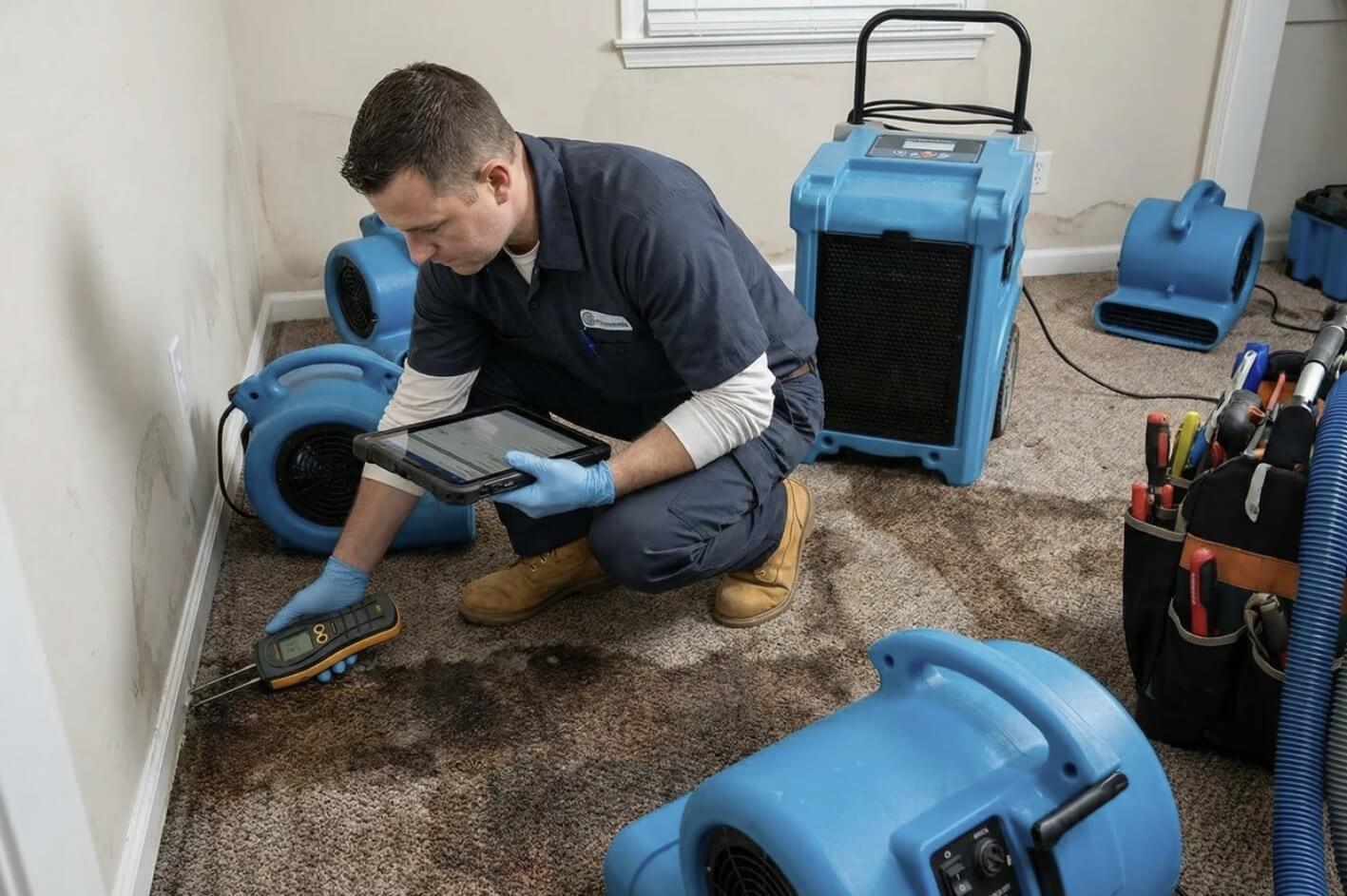
Testing a carpet with your hand is close to useless. Fingertips read temperature as readily as moisture, and a cool dry carpet underfoot feels exactly like a cool damp one. Three checks that do work:
- The paper towel test. Fold a towel into a thick pad, press it firmly into the pile for a full minute, then compare it against an area you know is dry. Any transfer of moisture means keep drying.
- A faint musty or wet dog smell, most obvious once the room has been closed up for a few hours. Smell usually turns up before anything is visible.
- A darker line at seams, doorways and edges, where water wicks toward the skirting. Rippling, bubbling or a soft spot in those places is delamination, and it does not reverse.
If you want the full set of checks, including how to read a moisture meter against a known dry reference, that’s in our guide to why your carpet still feels damp after drying.
What To Do In The First Six Hours
The first few hours after a clean decide whether you get a dry carpet or a damp week. This is what actually moves the needle.
- Get air moving across the surface, low and angled. Fans pointed down at the carpet at a shallow angle outperform fans oscillating from waist height. You want air skimming the fibres, not circulating above them.
- Cross ventilate if the air outside is dry. Open windows on opposite sides of the room so air moves through rather than in and back out the same opening.
- Close the room and run a dehumidifier if the air outside is humid. This is the Brisbane case. On a 60 per cent plus day, opening the windows adds moisture instead of removing it. Shut the room up and pull the water out of the air instead.
- Keep furniture off it. Not just the heavy pieces. Anything sitting on the carpet blocks airflow and holds moisture against the pile. Use foil or plastic discs under legs if something has to go back.
- Stay off it. Foot traffic compresses wet fibres and pushes moisture sideways into areas that were already dry.
- Skip the heater. It lifts the air’s ability to hold moisture slightly, then warms the room, and warm plus damp is the exact recipe for mould. Direct heat also attacks the latex binding the backing layers together.
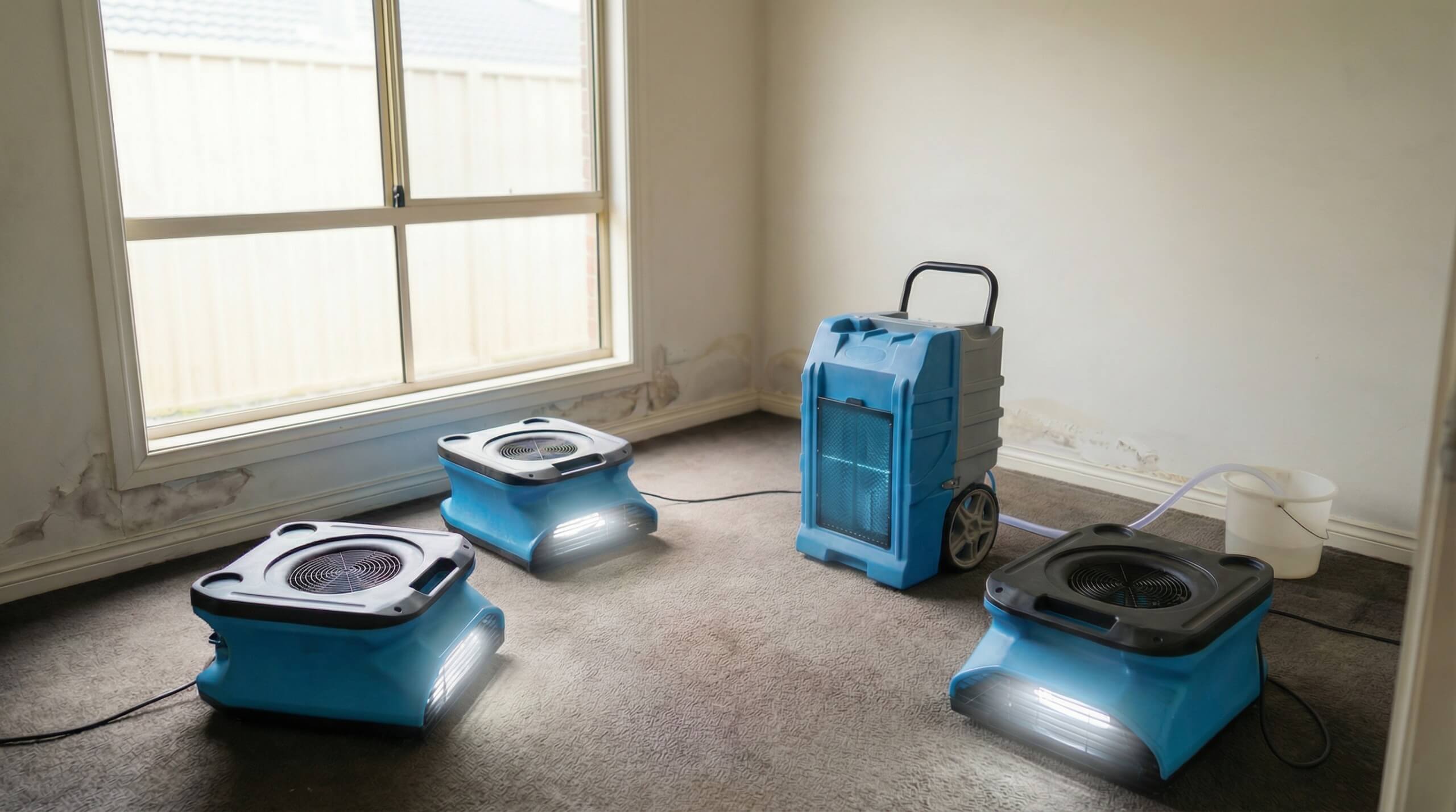
A household dehumidifier will handle a single room. If you don’t own one and the room is enclosed, hiring one for 24 hours will do more for your carpet than three days of open windows in February.
If It Is Still Damp After 24 Hours
Past 24 hours, one of two things is true. Either the carpet was over-wet when the machine stopped, or the underlay got soaked and nothing since has been able to dry it.
You can tell which by lifting a corner. Pull the carpet back at a doorway or in a corner, then look at and feel the underlay directly. Discolouration, a cold damp feel, or an earthy smell means the underlay is the problem, not the surface.
What to do about it:
- Get air under the carpet, not just over it. Prop the lifted corner up on a block and aim a fan underneath. This is the single most effective DIY step and almost nobody does it.
- Run a dehumidifier continuously in the closed room. Aim for below 50 per cent relative humidity. Switching it off overnight lets humidity climb back in and restarts the clock.
- Check the skirting and the subfloor. Water wicks sideways and down. A dry carpet against wet skirting is still a wet room.
- Decide on the underlay early. Underlay that’s been damp for more than 48 hours, or that smells earthy or crumbles when rubbed, is finished. It costs a fraction of the carpet to replace and it’s the mould’s food source.
- Take a reading, not a guess. Compare the wet area against a section of the same carpet you know is dry. The job is done when the two match, not when it feels dry.
If water has been sitting for days or the underlay is saturated, that’s a dry-out rather than a drying job. Our guide to how to dry wet carpet quickly sets out the extraction sequence, and our page on how long wet carpet takes to dry covers the timelines once the underlay is involved.
Should You Call The Cleaner Back?
Yes, if the carpet is still noticeably damp more than 12 hours after a hot water extraction clean. That’s a fair question to ask, and a good operator will want to know.
A properly run job finishes with dry passes: the wand goes back over the carpet after the solution stops, pulling water until it stops recovering anything meaningful. It also finishes with a moisture check. If neither happened, the carpet was left wet by design rather than by accident.
Three questions worth asking:
- Was the job bonnet, encapsulation, or hot water extraction? That sets the expected drying time. If they can’t tell you, they can’t tell you whether 24 hours is normal.
- How many dry passes were done after the solution? One pass that lays water and one that pulls it is not enough on a plush or wool carpet.
- Were moisture readings taken before they left? Any operator claiming a carpet is dry without a meter is guessing.
Be reasonable about it. A humid February week genuinely slows drying, and no cleaner controls the weather. What they control is how much water was left in the carpet and whether they checked. A carpet that’s touch dry at 8 hours and damp again at 20 is not a weather problem.
When The Dampness Was Never A Cleaning Problem
Sometimes the clean is a coincidence. The carpet was cleaned, the carpet is damp, and the two facts aren’t related.
Look for these:
- It’s damp in one defined area only. Cleaning wets a whole room evenly. A single damp patch points to a water source under or beside it.
- It comes back after drying. If you dry it and it’s damp again in a week, water is still entering.
- It’s near an air conditioner. Condensate drain blockages and frozen coils drip into the carpet with no other warning.
- It’s along an external wall or on a slab. Rising damp and slab moisture show up as a band of damp carpet against the wall, and it’s worst in humid weather.
- It’s near a bathroom, laundry or kitchen. Slow leaks from behind a wall or under a cabinet spread sideways along the floor long before anything shows.
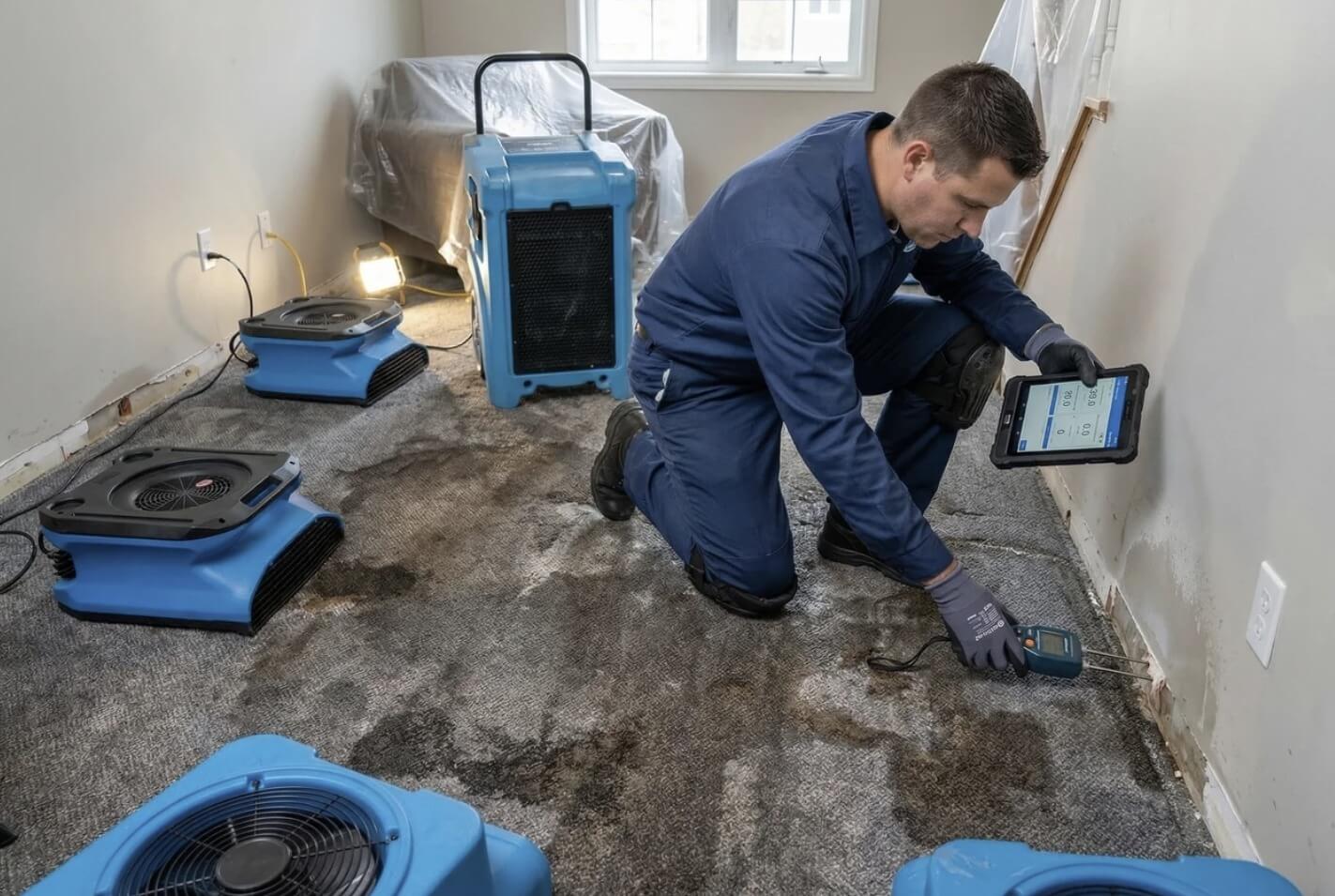
If any of that is familiar, stop treating it as a drying problem. A moisture assessment will find where the water is coming from. We cover how to run those checks in our guide to carpet that still feels damp.
How We Can Help
We’re a Brisbane based flood and water damage restoration team, on call 24 hours a day, and we can be on site within the hour for an urgent job.
For a carpet that’s still wet after cleaning, that means:
- Moisture readings, documented. We measure the carpet, backing, underlay, skirting and subfloor against dry references, so you know what’s actually wet rather than what feels wet.
- Extraction with commercial equipment. Truck mounted and portable extraction that pulls water out of the backing and the top of the underlay, not just the pile.
- Air movers under lifted carpet, paired with LGR dehumidifiers. Standard dehumidifiers lose effectiveness once the air drops below about 40 per cent relative humidity. LGR units keep pulling.
- Underlay handling. Kept and dried in place where it can be, pulled out where it can’t. We tell you which and why before we do it.
- Antimicrobial treatment applied during the dry and again at the end finish, to stop mould taking hold in the backing and underlay.
- Mould assessment where a smell has already developed. Surface cleaning doesn’t kill mould that’s inside porous materials, so it comes back from what was left behind.
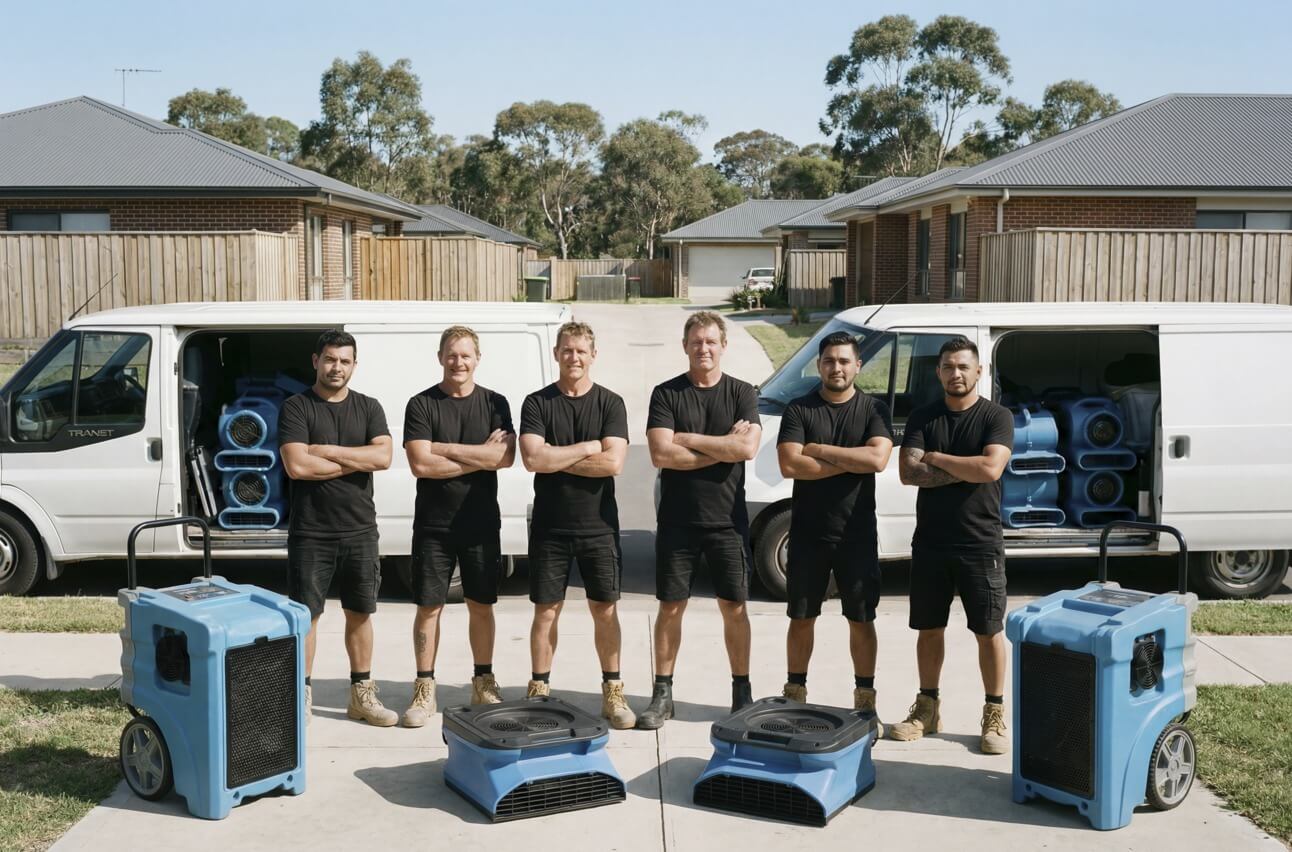
If you’d rather handle the dry-out yourself, we supply commercial dehumidifiers and air movers across Brisbane, usually delivered the same day. Hire the gear and run it your way, or leave the whole job to our carpet drying team in Brisbane.
Call us on 07 3185 0987, day or night, or get in touch online and we’ll book an assessment.
Frequently Asked Questions
How long does carpet take to dry after cleaning?
It depends on the method. A bonnet or encapsulation clean is usually dry within 1 to 2 hours. Standard hot water extraction takes 6 to 12 hours. High heat steam cleaning takes 12 to 24 hours. A hired DIY machine often takes longer than 24 hours because household suction can’t extract enough water. High humidity extends every one of those ranges, which is why a dehumidifier matters more in Brisbane than a fan does.
Why is my carpet still wet the day after cleaning?
Either too much water went in, or not enough came back out. Common causes are a missed dry pass on the extraction wand, an under-extracted DIY machine, a saturated underlay that the wand can’t reach, or a closed room on a humid day with no dehumidification. Lift a corner and check the underlay. That tells you which problem you have.
Can damp carpet after cleaning cause mould?
Yes. Mould needs sustained relative humidity above roughly 60 per cent, and it can establish on a damp surface within 24 to 48 hours. Brisbane’s summer air sits at or above that threshold on its own, so a carpet left damp in a closed room is a realistic mould risk rather than a theoretical one. The smell usually arrives before anything visible does.
Should I walk on damp carpet after cleaning?
Keep it to a minimum for the first 6 to 12 hours. Foot traffic compresses wet fibres and pushes moisture sideways into dry areas, and it leaves compression marks that don’t spring back.
Will baking soda help dry a damp carpet?
It helps with surface dampness and odour, not with saturation. Apply a generous layer over the affected area, leave it several hours or overnight, then vacuum thoroughly. It will not draw water out of a wet backing or underlay, so don’t rely on it as the drying method.
Is it safe to put furniture back after cleaning?
Only once the carpet is dry, and check with a paper towel rather than your hand. Furniture traps moisture and blocks airflow exactly where it’s hardest to dry.
Can I use a hair dryer on damp carpet?
No. Concentrated heat can damage or melt synthetic fibres and it doesn’t penetrate far enough to reach the backing, which is where the water is. Fans and a dehumidifier will beat it comfortably and won’t risk the carpet.
What if the cleaner says a damp carpet is normal?
Damp at 8 hours after hot water extraction is normal. Noticeably damp at 24 hours is not. Ask how many dry passes were done and whether moisture readings were taken before they left. If the answer is vague, get an independent reading. It’s a five minute check and it settles the question.
Flood Services Brisbane provides carpet drying, water damage restoration, and flood recovery services across Greater Brisbane. If your carpet is still damp after cleaning and you need a moisture assessment, contact our team today.