How to Dry Wet Carpet Quickly: The Complete Step-by-Step Guide
Water doesn’t knock before it enters your home. One moment you’re enjoying a quiet Brisbane evening, the next you’re standing ankle-deep in your living room, wondering how a burst flexi hose just rewrote your entire week. The clock starts ticking the second carpet gets wet, not from when you discover it, but from the moment moisture hits the fibres. In South East Queensland’s subtropical climate, that timeline compresses even further.
This guide walks you through exactly how to dry carpet quickly, in what order, and when to accept that professional intervention saves both your carpet and your subfloor.
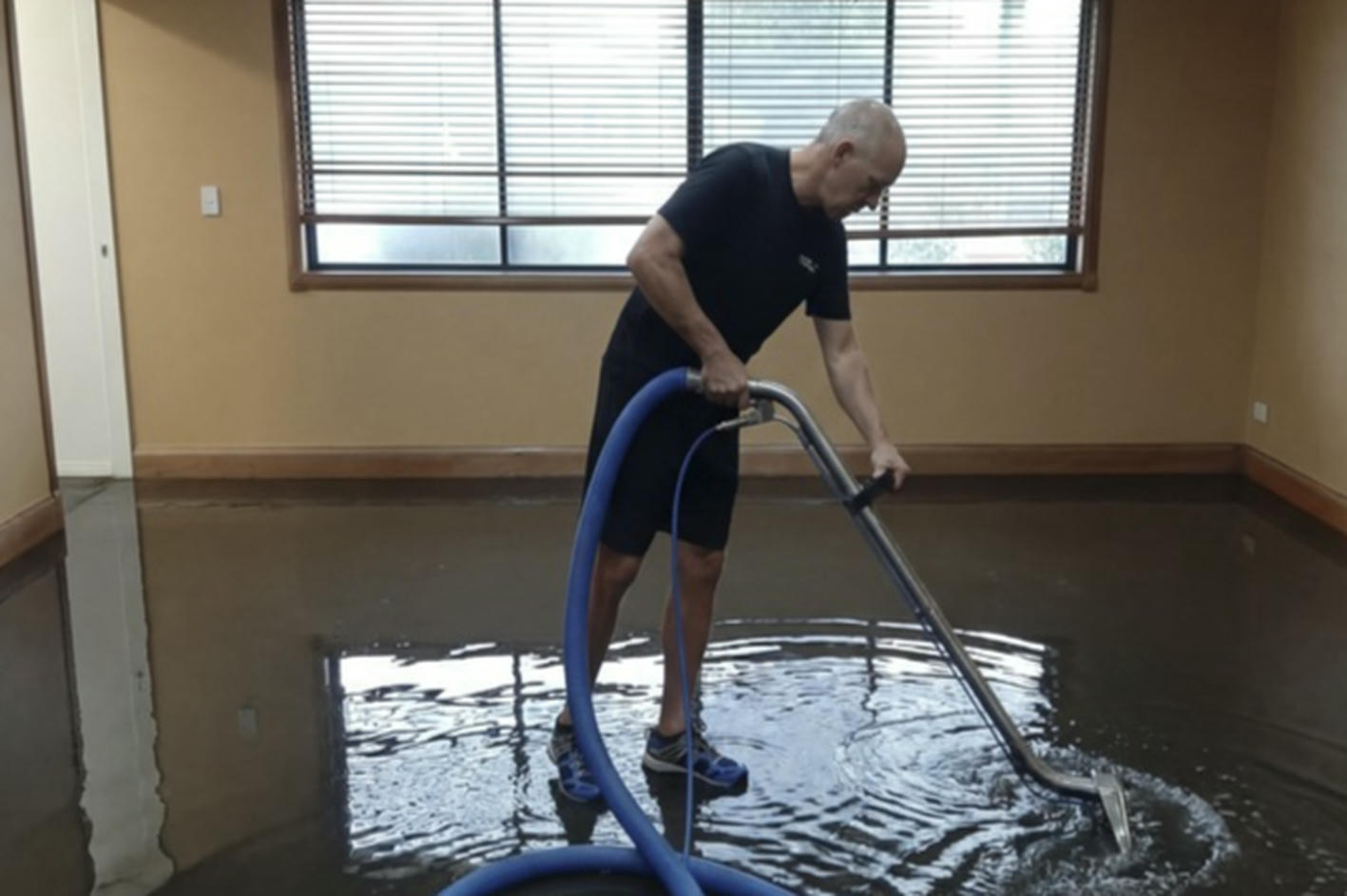
Best Way to Dry Flooded Carpet: Immediate Emergency Steps
When water spreads across your floor, the difference between salvaging your carpet and replacing it entirely often comes down to the first sixty minutes. Queensland homes face unique challenges here. Our humidity means moisture evaporates slower and mould establishes faster than in drier parts of the country.
How to dry flooded carpet starts with triage, not panic. Before you grab every towel in the linen cupboard, you need to make two critical safety decisions.
First, kill the power to affected rooms at the switchboard. Water and electricity create a hazard you cannot see until it’s too late, particularly when moisture has wicked beneath skirting boards and reached wall outlets.
Second, identify the water source. Clean water from a burst pipe or rainwater ingress presents a manageable problem. Grey water from washing machines or dishwashers carries contaminants. Black water from sewage or storm surge demands professional hazmat protocols, not a DIY approach.
Once those boxes are checked, move furniture off the wet carpet immediately. Aluminium foil under heavy furniture legs prevents rust and wood stains bleeding into the carpet. Then shift into extraction mode.
How to Get Water Out of Carpet Immediately
Surface water sits on top of carpet. The real problem lurks beneath.
Start by blotting, never rubbing, with thick, absorbent towels. Stand on the towels. Use your body weight to press moisture upward. Rotate them the moment they become saturated. This mechanical action draws water from the carpet pile more effectively than any casual dabbing.
For standing water, you need extraction power that towels simply cannot provide.
How to Remove Water from Carpet Using a Wet Vac
A wet/dry vacuum is not negotiable when you’re learning how to remove water from carpet properly. These machines, available from Bunnings or most equipment hire shops across Brisbane, create suction that pulls moisture from deep within the carpet pile and even the upper layer of padding.
Move the nozzle slowly, painfully slowly, across the affected area. One metre per second is too fast. You want to hear the water moving through the hose, and you want that sound to fade before you advance. Make multiple passes from different directions. Cross-hatch your pattern the same way you’d mow a lawn.
A single thorough extraction session with a wet vac can remove litres of water that would otherwise remain trapped. However, for larger jobs, professional water extraction equipment pulls moisture from deep within the carpet pile, the underlay, and even the subfloor below, cutting your total drying time by half or more.
Set Up Fans and Dehumidifiers for Fast Drying
This is where most DIY attempts fail. A single pedestal fan pointed vaguely toward the wet patch does almost nothing.
You need to know how to dry damp carpet fast through deliberate airflow engineering. Position multiple fans at a 45-degree angle to the floor, pointed directly across the wet surface. Create a cross-breeze by placing fans at opposing ends of the room. The goal is moving the saturated boundary layer of air away from the carpet so evaporation continues unimpeded.
A dehumidifier belongs in the centre of the affected zone. Close windows and doors, which is counter-intuitive for people who think fresh air helps. Outside air in Brisbane carries 70 to 80 percent humidity most months. A sealed room lets the dehumidifier pull moisture from the carpet into the air, then extract it into the collection tank.
Empty that tank religiously. A full dehumidifier does nothing. If moisture has penetrated beyond the carpet, structural drying becomes necessary to protect the subfloor and wall cavities from rot and long-term deterioration.
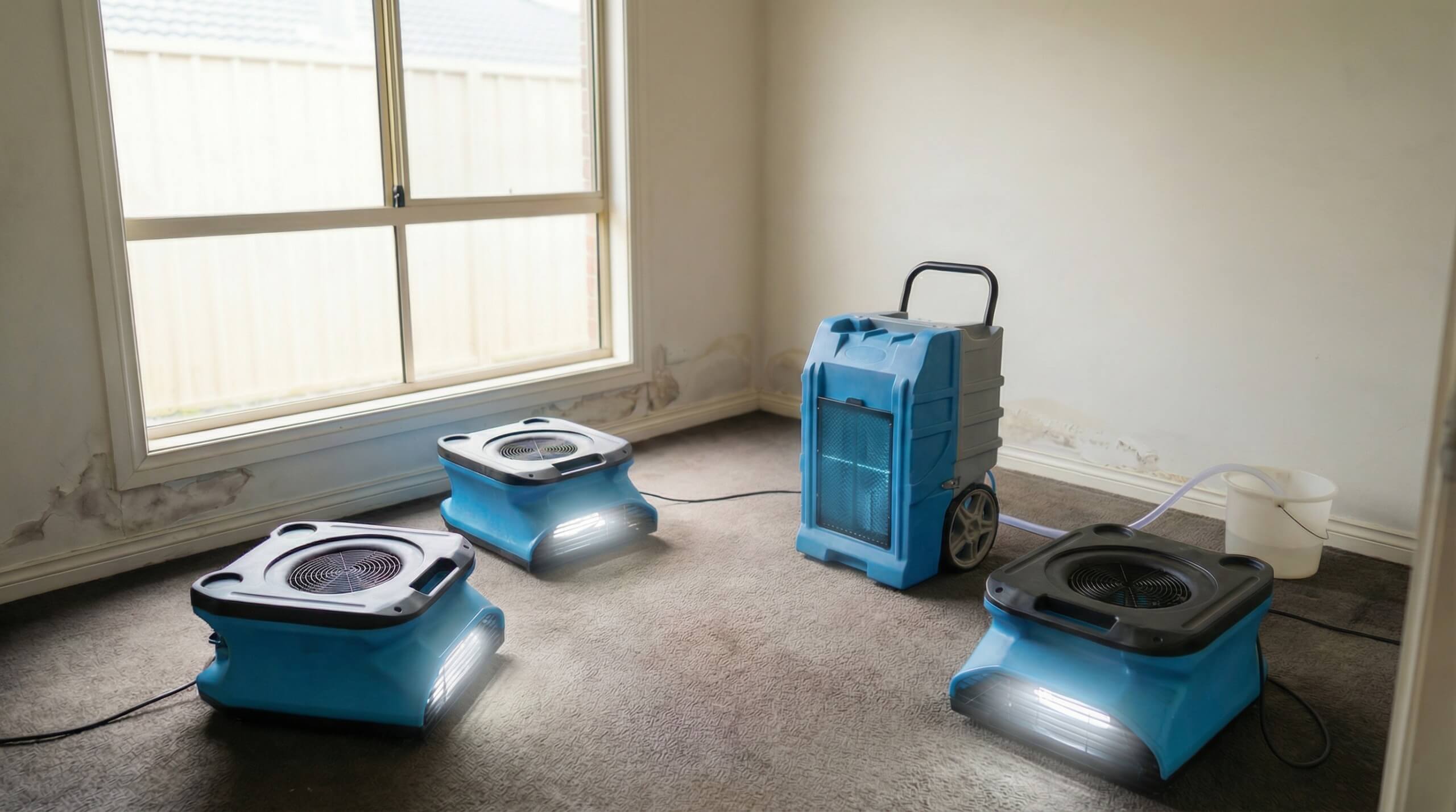
How to Dry Soaked Carpet: Home Remedies That Work
Not every wet carpet situation requires commercial equipment. A spilled drink, an overturned vase, or a small leak caught early can all be managed with items already in your home, provided you understand the physics at play.
How to dry wet carpet effectively at home comes down to absorption, evaporation, and patience, applied in that exact order.
Best Way to Dry Wet Carpet with Towels and Fans
The best way to dry wet carpet with household basics starts with sacrificing your oldest towels. Layer them over the damp area and apply pressure. Walk on them, place heavy books on them, or use your knees. The compression physically forces water upward into the towel fibres.
When the towel is saturated, replace it immediately. A wet towel sitting on carpet creates a seal that prevents evaporation. Some homes in flood-prone areas of Brisbane keep a dedicated stack of old beach towels precisely for this purpose.
Once you’ve pulled as much moisture as physically possible through blotting, set up the fan array described above. Keep air moving continuously. Check progress hourly.
Best Way to Dry Soaked Carpet Using Household Items
The best way to dry soaked carpet when you don’t own specialty equipment involves creative use of what’s already around you.
Baking soda is your ally. Once the carpet feels damp rather than wet, sprinkle it generously across the affected area. It absorbs residual moisture and neutralises odours simultaneously. Leave it for an hour at minimum, overnight if possible, then vacuum thoroughly.
For persistent dampness, lift a corner of the carpet and prop it up with a block of wood or a stack of books. Slide a fan underneath. This targets the underlay directly, which is where moisture hides longest. Even a desk fan wedged into position can make a measurable difference here.
White vinegar in a spray bottle, one part vinegar to one part water, applied as a light mist, helps prevent mould spores establishing while the carpet finishes drying. The vinegar smell dissipates completely within a day.
How to Dry Carpet After Water Damage
Flood damage carpet drying is a different beast from spill management. When external water invades a home, it brings silt, bacteria, and volume that household methods cannot handle alone. Even after the visible water recedes, the carpet and its padding remain saturated, often against the subfloor where airflow never reaches.
Water damage carpet drying requires systematic, multi-layered effort.
Drying Carpet and Padding After a Flood
Here’s an uncomfortable truth about wet carpet from flooding: the underlay may already be beyond saving even if the carpet itself looks recoverable.
Carpet padding acts like a sponge. Once saturated, it holds water pressed against the subfloor, whether chipboard, particleboard, or timber, where it begins causing structural damage immediately. If the flooding involved anything other than clean tap water, that underlay now harbours contaminants that drying alone cannot address.
Lifting the carpet entirely is often the only way to properly dry the subfloor. Professionals use specialised blowers directed into this cavity, but homeowners attempting DIY recovery should at minimum lift one corner of the carpet and inspect underneath. If the underlay is sodden, blackening, or smells earthy, replacement is almost certainly required regardless of how the carpet surface appears.
How to Dry Damp Carpet Fast Before Mould Sets In
The 24 to 48 hour window you hear about from restoration companies isn’t marketing; it’s biology. Mould spores activate the moment moisture levels rise, and in Brisbane’s climate, they don’t wait for an invitation.
How to dry damp carpet fast when time is your enemy means running fans continuously, not just during waking hours. It means emptying the dehumidifier at 2am. It means checking with the back of your hand for any cool spots that indicate lingering moisture.
Do not trust the carpet surface. It will feel dry long before the underlay is safe. Press a paper towel firmly into the carpet and against the underlay if accessible. Any moisture transfer means keep going. Once mould takes hold, professional mould remediation is the only way to fully eliminate it from carpet backing, underlay, and subfloor surfaces.
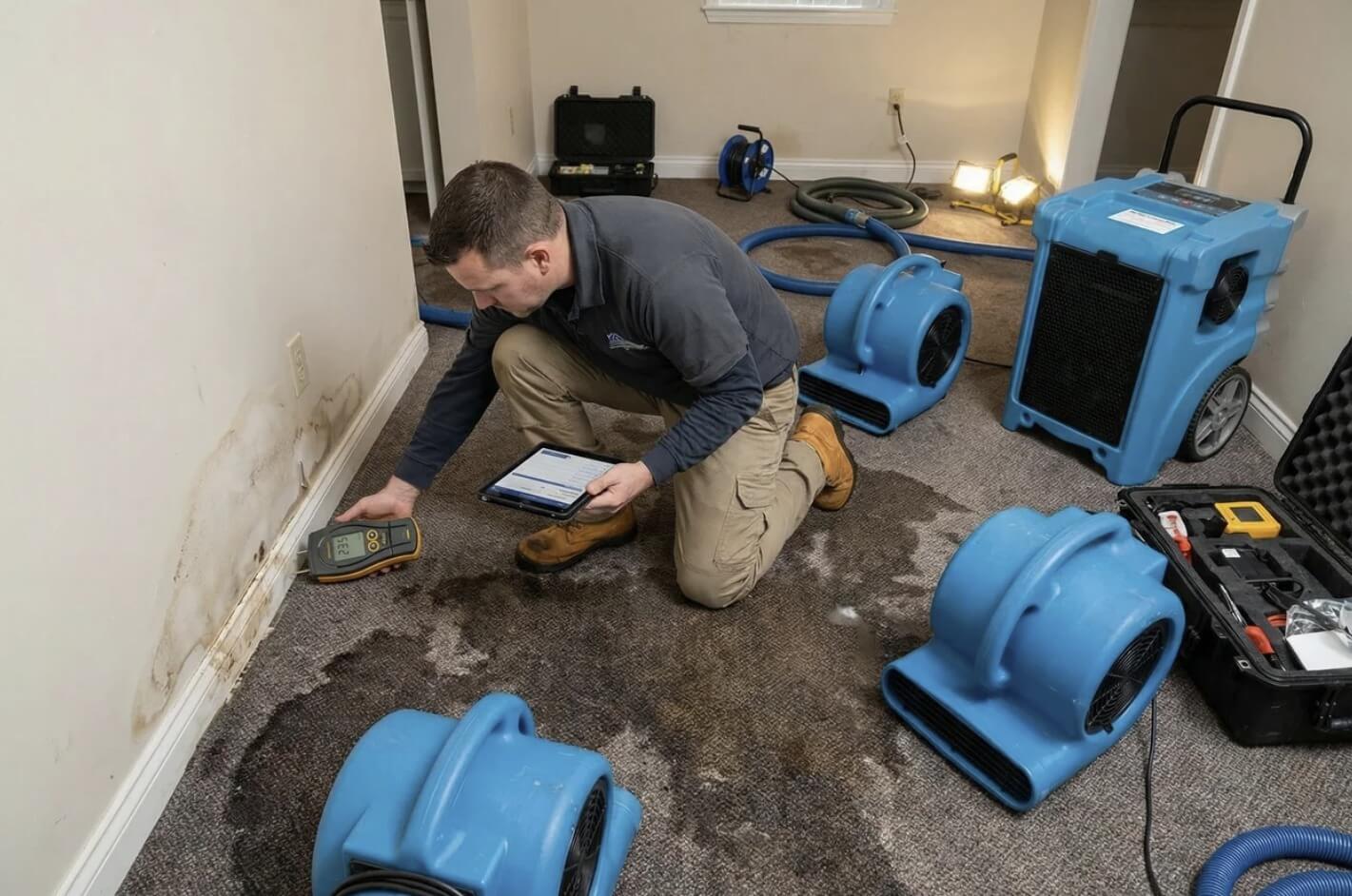
When to Call a Professional for Wet Carpet
There is no shame in reaching the limits of DIY drying. In fact, recognising those limits earlier rather than later often means the difference between carpet restoration and complete replacement, not to mention avoiding subfloor replacement that can run into tens of thousands of dollars. When the damage is beyond household equipment, flood restoration across Brisbane provides the industrial equipment and training needed to dry your home thoroughly.
Signs You Need Professional Water Damage Carpet Drying
Several red flags indicate your situation has moved beyond household intervention and into territory requiring professional water damage carpet drying:
- The water source is contaminated. Any flooding from sewage, storm water, or river inundation introduces pathogens that require antimicrobial treatment applied at extraction. This is not optional.
- The affected area exceeds one room. Industrial air movers and commercial dehumidifiers can process a volume that household equipment simply cannot match. Spreading household fans across multiple rooms dilutes their effectiveness to near zero.
- Carpet remains damp after 48 hours of active drying. This signals that moisture is trapped in the underlay or subfloor where your equipment cannot reach. Every additional day increases mould risk exponentially.
- You smell mustiness. That odour means biological activity has already begun. Surface sprays won’t reach the source.
- The carpet is buckling or separating from the tack strips. This indicates the backing and underlay have absorbed enough water to lose structural integrity.
What to Expect from Professional Carpet Drying Services
Professional water extraction and structural drying follows a different playbook entirely than the household approach.
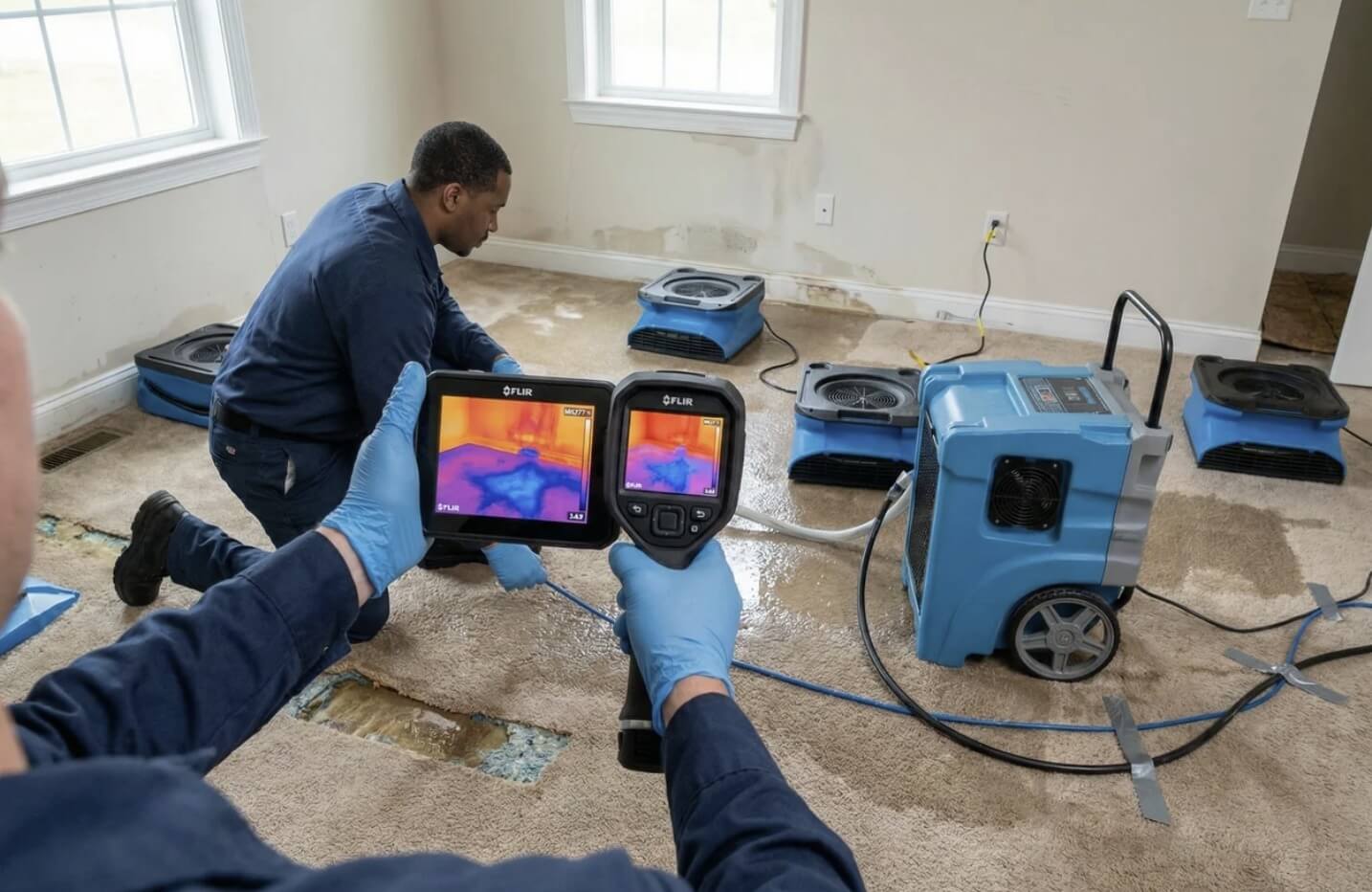
Crews arrive with truck-mounted extraction units that pull hundreds of litres per hour, not the few litres a wet vac manages. They inject high-velocity air movers beneath lifted carpet, directly drying the underlay and subfloor as a unified system.
Moisture meters provide quantitative data. Technicians map the affected area, take baseline readings, and don’t pack up until every measurement confirms the entire structure, including carpet, pad, subfloor, and wall cavities, has returned to acceptable moisture levels.
Antimicrobial applications prevent mould establishment during and after drying. This step alone justifies the cost of complete water damage restoration for many Brisbane homeowners.
Frequently Asked Questions
How long does wet carpet take to dry?
A small spill dried immediately with fans and extraction may feel dry in 6 to 12 hours. Flood-soaked carpet with saturated underlay typically requires 48 to 72 hours of professional drying. Brisbane’s humidity extends these timelines; a dehumidifier is non-negotiable.
Can wet carpet be saved?
Most clean water incidents allow full carpet restoration if extraction begins within hours and drying completes within two days. Carpet exposed to contaminated water, or any carpet where mould has established, should generally be replaced along with the underlay.
Will wet carpet smell go away?
Odour that persists after drying indicates either residual moisture or established mould in the underlay. Baking soda treatment helps surface odours, but smells returning within days signal a deeper problem requiring underlay inspection and possible replacement. For persistent smells, professional odour control treatment targets the source rather than masking the problem.
How do I know if my carpet padding is damaged?
Signs include a spongy feel underfoot, visible compression that doesn’t rebound, dark staining when you lift the carpet corner, and that unmistakable earthy or musty smell. Damaged padding cannot be dried effectively and must be replaced to prevent subfloor deterioration.
Is steam cleaning a good way to dry wet carpet?
No. Steam cleaning introduces more moisture, exactly the opposite of what a wet carpet needs. Extraction and forced air drying must happen first. Steam cleaning is for maintenance, not emergency water removal.
When water damage exceeds what towels and fans can handle, Flood Services Brisbane provides emergency water extraction, structural drying, and full restoration across the greater Brisbane region. Our teams arrive within hours, not days.