Signs of Hidden Water Damage in Your Home: Walls, Ceilings & Floors
Water damage in a Brisbane home rarely announces itself. It does not knock. It seeps, wicks, pools, and festers while you go about your day. By the time you spot the first tea-coloured smudge on the ceiling, the problem has been running its own schedule for weeks. Sometimes months.
This page covers the signs that matter. Not the obvious ones. Not the waterfall in the living room. The quiet ones. The signals your walls, ceilings, and floors send before they fail.
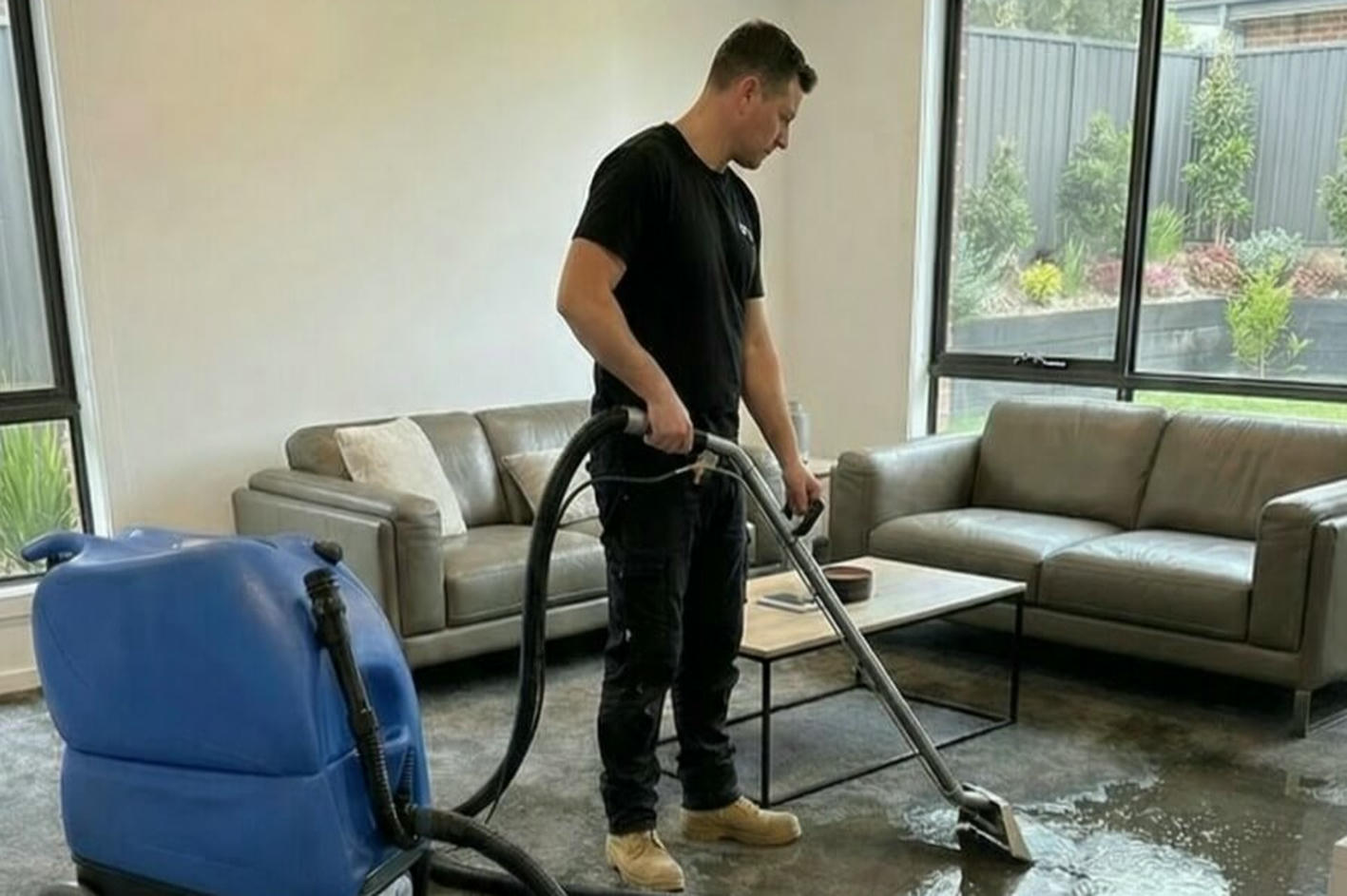
How to Tell If You Have Water Damage
You do not need a moisture meter to know something is wrong. You need to know what you are looking at.
Two distinct problems produce similar symptoms in Australian homes: surface damp and active water ingress. They are not the same thing. Treating one like the other wastes time and money.
Surface damp comes from condensation. Humid air hits a cold surface, the dew point is reached, and water droplets form. Brisbane’s subtropical summers make this routine. You will see it as fogged windows, clammy walls in bathrooms, or mould on silicone seals.
Active water ingress means water is entering the building envelope from outside or from a plumbing failure inside. Roof leaks, cracked shower grout, failed waterproofing membranes, burst flexi-hoses. This water travels. It moves through wall cavities, across ceiling plaster, under floorboards. It keeps going until something stops it.
The Victorian Building and Plumbing Commission identifies water ingress as one of the most common defects in Australian residential buildings, with condensation and moisture damage increasingly observed across Victorian homes. Brisbane’s climate, with its cyclone-season downpours and humidity that could drown a dehumidifier, accelerates every one of these problems.
If your issue disappears on dry days and returns with humidity, you are dealing with condensation. If it worsens after rain or never stops, you have a leak.
Early Signs of Water Damage You Should Not Ignore
Every major water damage job we attend at Flood Services Brisbane started with something the homeowner noticed and dismissed.
- A paint bubble the size of a 20-cent piece on the hallway ceiling
- A door that started sticking in February and got worse in March
- A skirting board that pulled 3 mm away from the wall
- A smell like wet cardboard that came and went
- A floorboard that suddenly had a gap where yesterday it did not
These are not quirks of an ageing home. They are a building telling you water is where it should not be.
Signs of Water Damage in Home: Where to Look First
Start low, then go high. Most water damage in Australian homes originates in one of three zones: the roof and gutters, the wet areas (bathroom, laundry, kitchen), or the subfloor and foundations.
Prioritise rooms directly below bathrooms. Check ceilings under roof valleys and box gutters, the most common failure points in Brisbane’s older homes. Inspect walls shared with showers. Pull back furniture against exterior walls after heavy rain.
Water hides where air does not move. Behind cupboards. Under carpet. Inside built-in robes on external walls. These are your first inspection sites.
Signs of Water Damage in Walls
Walls are the best liars in a house. They can be dissolving from the inside out while the paint looks fine.
The Building and Plumbing Commission notes that water damage routinely tops the list of defects encountered in buildings and in complaints to regulators. Much of that damage begins inside wall cavities where it cannot be seen.
Early Signs of Water Damage in Walls
Discolouration that spreads. A faint shadow near the skirting board. A copper-toned halo around a light switch. Stains that grow over days, not months. These are water travelling through the gypsum core.
Texture changes you can feel. Run your hand flat across a wall you suspect. Dry plasterboard is smooth and cool. Wet plasterboard feels softer and slightly warmer, because water conducts heat differently than gypsum. If your thumb leaves a depression, the board is already compromised.
Paint that separates. Not peeling. Separating. When moisture pushes outward against the paint film, it creates a pocket between the paint and the paper face. The paint bubbles. Then it bursts, and the crumbly gypsum underneath tells you everything.
Nail pops appearing in a cluster are another early warning. When timber framing swells from moisture, it pushes the fixings outward through the plaster.
Signs of Water Damage on Plaster Walls
Older Brisbane homes with solid plaster walls, typically lime and cement renders over brick, handle water differently than modern plasterboard. They are more forgiving but not immune.
Water damage on solid plaster appears as efflorescence, a white, powdery salt deposit that leaches out of the render as moisture evaporates. It also presents as blistering paint, crumbling render at the base of walls, and persistent damp patches that feel cold to the touch.
If the plaster sounds hollow when tapped, the render has likely debonded from the substrate. That section will need to be cut out and patched.
For modern plasterboard, the rules are simpler: once the gypsum core has absorbed water, it loses structural integrity. Knowing when to repair versus replace water-damaged plasterboard can save thousands in unnecessary rebuild costs. Soft board never regains its strength. It comes out.
Signs of Water Damage Behind Wall
Water behind a wall leaves clues on the wall itself.
Skirting boards that darken along the bottom edge or separate from the plaster indicate moisture wicking upward from the floor or downward from a leaking pipe inside the cavity.
A persistent musty odour that concentrates near one section of wall is likely trapped moisture feeding microbial growth inside the cavity. The smell is not the problem. The smell is the alarm.
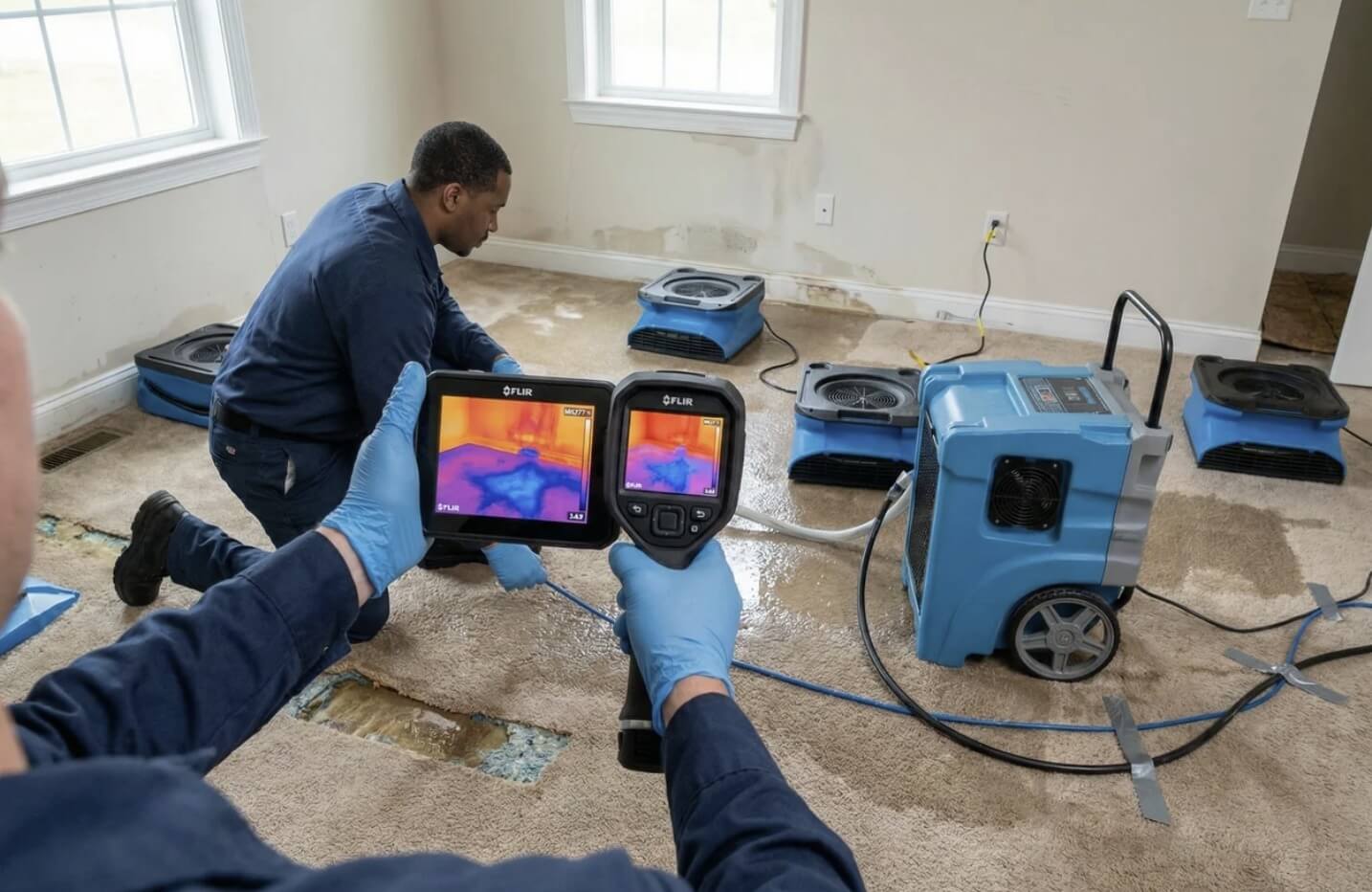
Unexplained rises in your water bill, with no tap dripping and no toilet running, suggest a concealed leak inside a wall. Thermal imaging is the fastest non-invasive way to confirm this, avoiding exploratory holes in your plaster.
Signs of Water Damage in Ceiling
Ceilings are simpler to read than walls because gravity does the diagnostic work for you. Water on a ceiling cannot hide. It collects, pools, and leaves a record.
Early Signs of Water Damage Ceiling
A small circular stain, usually golden-brown or copper-coloured, is the earliest ceiling signal. It might be dry to the touch. Do not be fooled. Dry stain means the water source is intermittent, perhaps a roof leak that only activates during rain. The plasterboard above that stain has been wet, possibly many times.
Paint bubbling on a ceiling is never normal. Ceilings do not sweat. If you see bubbles, water is sitting on top of the plasterboard or inside the roof cavity directly above.
A sagging ceiling is past the early stage. If you can see a visible bow between joists, or the ceiling moves when you push up gently with a broom handle, the plasterboard has absorbed enough water to lose its bond to the timber. This is a structural hazard.
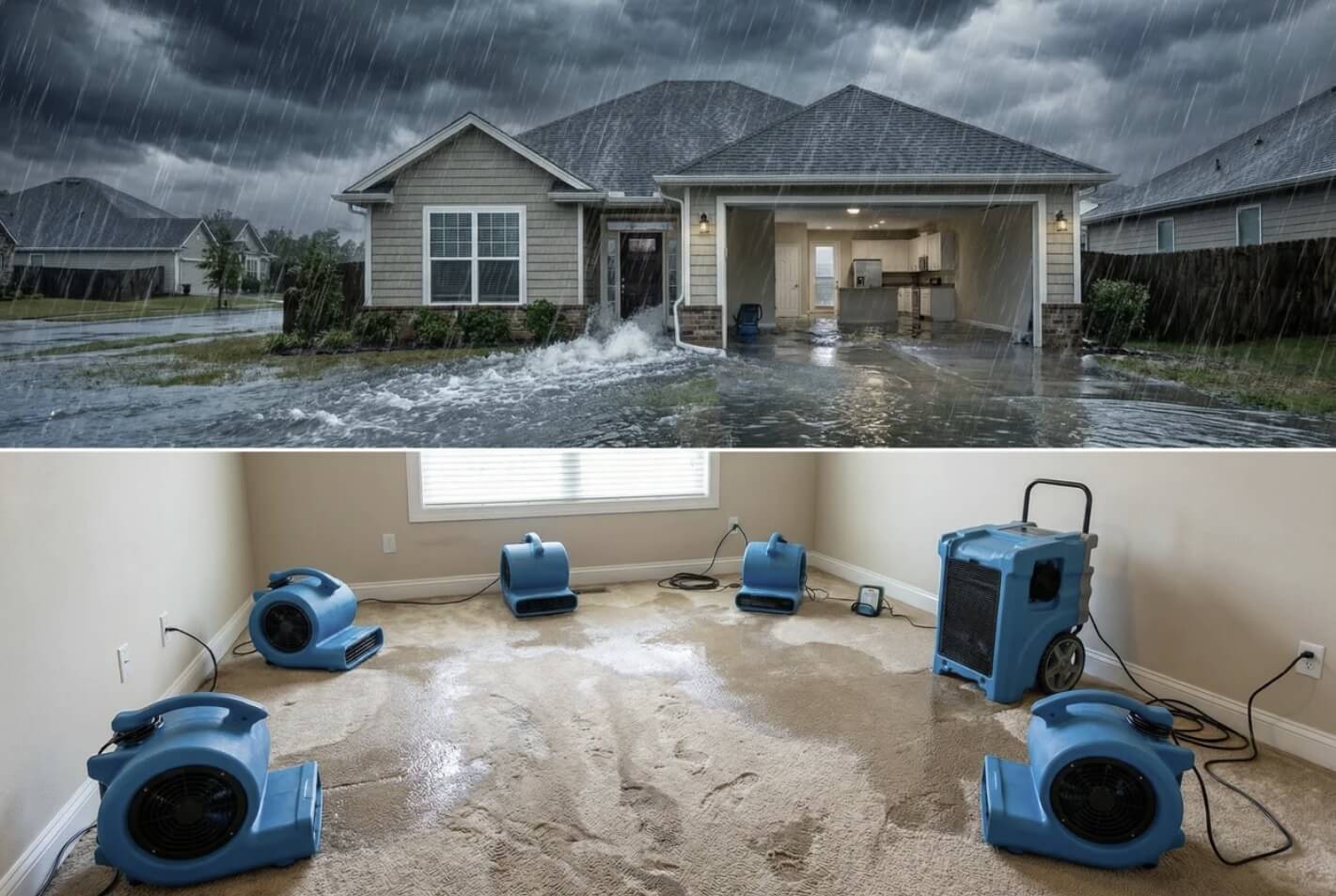
Signs of Water Damage on Ceiling
Beyond stains, look for these specific indicators:
- Cracking along cornice lines. When ceiling plasterboard swells, it pushes against the cornice, opening hairline cracks at the wall-ceiling junction.
- Dark spots that change size after rain. These are active leaks. The stain grows each time it rains and may develop a white powdery ring around the edge as the gypsum dries incompletely between events.
- Mould in concentric rings. Mould on a ceiling rarely spreads randomly. It follows the moisture pattern, which on a ceiling is usually circular, fanning outward from the leak point.
Signs of Ceiling Water Damage: When to Worry
Not every ceiling stain is an emergency. Here is the triage:
- Stain is dry, small (under 15 cm), and has not changed in weeks. Monitor it. The leak may be old and resolved.
- Stain is damp to touch, growing, or appears after rain. You have an active leak. Find and stop the water source immediately.
- Ceiling is sagging, cracking audibly, or water is dripping through light fittings. Leave the room. Turn off power to that circuit at the mains. Call a professional. A waterlogged ceiling can come down without warning.
According to the Australian Property Institute, water ingress and moisture problems are among the most common building inspection findings for property buyers nationwide, with ceiling stains often being the only visible indicator of deeper roofing or plumbing defects.
Signs of Water Damage on Hardwood Floors & Under Floor
Timber floors absorb water like a wick. The damage starts in the subfloor darkness and works its way up.
Buckling, Cupping & Staining
Cupping means the edges of individual boards have risen higher than the centre, creating a shallow U-shape across each plank. This happens when the underside of the board absorbs moisture and expands, while the sealed top surface stays drier and narrower.
Crowning is the opposite. The centre of the board rises higher than the edges. This typically occurs after someone sands a cupped floor flat before it has dried properly. The board was still swollen underneath, and when it eventually dried, the top surface contracted into a hump.
Buckling is the extreme version. Boards lift entirely off the subfloor, pulling away from the fasteners. This needs immediate attention, the moisture source must be found and stopped before the floor can be assessed for restoration.
Dark staining along board edges or at the ends of planks usually indicates water sitting in the tongue-and-groove joints. If the stain is black rather than grey, mould has already taken hold.
What to Do If You Spot Floor Damage
Stop walking on the affected area. Foot traffic forces moisture deeper into the timber and can crack already-weakened boards.
If the damage is localised near a known leak source, a burst dishwasher hose or an overflowing sink, read our guide on water under floorboards for step-by-step instructions on what to do in the first 24 hours.
Do not sand, seal, or attempt cosmetic repairs on a floor that is still drying. You will trap moisture inside the timber, and the floor will cup again within months. Professional drying with industrial dehumidifiers and subfloor air movers is the only reliable path for anything beyond a small surface spill.
Other Signs of Water Damage in Your House
Signs of Water Damage in Bathroom
Bathrooms are the most water-aggressive rooms in any home. The National Construction Code mandates waterproofing to AS 3740 in all wet areas, but waterproofing fails. When it does, the signs are specific.
Check the grout lines in your shower. Crumbling or missing grout means water has been bypassing the tile layer. This water sits on the waterproofing membrane underneath, and if the membrane has failed too, it travels straight into the wall cavity and subfloor.
Soft spots in the floor near the shower base or bath signal timber rot in the subfloor. Press down with your heel. Any movement, any sponginess, and you have a structural issue underneath.
Discoloured silicone seals around the bath, shower screen, or vanity are not cosmetic. When silicone darkens, peels, or develops black spotting, the seal has failed and water has been migrating past it. Replacing the silicone without checking what is behind it is like repainting a termite-damaged architrave.
Swollen vanity kickboards, particularly the MDF panels at the base of bathroom cabinetry, are reliable water damage indicators. MDF acts like a sponge. Once it swells, it never shrinks back.
Signs of Water Damage to Foundation
Foundation damage from water is slow, cumulative, and expensive. The first signs appear at the opposite end of the house from the water source, because the entire structure shifts.
Cracked concrete slabs with cracks wider than 3 mm, especially if one side sits higher than the other, indicate soil movement under the foundation. In Brisbane’s reactive clay soils, water leaking from a broken stormwater drain can saturate the ground on one side of the slab, causing differential movement.
Doors that stick suddenly and windows that jam in their frames are not coincidences. When a foundation shifts, the entire frame of the house distorts. If three doors in different rooms start sticking within the same month, your foundation is moving. Water is the most common cause.
Efflorescence, white salt deposits blooming on brickwork or concrete, tells you water has been migrating through the masonry and evaporating at the surface. The salt is what it left behind. A small amount is normal on older Brisbane homes. Heavy, recurring deposits mean water is moving through the foundation regularly.
Signs of Mould After Water Damage
Mould follows water by 24 to 48 hours in Brisbane’s climate. It needs three things: moisture, organic material to feed on (plasterboard paper, timber, dust), and still air.
The colour tells you something about the water source. Black or dark green mould on walls usually indicates prolonged dampness, often from condensation or a slow, persistent leak. White or grey fluffy mould on timber appears when wood has been wet and the air circulation is poor, common in subfloors and behind furniture pushed against damp walls.
A musty, earthy smell without visible mould means the growth is inside a cavity, behind plasterboard, under flooring, or in the roof space. If you can smell it, spores are already airborne. Professional mould remediation involves more than cleaning visible growth. It requires identifying the moisture source, containing the affected area, and treating the air as well as the surfaces.
When to Call a Professional
Some water damage you can manage yourself. A small condensation patch behind a bedhead. A single wet floorboard from an overturned vase.
Call a professional when any of these apply:
- The water source is unknown or inaccessible
- Water has contacted electrical wiring, power points, or light fittings
- The affected area is larger than one square metre
- The ceiling is sagging or water is pooling in the ceiling cavity
- Mould covers more than a dinner-plate-sized area
- Water has been sitting for more than 48 hours
- Timber framing or structural elements are involved
Safety warning: If water has entered electrical systems, ceiling cavities near light fittings, or structural framing, switch off power at the mains immediately and do not re-enter the affected area until a licensed electrician has inspected it.
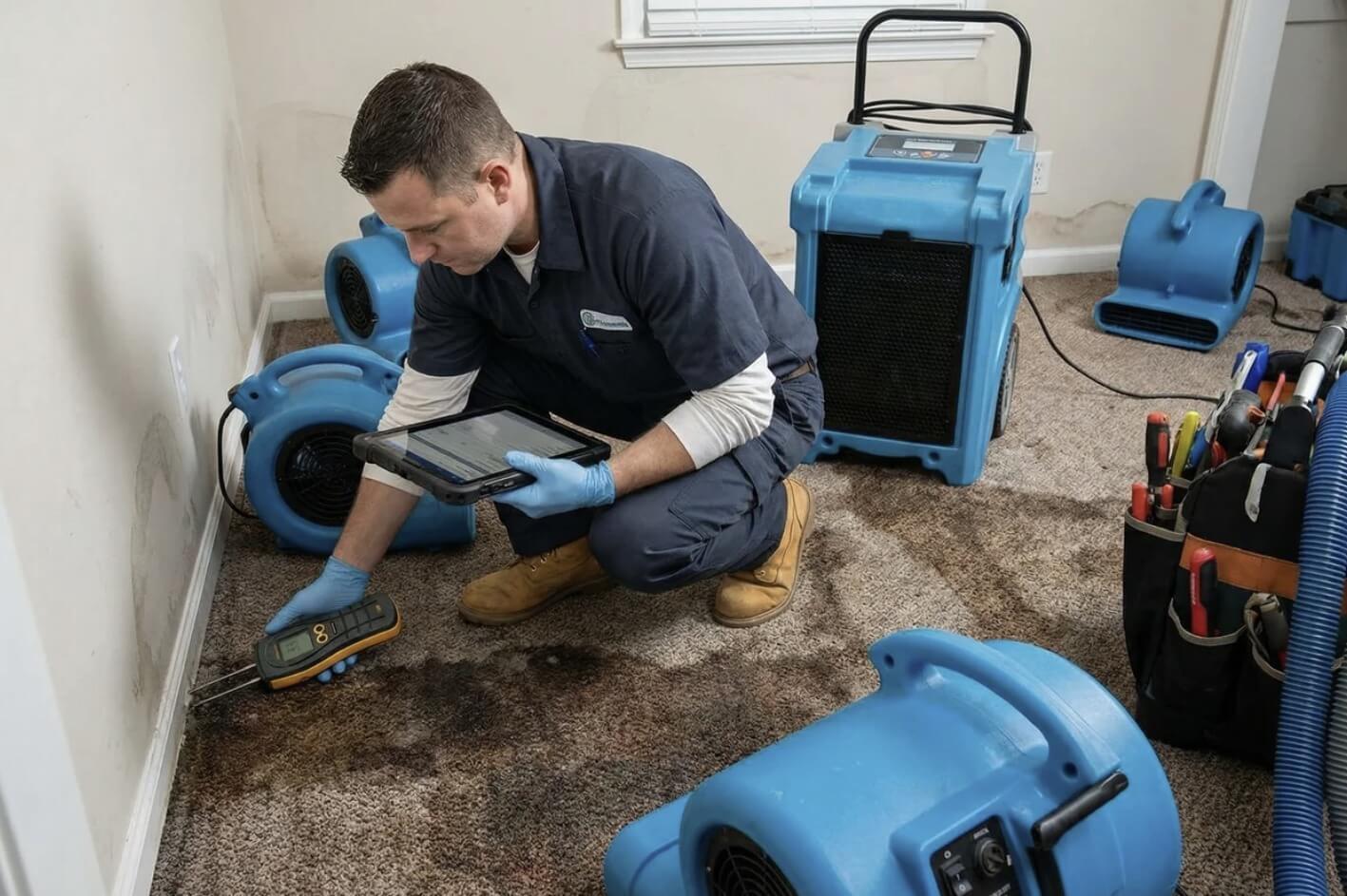
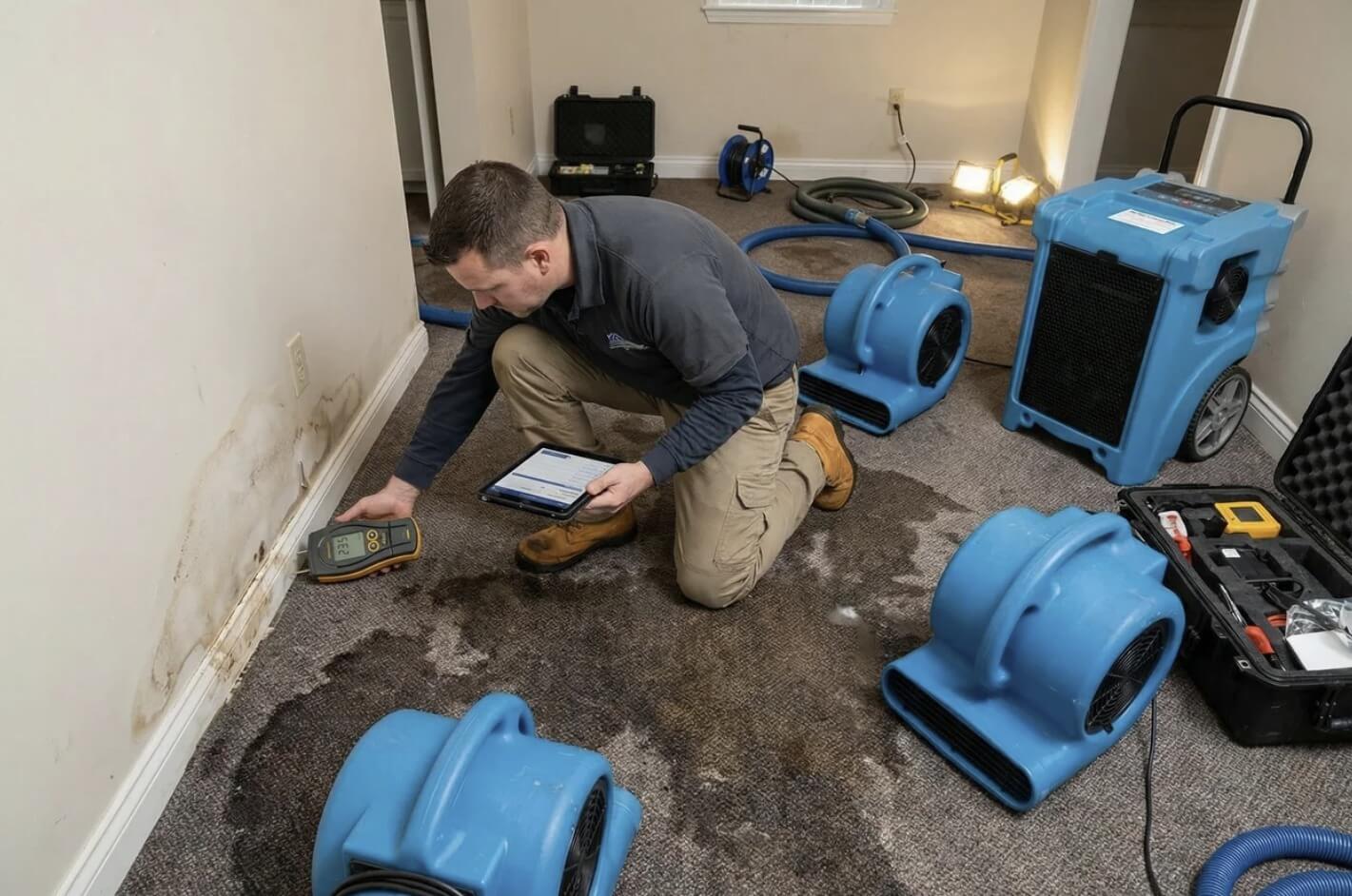
For significant water damage, professional water damage restoration is the difference between a dry home and one that moulds from the inside out for years. Industrial drying equipment, thermal imaging cameras, and calibrated moisture meters achieve what open windows and a pedestal fan cannot.

Structural drying specifically targets the building materials themselves, timber framing, concrete slabs, plasterboard, and subfloor structures. The goal is not surface dryness, which anyone can achieve with a towel, but equilibrium moisture content throughout the building assembly.
Frequently Asked Questions
What are the signs of water damage in a house?
Discoloured walls or ceilings, bubbling or peeling paint, warped or cupping timber floors, persistent musty odours, visible mould growth, sticking doors and windows, swollen cabinetry, and unexplained increases in water bills. The key is distinguishing between one-off symptoms and patterns. One sticking door is a door. Three sticking doors in different rooms is a foundation problem.
Can water damage be hidden behind walls?
Yes, and it frequently is. Water inside a wall cavity may show no visible signs on the paint surface for weeks or months. Indirect indicators include darkening skirting boards, a musty smell concentrated near one wall, paint or wallpaper separating at plasterboard joints, and rising water bills. Thermal imaging is the most reliable non-invasive detection method.
How do I know if I have water damage or just damp?
Use the plastic sheet test. Tape a 30 cm square of clear plastic firmly against the wall or floor you suspect, sealing all four edges. Leave it for 24 hours. If moisture appears on the room-facing side of the plastic, you have a condensation problem (surface damp). If moisture appears on the surface-facing side, underneath the plastic, water is migrating through the material from the other side, and you likely have a leak or water ingress issue.
Does homeowners insurance cover hidden water damage?
Most Australian home insurance policies cover sudden and accidental water damage, such as a burst pipe, storm damage, or a failed flexi-hose. They generally do not cover gradual damage from slow leaks, poor maintenance, rising damp, or condensation. Check your specific policy wording and document everything with dated photographs before any repair work begins. At Flood Services Brisbane, we assist with insurance documentation and can work directly with your provider to streamline the claims process.
For immediate assistance with water damage in Brisbane, call Flood Services Brisbane on 07 3185 0987. We are on site within 60 minutes, 24 hours a day, 365 days a year.