Water Damaged Plasterboard? Repair or Replace (Step-by-Step)
Water inside your walls doesn’t announce itself with a knock at the door. It creeps in quietly, saturates your plasterboard, and by the time you notice that first tea-coloured stain blooming across the ceiling, the damage has already been done. The real question Brisbane homeowners face isn’t whether the water got in. It’s what to do about it now.
At Flood Services Brisbane, we’ve pulled apart enough soggy walls across Queensland to know that every water damaged plasterboard tells a story. Some end with a simple patch and paint. Others demand a full sheet replacement before the ceiling lands on your dining table.
This guide walks you through exactly what you’re dealing with, how to spot what’s hidden, and when to repair versus when to rip it all out.
Signs of Water Damaged Plasterboard and Walls
A water damage wall doesn’t always look like you’d expect. It’s rarely a gushing waterfall. More often, it’s subtle. A slight shadow, a texture that feels wrong under your fingertips, a smell that reminds you of wet cardboard.
The first rule we teach every Brisbane homeowner: your plasterboard talks before it fails. You just need to know what to listen for.
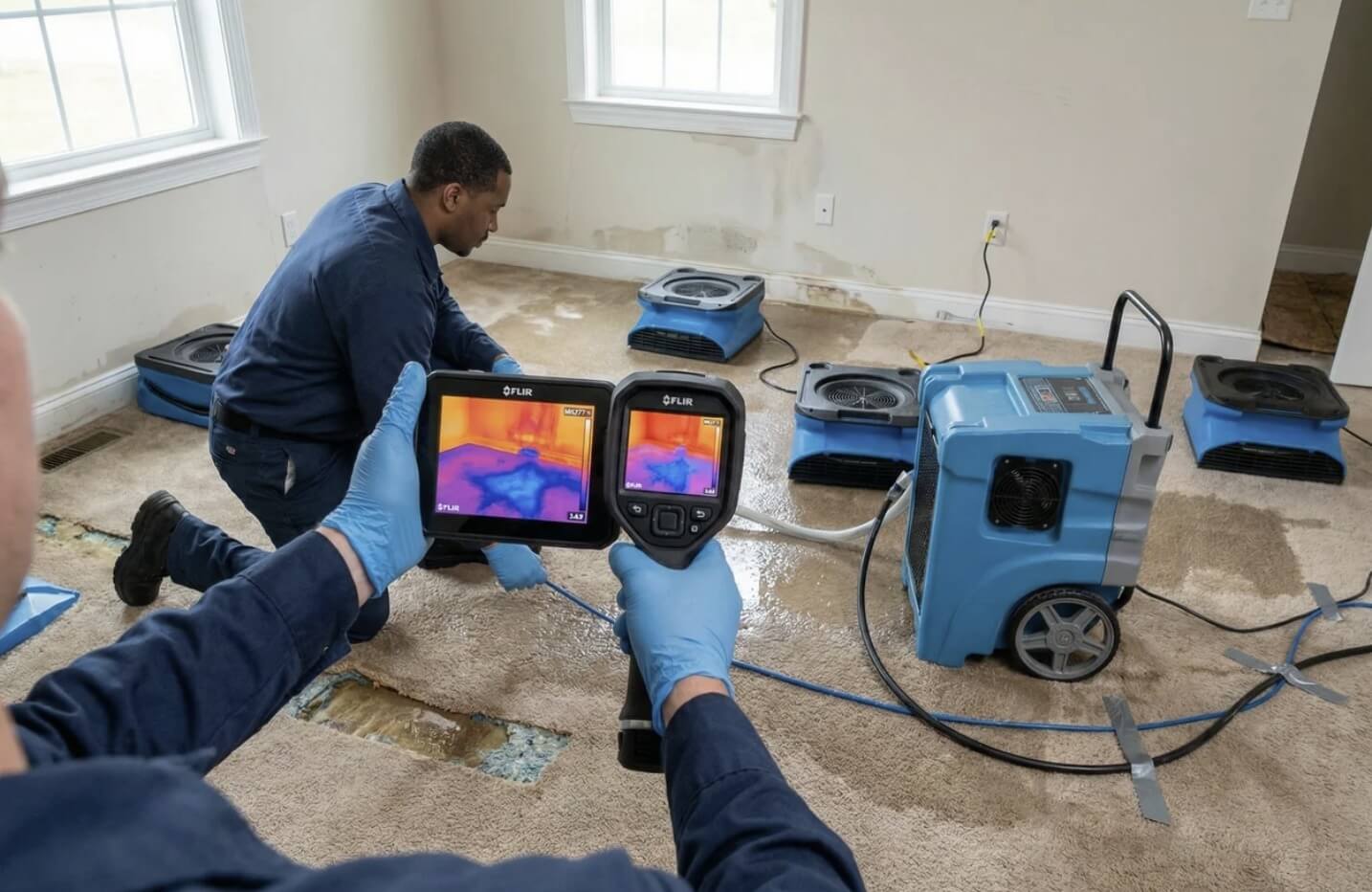
A water damaged wall will typically present itself through brown or copper-toned rings that spread outward from a central point. These stains mean moisture has travelled through the gypsum core and is now pushing against the paint layer. The board beneath is already compromised.
Soft, spongy sections that give way under thumb pressure indicate the gypsum core has absorbed enough moisture to lose its rigidity. Once plasterboard reaches this stage, it no longer holds screws or nails properly. The fixings become loose, and the sheet begins pulling away from the framing.
Peeling or flaking paint that wasn’t caused by poor surface preparation is another red flag. Moisture forces the bond between paint and paper to break down, creating sheets of paint that curl away from the surface.
And then there’s the smell. That distinct, musty odour that hangs in the air even after you’ve aired out the room. That’s trapped moisture feeding microbial growth inside the wall cavity. By the time you smell it, the problem has been brewing for weeks.
Paint Bubbling on Wall Water Damage
Paint bubbling on wall water damage is one of the most common calls we get, particularly during Brisbane’s wet season. These bubbles form when moisture vapour pushes outward against the paint film, creating raised pockets that eventually burst and flake away.
Here’s what matters: the bubble itself is never the problem. It’s a symptom. The moisture creating that pressure is sitting deeper, either in the plasterboard core or inside the wall cavity. Pop the bubble and you’ll often find a damp, crumbly surface underneath that tells you the board has been wet for some time.
Small, isolated bubbles might indicate a one-off event, like an air-conditioning drip that’s since been fixed. But multiple bubbles spread across a wall or ceiling almost always point to an active and ongoing moisture source that needs addressing before any repair work begins.
Water Damage Inside Walls: Hidden Signs
Water damage inside walls is what keeps Brisbane homeowners up at night. Unlike ceiling stains or visible wall bubbling, water damage in walls can progress for months without showing itself on the painted surface.
The signs are indirect. A door that suddenly sticks in its frame could mean the timber framing has swollen from moisture absorption. Skirting boards that pull away from the wall or show darkening along the bottom edge often indicate water wicking up from a leaking shower or failed waterproofing membrane. Unexplained increases in your water bill without a visible leak suggest something is running inside a cavity.
You might also notice paint or wallpaper lifting at the seams between plasterboard sheets. This happens because moisture causes the joint compound to swell at a different rate than the board itself, creating hairline separations that widen over time.
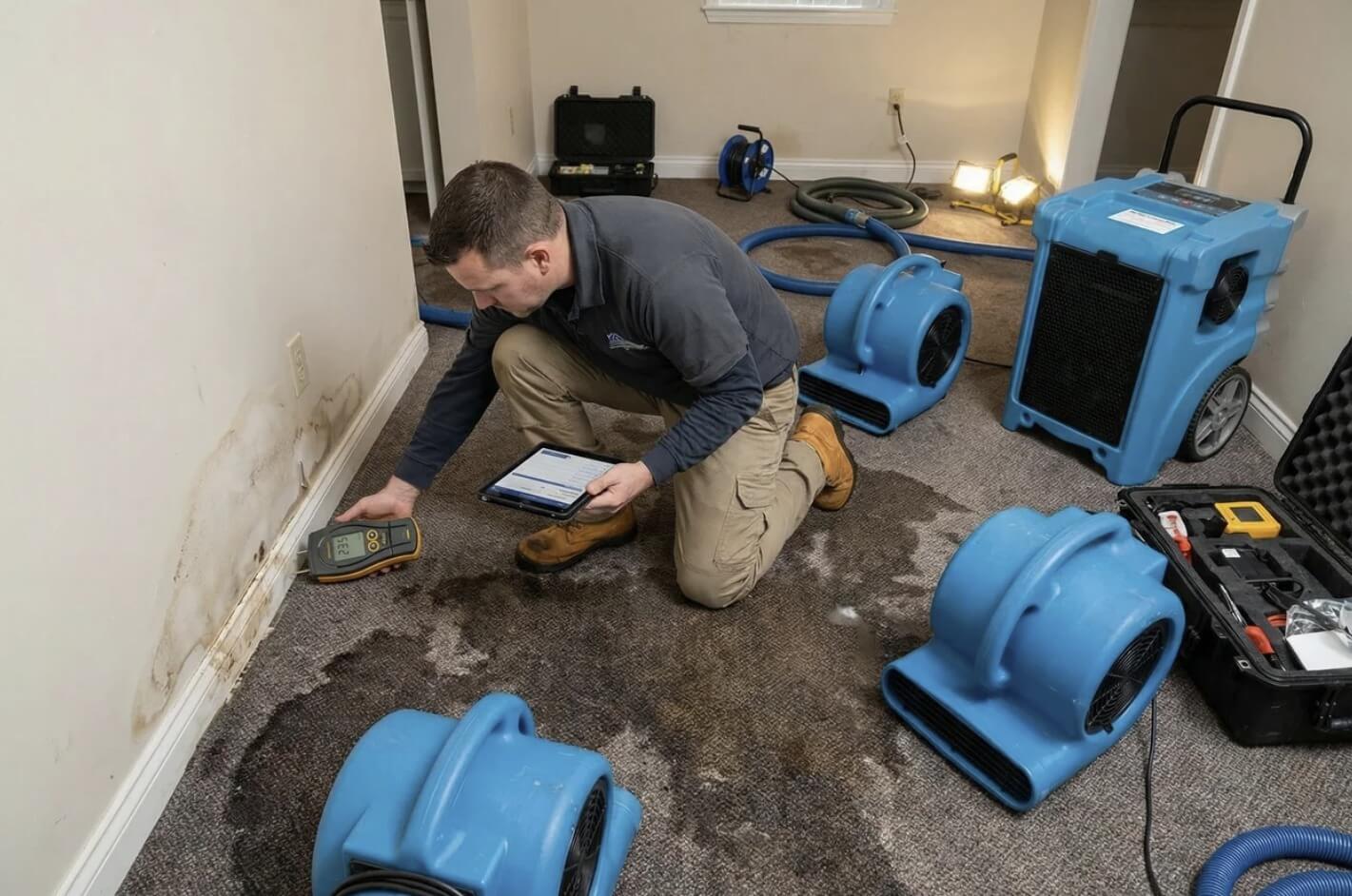
If you suspect water damage in walls but can’t see visible proof, a moisture meter is your best friend. These tools read through the surface and tell you exactly what’s happening inside the cavity. We use thermal imaging cameras to map moisture spread without cutting exploratory holes, something that saves Brisbane homeowners thousands in unnecessary demolition.
Can Gyprock Get Wet? Understanding Plasterboard and Water
The short answer: yes, Gyprock can get wet, but it shouldn’t.
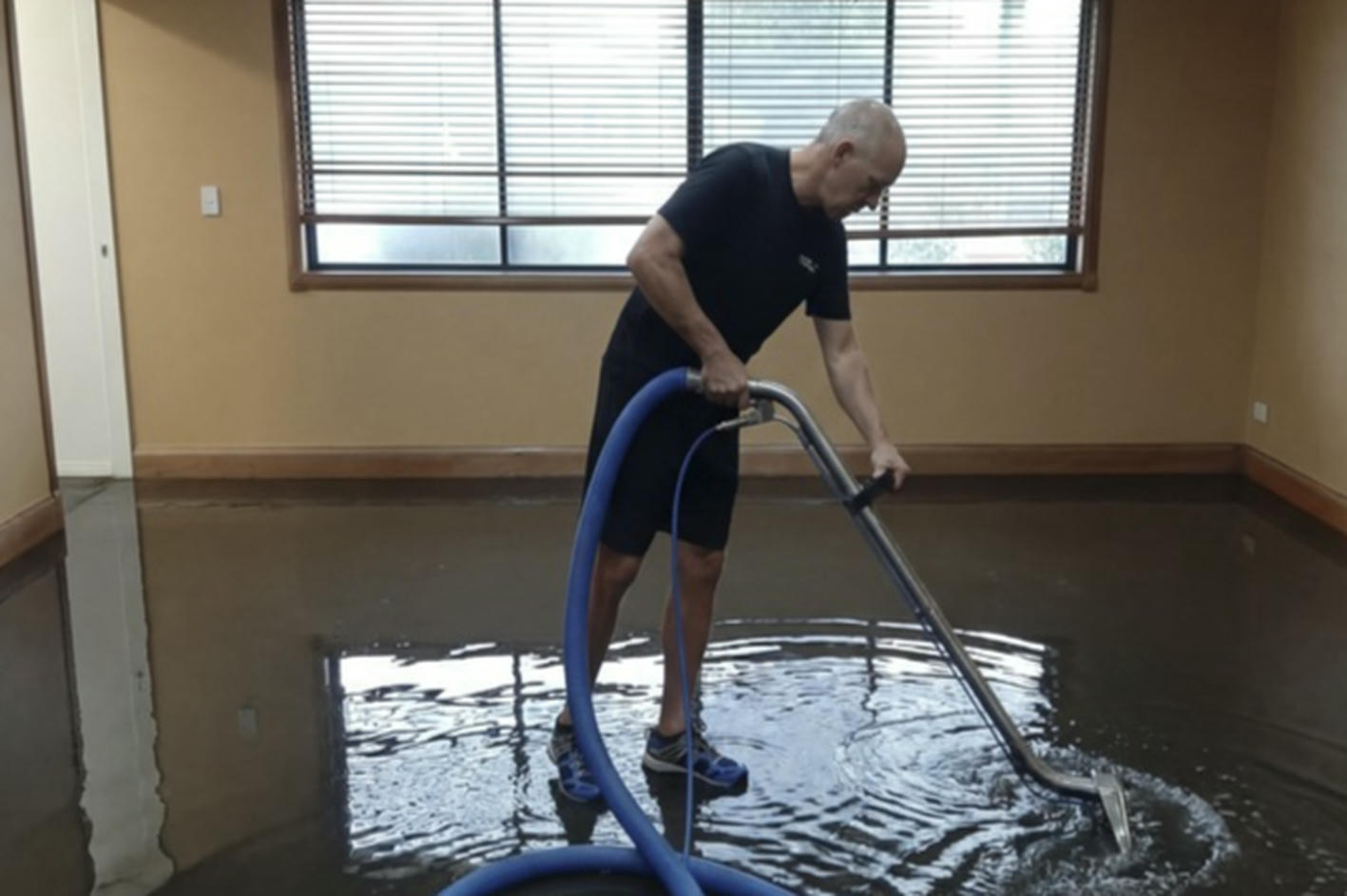
Plasterboard is fundamentally gypsum powder pressed between two layers of paper. Both components love water. The paper facing acts as a wick, drawing moisture into the gypsum core, which then expands, softens, and eventually crumbles. It’s not designed to handle saturation the way solid plaster or cement sheeting can.
We get asked “can Gyprock get wet” most often after roof leaks or burst flexi-hoses, and the answer always comes with a caveat. A light surface splash that dries within hours won’t destroy the board. But sustained moisture exposure, even from high humidity condensing inside a poorly ventilated wall cavity, will degrade plasterboard over time.
The Australian Gypsum Board Manufacturers Association sets clear standards for water exposure. Standard plasterboard is not rated for wet areas. Water-resistant plasterboard (often green-faced) handles moisture better but still isn’t waterproof. Only cement-based sheeting is truly suitable for areas subject to direct water contact.
Water Damaged Plaster vs. Plasterboard
Water damaged plaster and water damaged plasterboard behave differently, which matters if you live in an older Brisbane home with solid plaster walls.
Traditional solid plaster, a mix of sand, cement, and lime applied over brick or lath, tolerates water exposure far better than modern plasterboard. Solid plaster can often be dried out, treated for mould, and resurfaced without full replacement. The material is breathable, so moisture can escape rather than becoming trapped.
Plasterboard, by contrast, is a sealed system. Once water penetrates the paper face, it’s trapped between the vapour barrier of the paint and whatever is behind the wall. This creates the perfect conditions for mould, structural degradation, and paper delamination.
If you’ve got water damaged plaster in an older home, the repair path is generally more forgiving. But if you’re dealing with modern water damaged plasterboard, the clock is ticking from the moment it gets wet.
How to Repair Water Damaged Plasterboard
How to repair water damaged plasterboard depends entirely on the extent of the saturation. We’re going to walk through minor DIY-grade fixes and then tackle ceiling repairs separately, because gravity makes above-head work a completely different beast.
Before any repair begins, this step is non-negotiable: find and fix the water source. Every patch job will fail within weeks if moisture is still entering the cavity. That means checking roof flashing, plumbing connections, shower seals, and drainage paths. No exceptions.
DIY Fixes for Minor Water Damage
If you’re researching how to fix water damaged plasterboard and the damage is genuinely minor, think a small stain from a one-off overflow or a condensation drip that’s been resolved, here’s the process.
First, let the board dry completely. Use fans, open windows, and dehumidifiers. Don’t rush this step. Plasterboard that feels dry on the surface can still hold moisture in the core.
Once dry, assess the structural integrity. Press firmly around the affected area. If the board feels solid and doesn’t crumble, you can proceed with a surface repair. Scrape away all loose and bubbling paint. Apply an oil-based stain-blocking primer. This is critical because water-based primers won’t stop the stain from bleeding through. Use a shellac or oil-based sealer specifically designed for water stains.
After the primer cures, fill any small gouges with joint compound, sand smooth when dry, and apply your finish coat. This approach works for cosmetic damage where the gypsum core remains intact.
How to Repair Water Damaged Plasterboard Ceiling
Ceiling repairs demand more caution. A water damaged plasterboard ceiling has gravity working against it, and a failed repair means someone gets hurt.
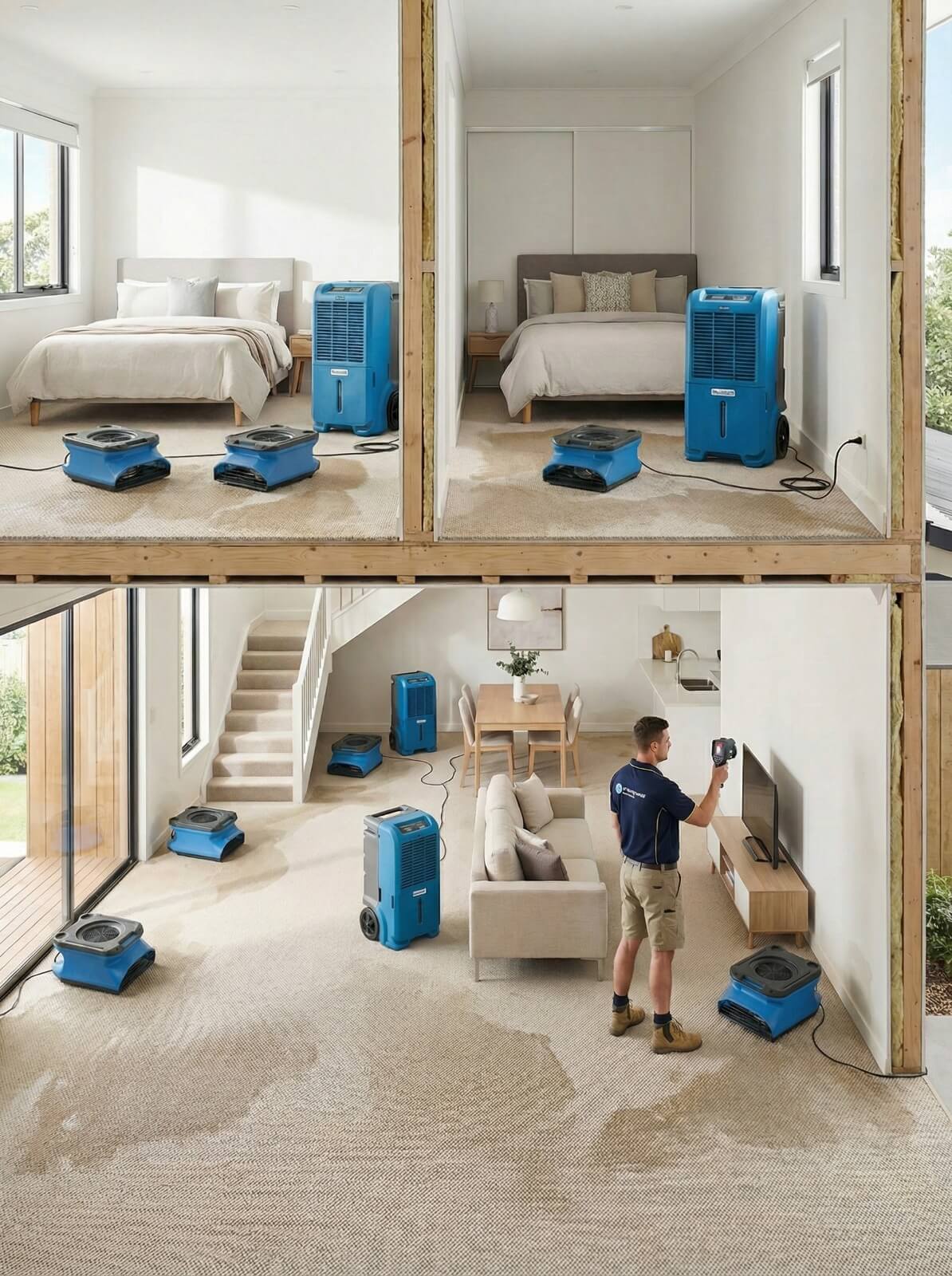
When homeowners ask how to repair water damaged plasterboard ceiling sections, we start with the sag test. Stand on a ladder and gently push upward on the stained area. Any movement, deflection, or cracking sounds mean the board has lost its structural bond to the joists and needs replacement, not repair.
For minor ceiling stains without sagging, the repair process mirrors wall work: dry thoroughly, seal with stain blocker, patch, sand, and paint. But watch for these danger signs: nail pops appearing around the stain, visible bowing between joists, or cracks running along the joint lines. Any of these indicate the board is moving and the problem is bigger than a cosmetic fix.
Ceiling repairs also need to account for insulation. Wet ceiling insulation sitting above the plasterboard must be removed and replaced. Leaving damp insulation in place guarantees ongoing moisture problems and potential mould growth in the roof cavity.
Water Damaged Plasterboard: Repair or Replace?
This is the question that drives every Brisbane homeowner to Google at 2am. Water damaged plasterboard repair or replace decisions come down to three factors: extent of saturation, presence of mould, and structural integrity of the remaining board.
When Repair Is Enough
You can repair water damaged plasterboard when the affected area is small (smaller than a dinner plate), the board has dried fully without crumbling, there’s zero mould present, and the paper facing hasn’t separated from the gypsum core.
Repairs work for isolated incidents: a single storm entry point that was sealed quickly, a minor air-conditioner condensate drip that’s been fixed, or a splash zone behind a vanity that didn’t penetrate deeply.
A proper repair involves scraping back the damaged surface, applying a stain-blocking sealer, patching with compound, and refinishing. The key is that the underlying plasterboard remains sound enough to hold fasteners and support the patch.
When Replacement Is Necessary
Replacement becomes necessary when the board has lost its structural integrity. If the gypsum core crumbles when you press it, the sheet cannot be saved. If mould is visible on the surface or the paper facing has delaminated, you’re looking at replacement.
Large saturated areas, anything bigger than a square metre, almost always require cutting out and replacing the affected sheets. Soaked plasterboard loses its load-bearing capacity, and ceilings can drop without warning when the board finally gives way.
Warped or visibly bowed sections mean the board has permanently deformed. Even if it dries, it won’t sit flat against the framing, and your finished wall will show waves and bumps no amount of compound can hide.
Replacement involves cutting back to the nearest stud or joist, removing all compromised material, checking and drying the cavity, then installing new plasterboard, taping, setting, and finishing. It’s more work upfront but delivers a permanent solution that won’t fail six months later.
When to Call a Professional
Some jobs sit firmly in the DIY column. Extensive water damaged plasterboard is rarely one of them.

Call in professionals when the damage covers more than a small isolated patch, when ceilings are involved, when mould is present, or when the moisture source hasn’t been fully identified and resolved. We regularly see Brisbane homes where a homeowner’s well-intentioned patch job has trapped moisture inside a cavity, creating a much larger problem than the original leak.
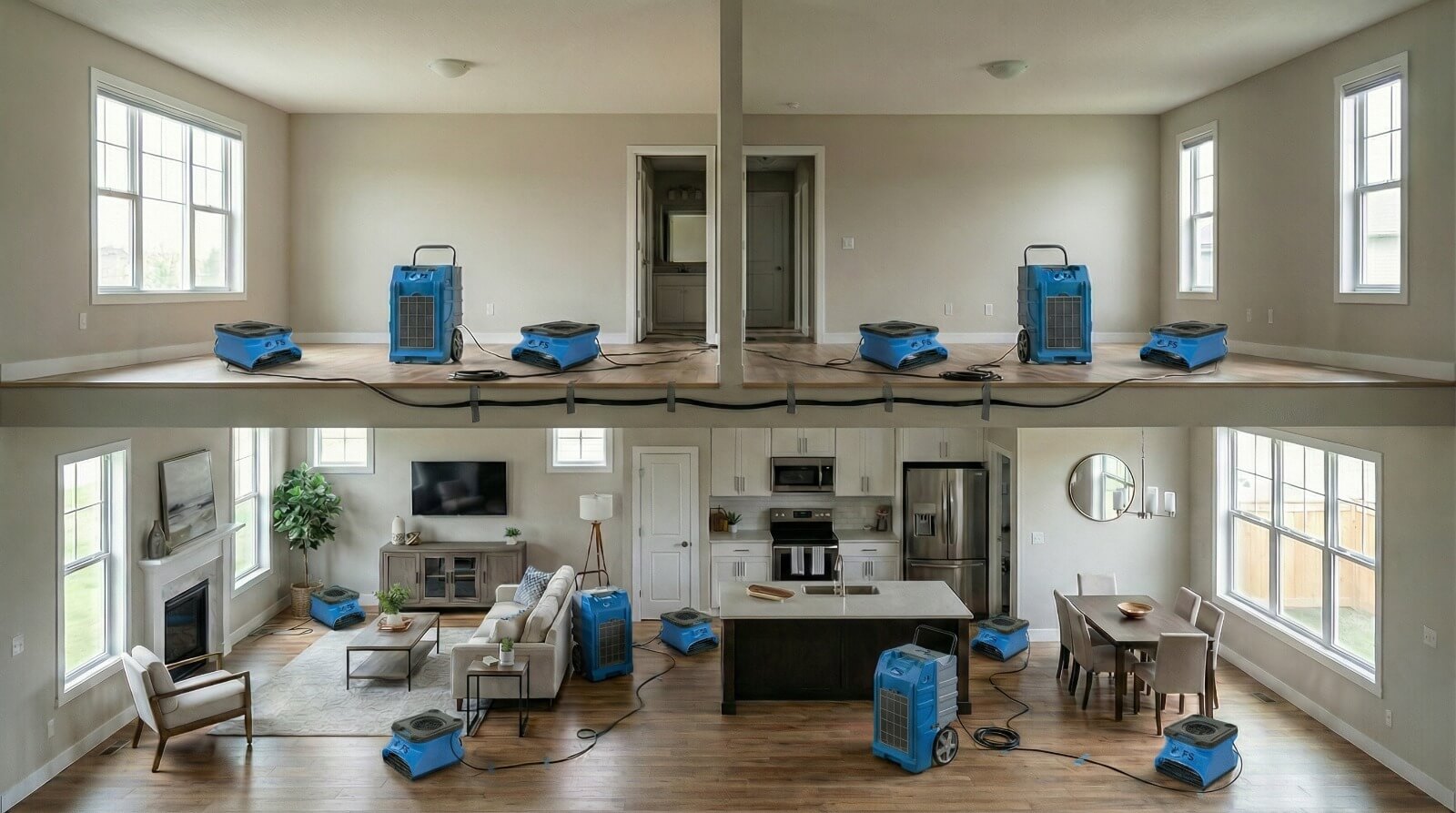
Professional restoration brings equipment most homeowners don’t have: industrial dehumidifiers, thermal imaging cameras, moisture mapping tools, and the experience to know what’s salvageable and what needs to go. We offer structural drying services that can sometimes save plasterboard that appears beyond hope, along with mould remediation for situations where moisture has triggered fungal growth inside wall cavities. Our full water damage restoration process ensures the job is done correctly from source to finish.
Electrical safety is another factor. Water and wiring don’t mix, and a saturated ceiling around downlights or ceiling fans creates risks that require a licensed electrician alongside your plasterboard repair team.
Frequently Asked Questions
How long does plasterboard take to dry after water damage?
Under ideal conditions with professional drying equipment, 3 to 5 days. Without forced air and dehumidification, it can take weeks. In humid Brisbane conditions, plasterboard left to dry naturally often never fully releases its moisture, which is why professional drying makes a significant difference.
Can water damaged plasterboard cause mould?
Yes, and it happens quickly. Mould spores need moisture, organic material (the paper facing), and warmth. Plasterboard provides all three. Visible mould can appear within 48 to 72 hours of saturation, and hidden mould inside the cavity can spread extensively before you notice any signs.
Does insurance cover water damaged plasterboard?
Most Australian home insurance policies cover sudden and accidental water damage: burst pipes, storm entry, appliance overflow. Gradual damage from slow leaks or poor maintenance is typically excluded. Check your policy wording and document everything with photos before beginning any repair work. We can help with insurance assessment reports.
How much does plasterboard repair cost?
Costs vary significantly based on the extent of damage. Minor patch repairs start from a few hundred dollars. Full sheet replacement including finishing and painting runs higher. Ceiling work, mould remediation, and structural drying add to the scope. The most expensive repair is the one done twice because the moisture source wasn’t fixed the first time.