How Long Does Mould Take to Grow After Water Damage?
Mould Remediation 19 August 2026 | Flood Services Brisbane
Mould remediation Brisbane homeowners need is often urgent. After a flood, burst pipe, or roof leak, the clock starts immediately. In Brisbane’s warm, humid climate, you have a much smaller window to act than homeowners in drier states. This guide covers exactly how fast mould grows, what to look for, and when to call a professional.
The 24–48 Hour Mould Window in Brisbane’s Climate
Mould does not need much to get started: moisture, an organic surface, still air, and warmth. Brisbane provides three of those conditions year-round. Add floodwater or a burst pipe and the fourth condition — moisture — arrives too.
Most water damage restoration guidelines cite 24 to 48 hours as the critical window. In Brisbane’s subtropical climate, with relative humidity regularly sitting above 70%, that window can be shorter. Materials like plasterboard and carpet underlay absorb moisture rapidly and create perfect mould conditions before they even feel damp to the touch.
24h
When mould spores begin to germinate
48h
When visible mould colonies appear
72h+
When structural risk begins
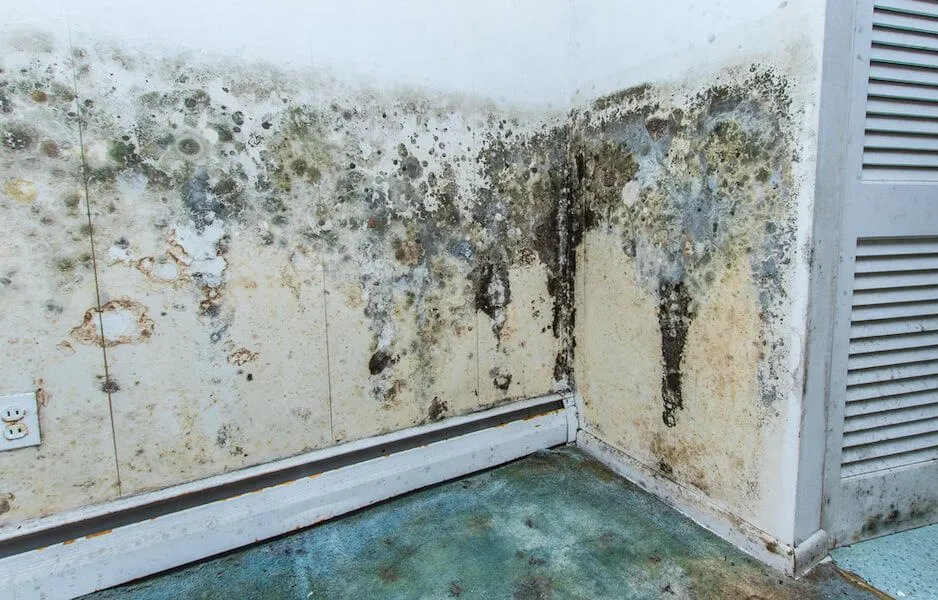
Visible mould growth on a water-damaged wall — Brisbane’s subtropical humidity accelerates the process significantly.
Mould Growth Timeline: Hour by Hour
0–24 hrs
0–24 Hours: Still Salvageable
In the first 24 hours, mould spores are present on wet surfaces but have not yet germinated. Wet materials can still be extracted, dried, and saved. This is the most important window to act. Professional water extraction and structural drying started within this period significantly reduce mould risk.
24–48 hrs
24–48 Hours: Mould Begins
Spores begin to germinate and form colonies on porous surfaces. Plasterboard, timber framing, carpet underlay, and soft furnishings are the first materials affected. You may not see anything yet, but growth is underway. A musty odour often appears before any visible sign.
48–72 hrs
48–72 Hours: Structural Risk Increases
Mould colonies are now visible and expanding. Timber framing begins to degrade. In Queenslander homes with timber subfloors, the risk of rot and structural compromise rises quickly. Professional mould remediation becomes necessary. Materials that could have been dried and saved at 24 hours may now require removal.
72h+
72 Hours and Beyond: Significant Damage
Mould has penetrated porous building materials. Air quality is compromised. Spores become airborne and spread to unaffected areas. At this stage, professional mould remediation Brisbane specialists use containment protocols to prevent cross-contamination during removal.
Not all mould is equal. The species that establish in flood-damaged homes carry different health risks and respond to different treatment protocols. Here is what Brisbane specialists commonly find after a water event.
Mould Type
Common Location
Colour
Health Risk
Aspergillus
Walls, HVAC ducts, insulation
Green, grey, white
Moderate respiratory irritation
Cladosporium
Carpet, fabric, timber
Olive-green, brown
Low–Moderate allergies
Stachybotrys (Black Mould)
Plasterboard, subfloor
Black, dark green
High mycotoxins, serious illness
Penicillium
Under carpet, inside walls
Blue, blue-green
Moderate spore-triggered allergies
Chaetomium
Wet drywall, timber framing
White then grey/brown
Moderate musty odour, respiratory
In Brisbane’s climate, black mould removal Brisbane specialists frequently encounter Stachybotrys in homes that have experienced flooding or long-term water ingress. This species requires prolonged moisture to establish and is a reliable indicator that water damage has been present for more than 72 hours. If you notice signs of water damage in your walls or floors, read our guide on signs of hidden water damage before assuming the area is dry.
Signs Mould Has Already Started Growing
✓ A musty, earthy smell that intensifies in enclosed spaces (wardrobes, under-stair storage)
✓ Visible black, green, or white spots on walls, ceilings, or skirting boards
✓ Discolouration along grout lines, window frames, or wall-to-floor junctions
✓ Paint or wallpaper bubbling away from the surface in areas that got wet
✓ Persistent coughing, sneezing, or eye irritation that improves when you leave the house
✓ A white powdery residue on brick or concrete surfaces (efflorescence from moisture migration)
✓ Dark staining on the underside of carpet or at the edges of flooring
⚠ Warning
If you can smell mould but cannot see it, growth is likely inside a wall cavity, under flooring, or in the roof space. At this stage, professional mould remediation Brisbane services are essential. DIY cleaning of visible surfaces will not reach the source.
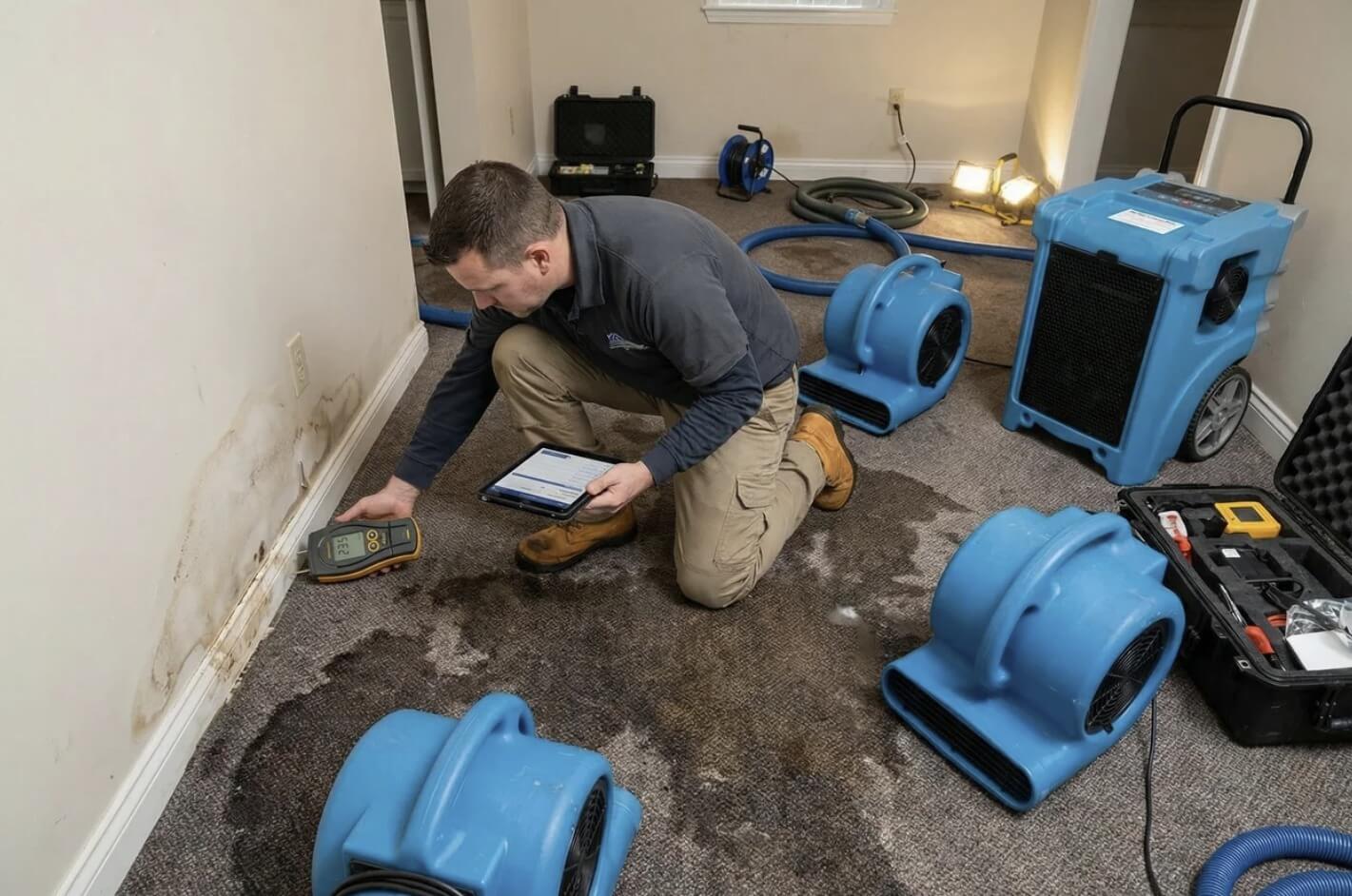
Professional moisture mapping detects hidden mould risk before visible growth appears.
Professional Mould Remediation: What the Process Involves
When you engage Flood Services Brisbane for mould remediation, a certified technician follows a structured, six-step protocol designed to remove mould safely and prevent recurrence.
1
Assessment
Thermal imaging cameras and calibrated moisture meters map the full extent of moisture. Visible and hidden mould is identified. Affected areas are marked for treatment or removal.
2
Containment
Negative air pressure and physical barriers isolate the affected zone. This prevents mould spores from spreading to unaffected rooms during removal.
3
Removal
Non-salvageable materials (plasterboard, carpet, underlay) are removed and bagged on-site. Structural elements are treated with antimicrobial solutions.
4
Drying
Industrial dehumidifiers and air movers dry the structure to below 16% moisture content. Moisture levels are confirmed with calibrated equipment before any reinstatement work begins.
5
Air Purification
HEPA-filtered air scrubbers remove airborne spores. Air quality testing confirms the space meets safe occupancy standards. Learn more about our air purification services.
6
Clearance
Final moisture and air quality readings are documented for insurance purposes. A clearance report is issued confirming the property meets safe occupancy standards.
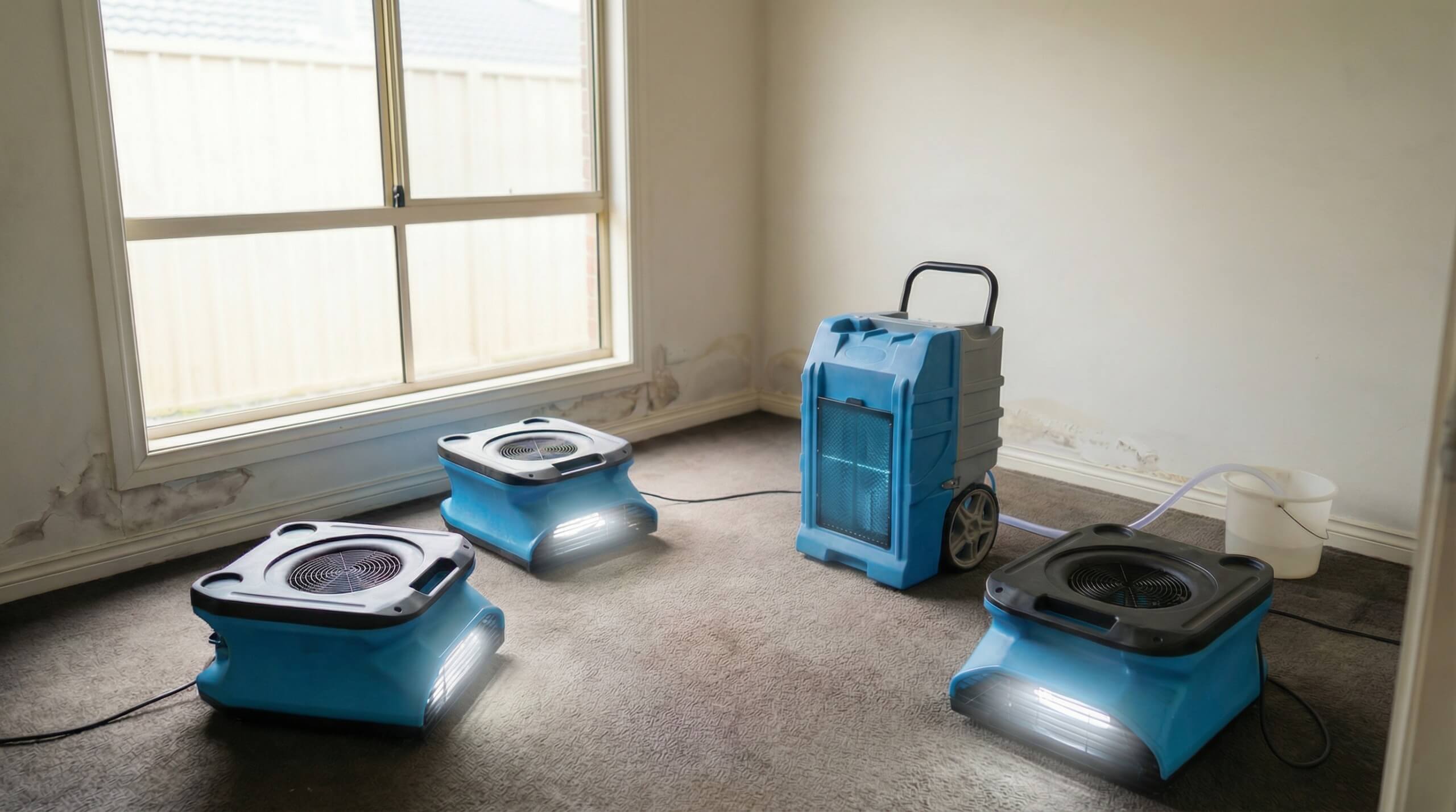
Industrial dehumidifiers dry structural materials to safe moisture levels as part of professional mould remediation.
Mould Remediation Cost in Brisbane (2026)
Mould removal after flooding Brisbane costs vary significantly based on the extent of growth, the materials affected, and how early the problem is treated. Acting within 24 hours can reduce costs by 60% or more.
Scope
Estimated Cost (AUD)
Typical Timeline
Small surface area (<2 sqm), single room
$400 – $900
1 day
Medium growth (2–10 sqm), multiple surfaces
$900 – $3,000
1–3 days
Large area (>10 sqm), cavity or subfloor involvement
$3,000 – $8,000+
3–7 days
Whole-home or severe black mould removal Brisbane
$8,000 – $20,000+
7–14 days
Insurance may cover mould remediation when it results directly from an insured water event. Flood Services Brisbane assists with insurance documentation and liaises with assessors to support your claim. Read more on whether home insurance covers water damage in Australia.
DIY Mould Removal vs Professional Mould Remediation Brisbane
Aspect
DIY
Professional
Surface mould (<1 sqm)
May be effective with correct PPE and antifungal products
Recommended for thoroughness
Inside wall cavities
Not possible without opening walls
Thermal imaging + targeted removal
Black mould
Not recommended — health risk
Full containment protocol required
Insurance documentation
No
Full clearance report provided
Air quality confirmation
No
HEPA filtration + post-clearance testing
If the affected area is larger than a dinner plate, inside a wall or ceiling, or if you have any respiratory conditions, do not attempt DIY removal. Professional mould remediation Brisbane services are the only reliable path to a safe, confirmed outcome.
How quickly can mould grow after water damage in Brisbane?
Mould spores can begin germinating within 24 hours of water damage. In Brisbane’s subtropical climate, with humidity often exceeding 70%, this window can be shorter. Visible mould colonies typically appear between 24 and 48 hours. By 72 hours, mould has often penetrated porous materials and structural risk begins.
Is it safe to stay in a home with mould after flooding?
This depends on the type and extent of mould. Small surface areas of low-risk species may not require evacuation, but any confirmed or suspected black mould (Stachybotrys) presence, or large-scale mould growth, poses serious health risks. Symptoms include persistent respiratory irritation, headaches, and eye irritation. If in doubt, vacate and call a professional for assessment.
Can I remove mould myself after a flood?
DIY mould removal is only appropriate for very small surface areas (under 1 sqm) of non-black mould on non-porous surfaces. For anything inside a wall cavity, under flooring, on plasterboard, or involving black mould — professional remediation is required. Consumer-grade products do not achieve full decontamination, and disturbing mould without containment spreads spores to unaffected areas.
Does home insurance cover mould removal after flooding in Queensland?
Insurance coverage depends on your specific policy and the cause of the damage. Mould resulting directly from an insured water event (such as a burst pipe or storm flooding) is often covered under home insurance. Mould caused by long-term neglect or gradual water ingress is typically excluded. Flood Services Brisbane provides the clearance reports and documentation Australian insurers require to process mould-related claims.
How long does professional mould remediation take in Brisbane?
Timeframes depend on the extent of mould. A small single-room treatment typically takes 1 day. Medium growth affecting multiple surfaces takes 1–3 days. Whole-home or subfloor mould events can take 7–14 days. Brisbane’s humidity means drying times are longer than in drier states, which is factored into every remediation plan.
What is the difference between mould remediation and mould removal?
Mould removal refers to physically cleaning or wiping visible mould. Mould remediation is a comprehensive process that includes assessment, containment, removal of affected materials, antimicrobial treatment, structural drying, air purification, and final clearance testing. Remediation addresses the root moisture cause and confirms safe air quality — removal alone does not.
Why does Brisbane have a bigger mould problem than other Australian cities?
Brisbane’s subtropical climate means relative humidity regularly exceeds 70% — year round, not just during La Nina events. Mould spores are always present in the air; they only need a wet surface to germinate. Drier cities like Perth or Adelaide give you more time after a water event. In Brisbane, the 24-hour window is the real threshold, and acting fast is the single biggest factor in limiting damage.