What to Do After a Burst Pipe: Water Damage & Emergency Steps
A burst pipe is one of the few household disasters where seconds genuinely matter. A half-inch pipe can dump over 200 litres into your home in under ten minutes. Ceilings sag. Floorboards swell. Everything you do not act on in the first five minutes becomes more expensive in the five hours that follow.
Is a Burst Pipe an Emergency?
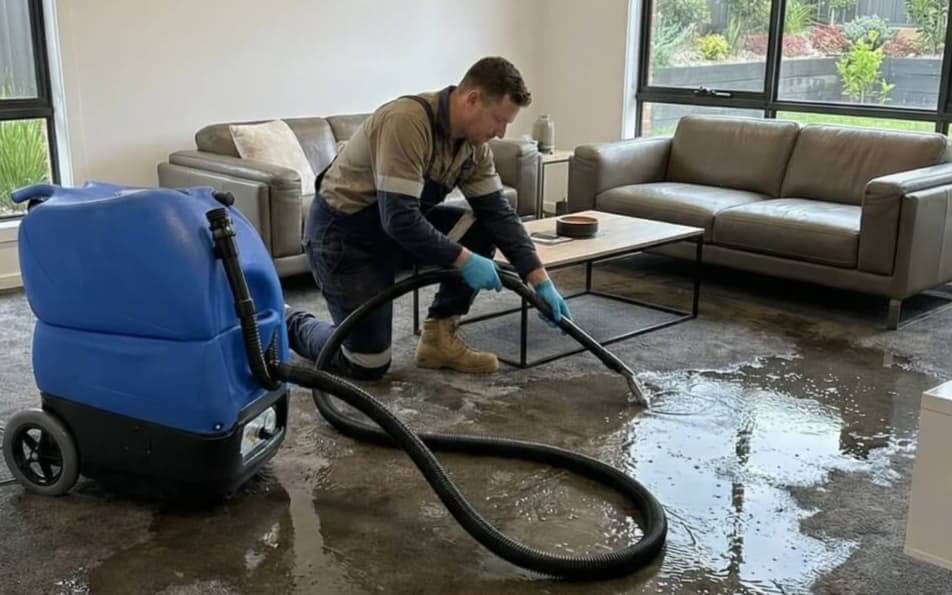
Yes. A burst pipe is an emergency. Not a “call the plumber tomorrow” situation. Water spreads, seeps, and saturates. Every minute the water runs, the repair bill climbs.
A pinhole leak under a bathroom vanity might lose a few litres a day. That is a scheduled plumber visit. A burst pipe releases water under full mains pressure. That demands an emergency plumber now. Unsure which you have? Shut the water off first, then assess.
Signs a Pipe Has Burst
Not every burst announces itself with a geyser. Many happen inside walls, under floors, or underground.
Damp or discoloured patches on walls, ceilings, or floors. Surface damp from a steamy bathroom dries when you ventilate. Active water ingress from a burst pipe stays wet, spreads, and worsens. If a patch keeps returning, you have a leak, not condensation.
Warped or bubbling paint, wallpaper, or plasterboard. Gyprock loses strength when wet. Paint blisters. Wallpaper lifts. Skirting boards swell and separate.
A persistent hissing or rushing sound behind walls when no taps are running. Turn off every appliance and listen.
A sudden, unexplained spike in your water bill. Compare your current bill to the same period last year.
The water meter test. Turn off all taps and appliances. Locate your water meter, usually at the front boundary in a concrete or plastic box. Note the reading. Wait 15 minutes. Check again. If the numbers moved, water is escaping somewhere on your property.
Shut Off the Water
Find your water meter at the front of your property, near the boundary, set into the ground. Lift the lid. Turn the valve clockwise until it stops. That cuts water to your entire property.
In an apartment, your shut-off valve might be in a utility cupboard or inside the unit near the hot water system. Know its location before you need it. Test the valve every six months. Unused valves seize.
Turn Off Electricity in Affected Areas
If water has reached power points or switches, turn off those circuits at the switchboard. Never wade through standing water to reach a switchboard. If the board is wet or unreachable, call an electrician.
Contain the Water
Grab buckets, towels, and mops. Push furniture out of the wet zone. Roll up rugs. Lift curtains off the floor. Timber and carpet underlay wick moisture. The less they absorb now, the less gets torn out later.
Temporary Pipe Repairs (Until a Plumber Arrives)
These buy time. They are not permanent.
- Pinhole leaks: Epoxy putty from any hardware store. Knead until uniform, press over the hole, hold until set. Works on copper and PVC.
- Medium leaks: A pipe repair clamp. A rubber-lined metal sleeve that bolts tight around the pipe. Costs under $30. Keep one ready.
- Minor splits: A rubber patch secured with hose clamps or strong tape. The weakest fix. Use only to stop a slow weep until help arrives.
Document the Damage for Insurance
Photograph everything before moving or cleaning. Wide shots, close-ups, video walkthroughs. Photograph the pipe if visible. List every damaged item with brand and age. Contact your insurer immediately.
Most Australian home insurance covers escape of liquids (EOL): water that bursts or leaks from where it should be contained. Sudden, accidental bursts are covered. Gradual leaks are often excluded. Around 20% of insurers exclude gradual leaks entirely. Read your product disclosure statement.
Burst Pipe Water Damage Repair: What’s Involved
Two phases: plumbing repair and property restoration. The plumber fixes the pipe. The restorer stops mould, rot, and structural deterioration.
Pipe Burst in Wall: Hidden Water Damage
Water inside a wall cavity travels downward, pooling at bottom plates and seeping into adjoining rooms. Surface damage is rarely the full picture.
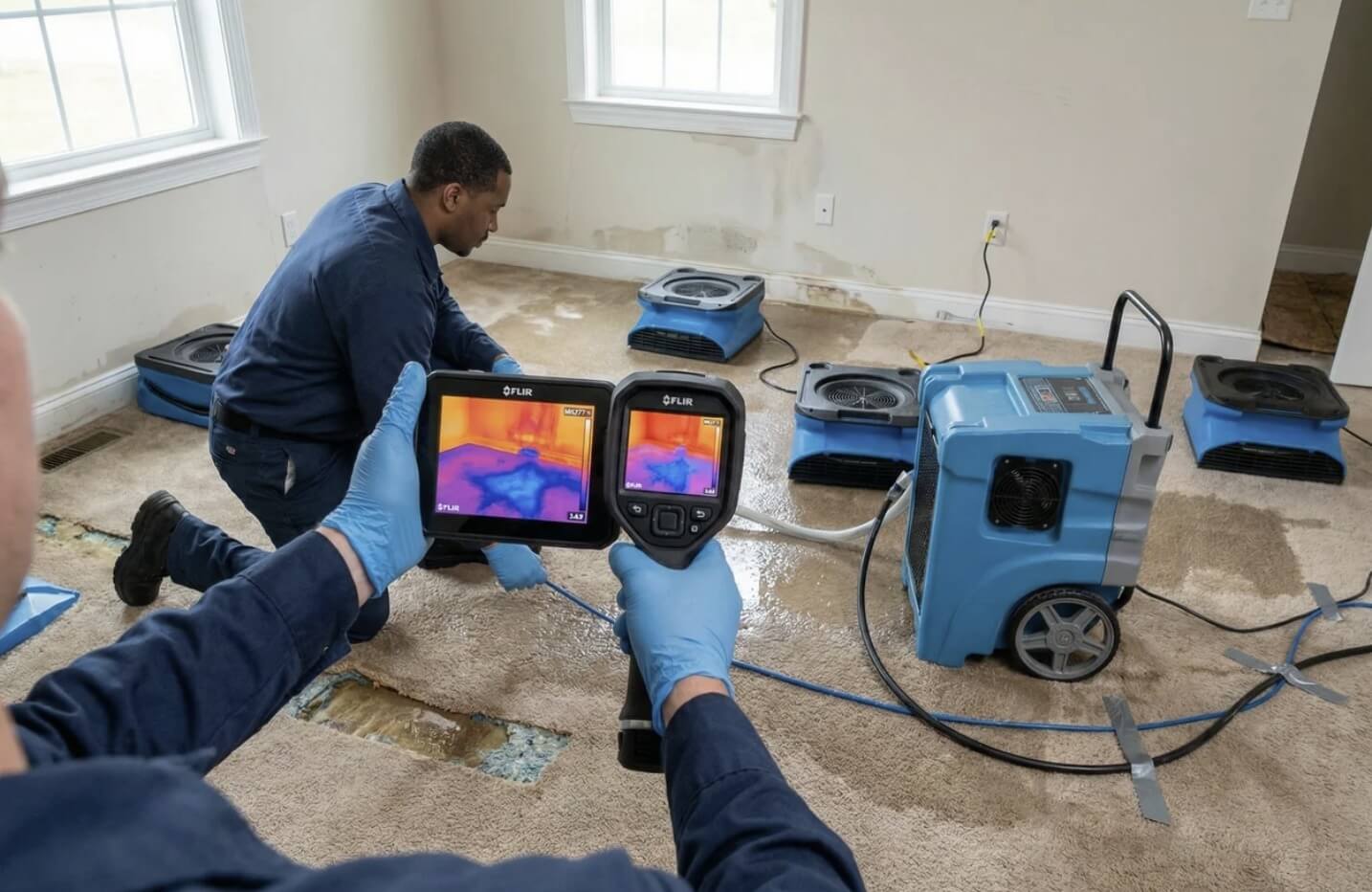
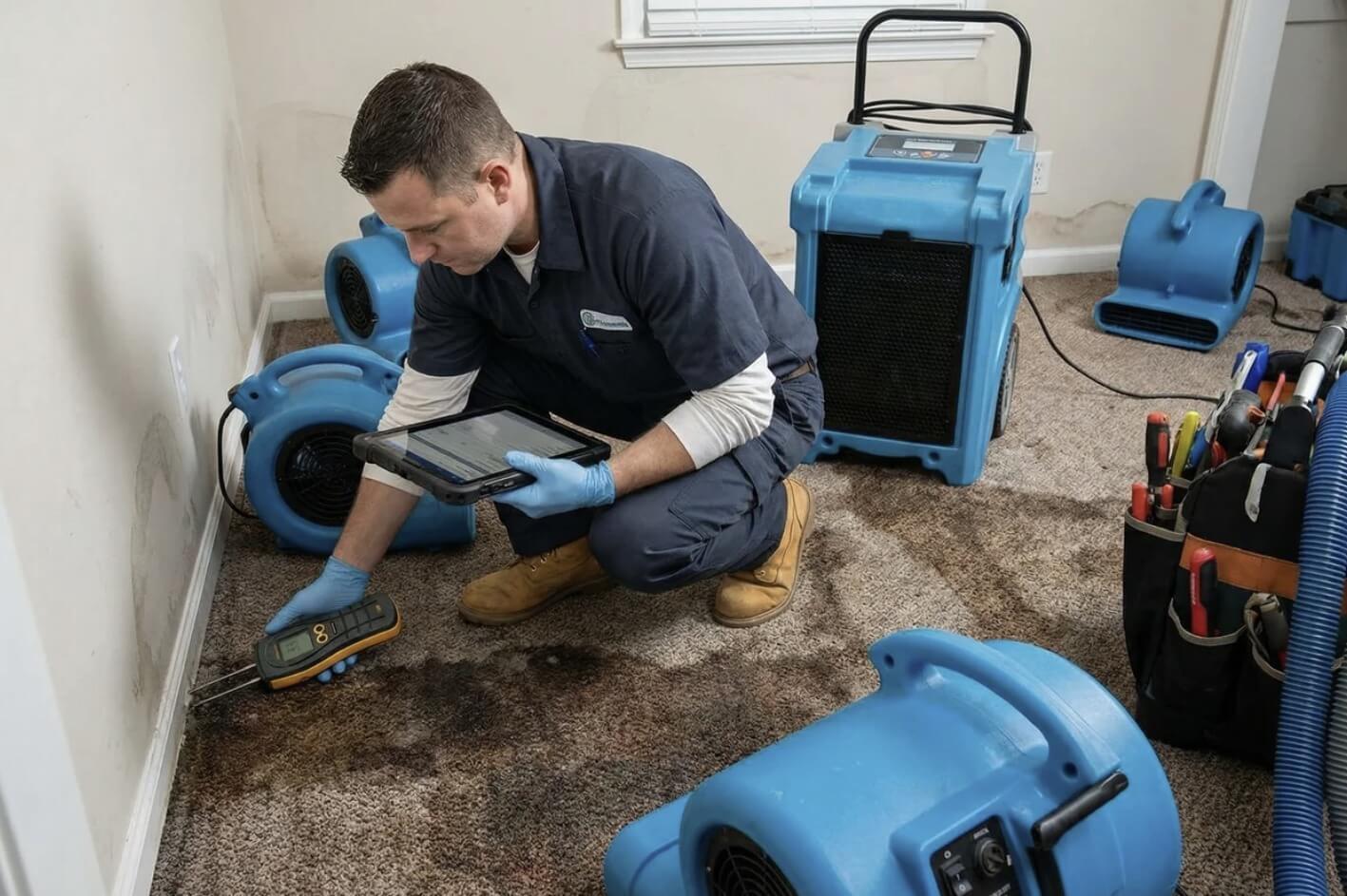
Professionals locate hidden leaks with infrared cameras (temperature differences), moisture meters (actual water content inside materials), and acoustic detectors (amplified sound of escaping water). A plumber opens the wall at the leak point, replaces the failed section, and pressure-tests before closing.
Never patch over a wall burst without confirming the cavity is dry. Trapped moisture breeds mould within 24 to 48 hours.
Leaking Pipe Under House
A subfloor leak raises humidity through the entire structure. In Queensland’s climate, trapped moisture accelerates timber decay, attracts termites, and moulds floorboards. Signs include a damp smell, cupping or warped boards, and visible water in the crawl space.
The pipe fix is often quick. Drying the subfloor can take days and may require mechanical ventilation.
Burst Water Pipe Outside House
An external burst shows as a wet patch that never dries, a sinkhole, or water bubbling through soil. Shut the water off at the meter. The pipe from the meter to your house is your responsibility. The street side belongs to your water utility.
A plumber excavates, cuts out the damaged section, and replaces it. If the burst was near the house, check that water did not track toward the slab before backfilling.
Can a Burst Water Pipe Damage House Foundations?
Yes. Saturated soil loses bearing capacity. Reactive clay soils, common across Queensland and northern NSW, expand when wet and shrink when dry. A leak under or beside a slab can cause differential movement where one part of the foundation lifts or sinks relative to the rest. Walls crack. Doors jam. Tile grout separates.
Cracks wider than 5mm, diagonal cracking above doors, or noticeably sloping floors warrant a structural assessment alongside your plumbing repair. Insurance may cover foundation damage from a sudden burst. Gradual soil movement from a long-term leak is harder to claim.
What Does Burst Pipe Water Damage Cost?
- Accessible repair (exposed pipe under vanity or laundry): $200 to $500
- In-wall or under-floor repair: $400 to $1,200. Includes access cutting and pressure testing. Plaster patching is extra.
- Underground or under-slab repair: $1,200 to $4,000. Excavation, possible concrete cutting, and surface restoration.
- With full water damage restoration: $5,000 and up. Severe multi-room cases routinely exceed $15,000.
- Emergency after-hours call-out: $150 to $350 added.
Flexi-Hose Warning
Flexi-hoses, the braided stainless steel hoses under sinks and behind toilets, cause 10% of all home insurance water damage claims in Australia. Average claim: approximately $30,000. Six percent exceed $100,000.
Inspect every flexi-hose every six months. Look for fraying, rust at connections, kinking, twisting, or bulging. Replace immediately if any signs appear. Use a licensed plumber. Hoses older than 10 years should be replaced pre-emptively. A new hose costs under $30. Doing nothing averages $30,000.
When to Call a Professional for Water Damage Restoration
Plumbers fix pipes. Restorers fix what the water left behind. If water has saturated carpet, underlay, plasterboard, cabinetry, or timber flooring, household fans are not enough. Wet materials must dry to below 16% moisture content within 48 hours or mould becomes near-certain.
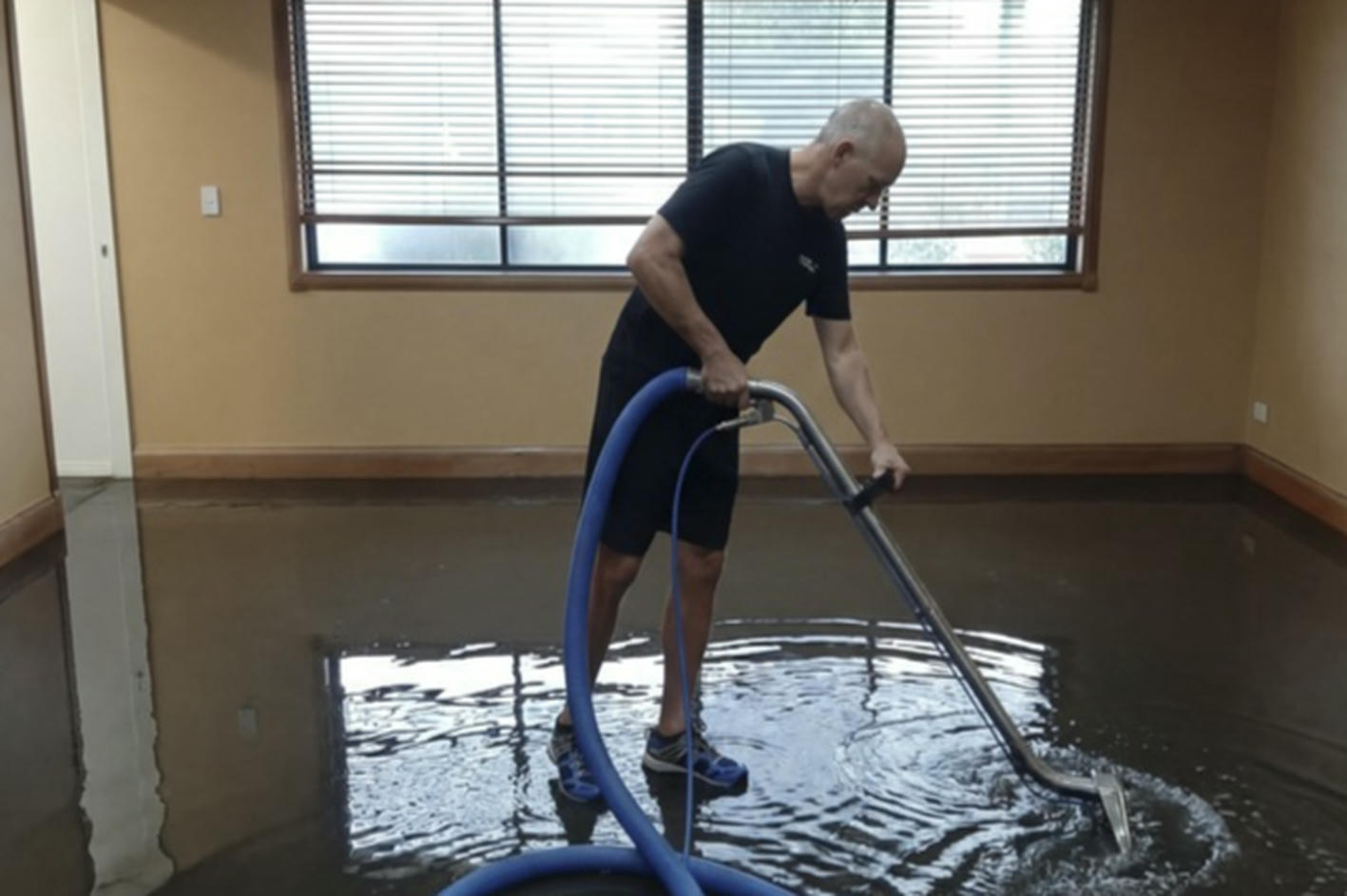
Professional restoration involves truck-mounted water extraction, industrial air movers and dehumidifiers running for two to five days, removal of unsalvageable materials, and antimicrobial treatment.
Flood Services Brisbane provides 24/7 emergency water extraction and structural drying across the Brisbane metro area. Our team starts the drying process immediately and our water damage restoration service manages the full scope from moisture mapping to clearance testing. For saturated carpet, professional carpet drying in Brisbane prevents delamination and mould. For more detail on navigating the claims process, read our guide on how home insurance covers water damage.
Frequently Asked Questions
Does insurance cover burst pipe water damage?
Most Australian policies cover sudden, accidental bursts under escape of liquids. Gradual leaks from poor maintenance are often excluded. Insurers cover the water damage, not the cost of fixing the failed pipe. Read your PDS.
How fast can you respond to a burst pipe emergency?
Flood Services Brisbane dispatches within 60 minutes across the Brisbane metro area, 24 hours a day, 7 days a week.
Can carpets be saved after a pipe bursts?
Clean water from a burst supply pipe gives the best chance if extraction starts within hours. Grey or black water usually means disposal. Carpet underlay almost always needs replacement.
How long does it take to dry out after a burst pipe?
A single room typically dries in two to three days with commercial equipment. Multiple rooms or saturated plasterboard can take five to seven days. Moisture meters confirm when materials reach safe levels. Never rely on touch alone.