Wet Vacuum for Carpet: How to Choose, Rent & Use One After Water Damage
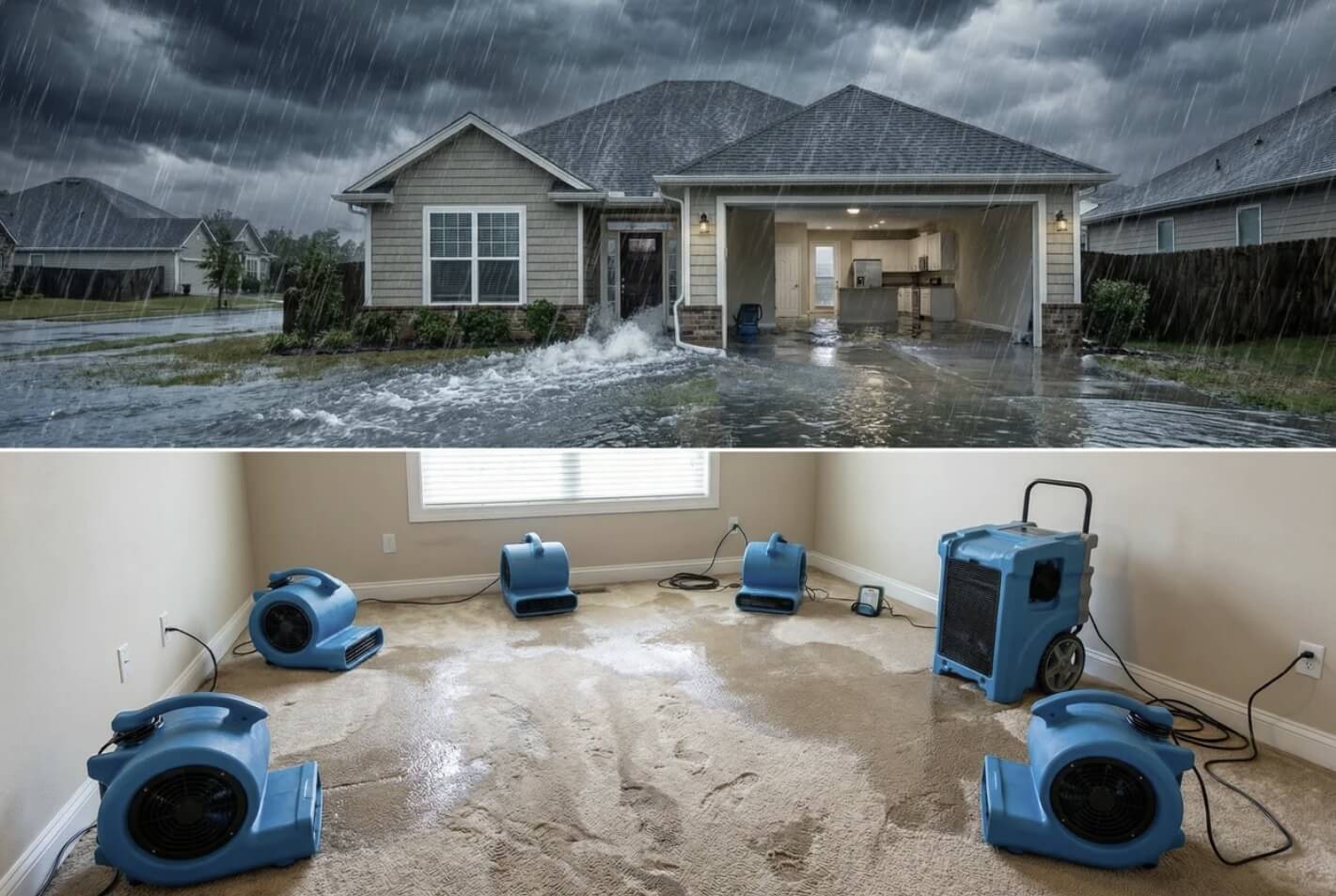
Water doesn’t wait, and neither should you. When a Brisbane storm turns your living room carpet into a sodden mess, or a burst flexi-hose floods the spare bedroom at 2 AM, the clock starts ticking immediately. Every minute that water sits in your carpet fibres pushes you closer to delamination, mould growth, and the kind of structural damage that turns an inconvenience into a five-figure remediation job.
A wet vacuum for carpet is your first line of defence. Not the sleek barrel vac sitting in your hall cupboard, not your stick vac charging by the fridge. We’re talking about a machine purpose-built to pull litres of water from saturated flooring without electrocuting you or destroying itself in the process.
This guide cuts through the noise. You’ll learn exactly what a wet vacuum does, which one suits your situation, whether renting makes more financial sense than buying, and the extraction technique that gives your carpet a fighting chance. Brisbane homes face unique moisture challenges: humidity, storm surges, and slab construction that traps water beneath flooring. Getting extraction right matters here more than most places.
Let’s get your carpet dry.
What Is a Wet Vacuum for Carpet?
A wet vacuum cleaner for carpet isn’t a gimmicky add-on or a regular vacuum with a “wet mode” sticker slapped on the box. It’s a fundamentally different machine with one job: safely extracting standing water and moisture from carpet, upholstery, and hard surfaces.
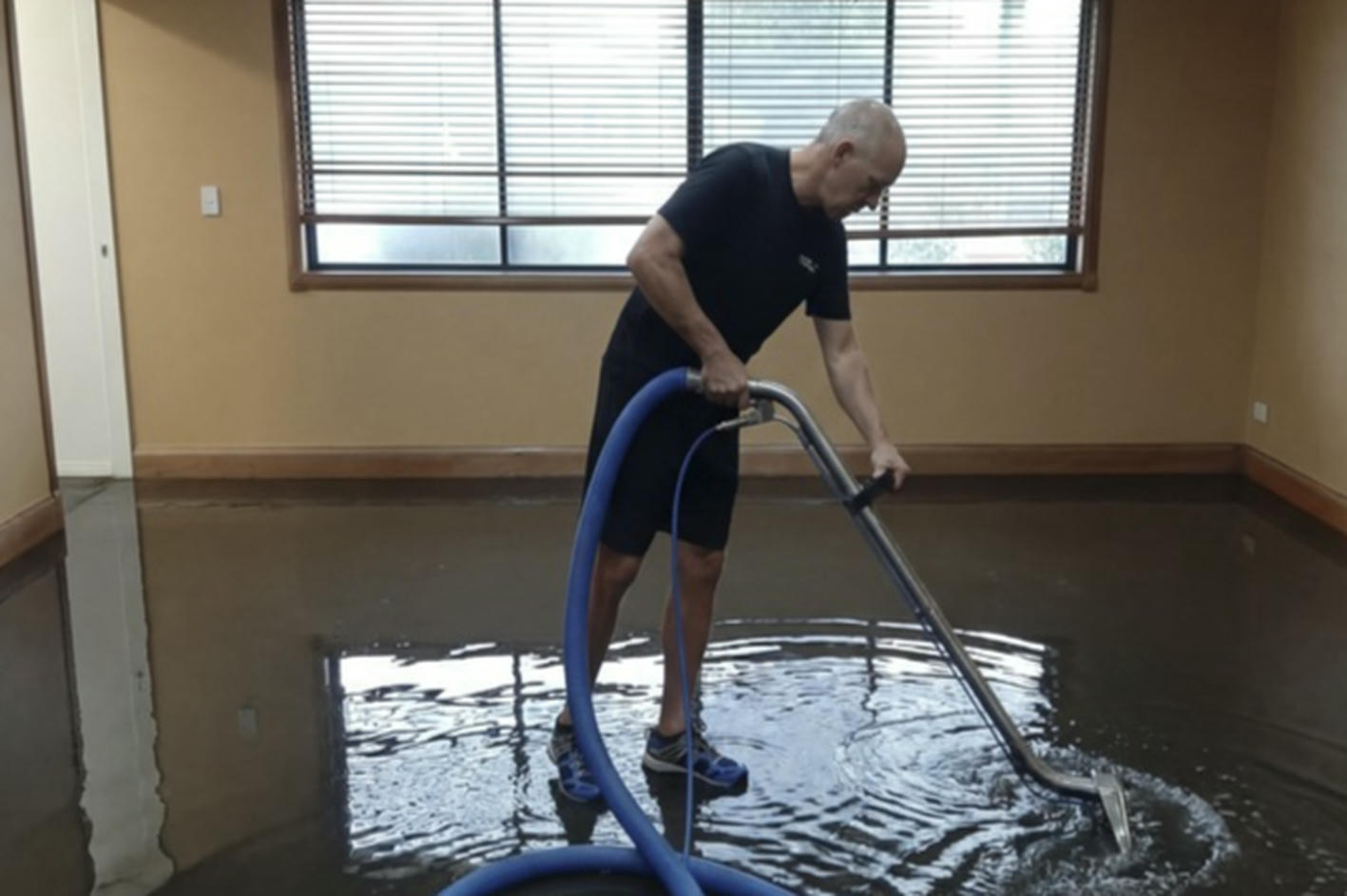
At its core, a wet and dry vacuum for carpet separates liquid from the motor assembly using a bypass cooling system. Standard vacuums pull air directly through the motor for cooling. That’s fantastic for dry dust, catastrophic for water. Introduce moisture to a standard motor and you’re looking at short circuits, mouldy internals, and a trip to the dump. Wet/dry vacs route incoming air around the motor housing, keeping electronics isolated while the tank fills with whatever you’ve sucked up.
Key components that differentiate these machines:
- Collection tanks with capacities ranging from 10 to 75 litres, designed to hold water without corroding.
- Float shut-off valves that automatically block suction when the tank reaches capacity, preventing motor flooding.
- Reinforced hoses that won’t collapse under the weight of water.
- Drain ports at the base for emptying without tipping heavy, sloshing tanks.
- Specialised filters (foam sleeves for wet work, cartridge filters for dry debris).
The versatility extends beyond emergencies. A wet and dry vacuum for carpet handles muddy footprints, spilt milk, and the sand your kids dragged back from Streets Beach. Workshop dust, car interiors, blocked drains. These machines earn their keep long after the carpet dries.
Wet Dry Vacuum for Carpet vs. Regular Vacuum
The distinction isn’t just about water tolerance. It’s about fundamental design philosophy.
A wet dry vacuum for carpet prioritises raw suction power and debris capacity over finesse. Your regular vacuum relies on a motorised brush roll to agitate fibres, dislodge trapped dust, and groom the pile. Wet/dry vacs skip the brush roll entirely. There’s no spinning bristle bar, no belt to snap, no delicate height adjustment mechanism. What you get instead is brute suction through a wide-mouth floor nozzle that doesn’t care whether it’s inhaling water, gravel, or the LEGO piece you’ve been searching for since 2019.
This matters for water extraction. Brush rolls tangle, bog down, and smear wet debris across carpet rather than lifting it. The rigid nozzle of a wet vac channels airflow directly across the carpet surface, creating the pressure differential needed to pull water from fibres and backing.
Filtration tells a similar story. Regular vacuums chase fine particles (dust mite allergens, pollen, skin cells) using multi-stage HEPA filtration. Wet vacs protect the motor first and capture coarse debris second. They’re not designed to improve your indoor air quality during dry cleaning; they’re designed to survive conditions that would destroy everything else in your cleaning cupboard.
Can You Use a Regular Vacuum for Wet Carpet?
The short answer: absolutely not. Never. Under no circumstances.
Can you use a regular vacuum for wet carpet? The question comes up constantly, usually from people staring at a flooded room hoping for a shortcut. We understand the impulse. What we don’t understand is risking electrocution or destroying a $600 vacuum to save a trip to Bunnings.
Here’s what happens when you run a standard vacuum over wet carpet:
Water enters the motor housing. The motor relies on airflow for cooling and operates at mains voltage. Water bridges electrical contacts, creating short circuits that can trip breakers, fry circuit boards, or deliver a shock through the handle. Even if you escape unharmed, moisture lingers inside the machine. Within 48 hours, mould colonises the internal ducting, filters, and bag chamber. Your vacuum starts smelling like a neglected bathroom. You’ll never eliminate the odour.
Bacteria multiply. The warm, dark interior becomes a petri dish. Every subsequent use blows contaminated air through your home.
The carpet suffers. Regular vacuums lack the static lift (measured in inches of water column) to pull moisture from carpet backing and underlay. Surface water disappears, creating the illusion of progress while the padding underneath stays saturated. This hidden moisture delaminates carpet backing, warps floorboards, and feeds mould colonies you won’t see until the staining appears weeks later.
There’s exactly one scenario where a regular vacuum touches wet carpet: when you’re filming a demonstration of why not to do it. Otherwise, keep it unplugged and far away.
Best Wet Vacuum for Carpet: Top Picks
Finding the best wet vacuum for carpet means matching the machine to your specific circumstances. The unit that handles occasional pet accidents looks very different from the beast you want when stormwater’s been sitting in your lounge room for eight hours.
The Australian market splits roughly into three tiers: compact homeowner units, mid-range workshop vacs, and commercial-grade extractors. The best wet dry vacuum for carpet in each category balances suction performance, tank capacity, filtration quality, and build durability at a price point that makes sense.
For most Brisbane households dealing with the aftermath of a storm or plumbing failure, a unit with at least 20 litres of wet capacity, a robust float shut-off, and a minimum 1,200 watts of power handles the job without being overkill. Look for models with rear blower ports. These let you attach the hose to the exhaust side and use the vacuum as a blower to accelerate drying after extraction.
Dual-purpose designs that switch between wet and dry modes add year-round utility. You’ll use it for car interiors, garage floors, and the occasional renovation cleanup rather than storing it for emergencies that (hopefully) come once a decade.
What to Look for When Buying a Wet Vacuum
- Tank capacity. More litres means fewer emptying trips. Water weighs one kilogram per litre. A 30-litre tank holds 30 kilos of liquid. Factor in whether you’ll need to carry the unit upstairs or empty it solo. Tanks with built-in drain spouts and pour spouts make disposal cleaner.
- Suction power. Measured in air watts or CFM (cubic feet per minute). Higher numbers extract water faster. For carpet extraction, aim for at least 80 CFM. Anything lower and you’ll spend hours chasing moisture that keeps wicking back up from the underlay.
- Hose diameter and length. Wider hoses (35mm or greater) resist clogging when pulling debris-laden water. Length matters for reach. Three metres minimum keeps you from dragging the tank across wet carpet.
- Filter system. Confirm the unit includes foam sleeve filters for wet operation and a cartridge filter for dry use. Some models feature washable HEPA cartridges, adding genuine dry-cleaning capability.
- Attachment variety. A wide floor nozzle handles broad areas. A crevice tool reaches under skirting boards. A squeegee attachment works on hard surfaces. The more tools included, the fewer trips to buy adapters.
- Noise level. Wet vacs are inherently loud. Brushless motors and insulated housings take the edge off. If you’re running extraction for hours, your neighbours will appreciate anything below 75 decibels.
- Warranty and parts availability. Australian consumer law provides baseline protections, but manufacturer warranties ranging from three to seven years indicate confidence in build quality. Check whether filters, hoses, and nozzles are readily available through local retailers.
Wet Dry Vacuum for Carpet and Hardwood
A wet dry vacuum for carpet and hardwood needs to transition between surfaces without causing damage. Hardwood presents a challenge: rigid floor nozzles that work brilliantly on carpet can scratch timber flooring if they lack smooth gliding surfaces or rubberised edges.
Look for models that include a dedicated hard floor attachment (typically a wide head with soft bristles or felt strips that prevent direct plastic-to-timber contact). Some premium units feature switchable heads: one side with squeegees for wet extraction on hard surfaces, the other with a carpet insert for fibre penetration.
The suction balance matters too. Excessive suction on hardwood can create so much downward pressure that the nozzle sticks, requiring constant wrestling to move across the room. Adjustable suction bleed valves (those little collars on the hose or wand that let you dial back airflow) solve this by reducing static lift without turning the motor off.
For homes with mixed flooring, verify that the vacuum’s castors or wheels won’t mark timber. Hard rubber wheels with smooth treads protect against scuffing. Cheap plastic wheels leave tracks you’ll notice immediately.
Wet Vacuum for Carpet Rental: Buy vs. Rent
The wet vacuum for carpet rental decision comes down to frequency and urgency. A quality wet/dry vac costs between $150 and $800 depending on capacity and features. Renting typically runs $40 to $80 daily through equipment hire services. Do the math, but factor in more than just the dollar figure.
Storage space matters. A 30-litre wet vac occupies roughly the same footprint as a carry-on suitcase. If your garage already houses camping gear, Christmas decorations, and three bikes, adding a once-a-year emergency tool might tip you into chaos territory.
Access also matters. When water’s spreading across your floor at 11 PM on a Sunday, the rental shop won’t open until Monday morning. Owning means immediate deployment. That eight-hour head start often makes the difference between saving carpet and replacing it entirely.
When Renting Makes Sense
Renting wins when you’re dealing with a one-off situation and have zero interest in long-term ownership. Apartment dwellers without storage, renters who may move frequently, and people facing their first water incident in twenty years all fall into this category.
Short-term remediation projects also favour rental. If you’ve already engaged a water damage restoration company and just need supplementary extraction for a single room, a weekend rental handles the job without cluttering your life afterward.
Consider the machine quality. Commercial rental units often outperform consumer-grade purchases. They’re maintained regularly, feature larger tanks and stronger motors, and come with the full suite of attachments. For the cost of two days’ rental, you access equipment that would cost thousands to buy.
Where to Rent a Wet Vacuum for Carpet
Brisbane offers solid rental options across the metro area. Equipment hire specialists stock industrial wet/dry vacs suitable for serious water extraction. Explore our drying equipment hire options to access professional-grade extraction units, air movers, and dehumidifiers. This is the same gear our restoration teams use on-site.
Bunnings and Kennards Hire locations across Brisbane carry consumer and trade-grade wet vacs with flexible hire periods. Most offer weekend rates with Saturday pickup and Monday return counting as a single day. Book ahead during storm season. September through March sees demand spike after every heavy rainfall event.
What to confirm before collecting:
- The unit includes both wet and dry filters.
- Hose and attachments are present and undamaged.
- Tank capacity matches your job size.
- You understand the float shut-off mechanism and how to empty the tank safely.
- Extension wands are available for reaching across large rooms without moving the canister repeatedly.
How to Use a Wet and Dry Vacuum Cleaner for Carpet
Knowing how to use wet and dry vacuum cleaner for carpet effectively determines whether you save your flooring or just make it look drier than it actually is. Proper extraction technique pulls water from fibres, backing, and (critically) the underlay below. Poor technique leaves enough moisture behind that you’ll be replacing carpet within weeks.
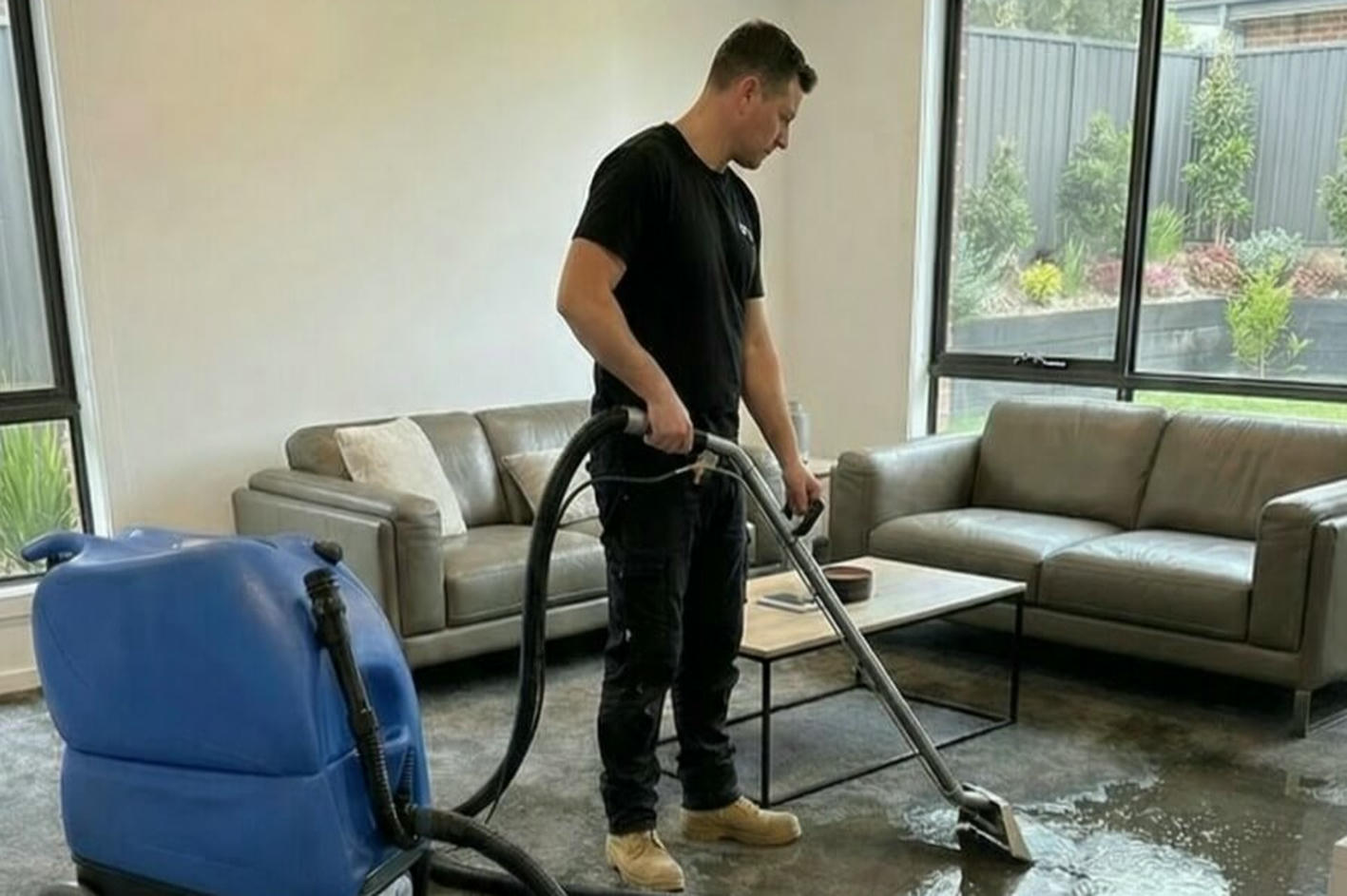
A vacuum for wet carpet operates on simple principles: create maximum airflow across the saturated area, maintain consistent suction pressure, and work systematically from the outer edges toward the centre. Never start in the middle of a flooded area. You’ll spread contaminated water into dry zones and force moisture deeper into the carpet rather than lifting it out.
Step 1: Safety First
Kill power to the affected room at the switchboard. Water and electricity don’t mix, and carpet saturated with greywater or clean water can still conduct current if it reaches a power point or extension lead. Unplug everything. Verify the circuit is dead before stepping onto wet carpet.
Step 2: Remove Standing Water
If water is pooling above the carpet surface, scoop or pump out as much as possible before vacuuming. A bucket, mop, or submersible pump handles bulk water faster than any vacuum. Wet vacs excel at the residual moisture stage. Using them as primary pumps fills tanks in seconds and slows you down.
Step 3: Configure the Vacuum
Remove any dry-use filters and install the foam sleeve filter designed for wet operation. Confirm the float shut-off moves freely. Attach the widest floor nozzle. Narrow tools concentrate suction in too small an area and extend drying time unnecessarily.
Step 4: Start at the Perimeter
Begin extraction at the outermost edge of the wet area. Make slow, overlapping passes moving inward. Each pass should overlap the previous by 50%. Rushing creates dry-looking stripes that reabsorb moisture within minutes.
Step 5: Multiple Passes, Multiple Directions
Extract the entire area once, then rotate 90 degrees and repeat. Water trapped between carpet fibres and backing releases more readily when suction approaches from different angles. Three to four complete passes typically reduce moisture content to manageable levels.
Step 6: Monitor the Tank
Empty before the float valve triggers. Once it engages, suction stops and you’re carrying a heavy, full tank to the drain point. Listen for the pitch change as capacity approaches maximum.
Step 7: Lift the Carpet If Possible
For severe saturation, peel back a corner of the carpet and check the underlay. If foam underlay squishes under finger pressure, it needs replacement regardless of extraction quality. Extract the backing directly if carpet separation is feasible without damaging seams.
Step 8: Deploy Drying Equipment
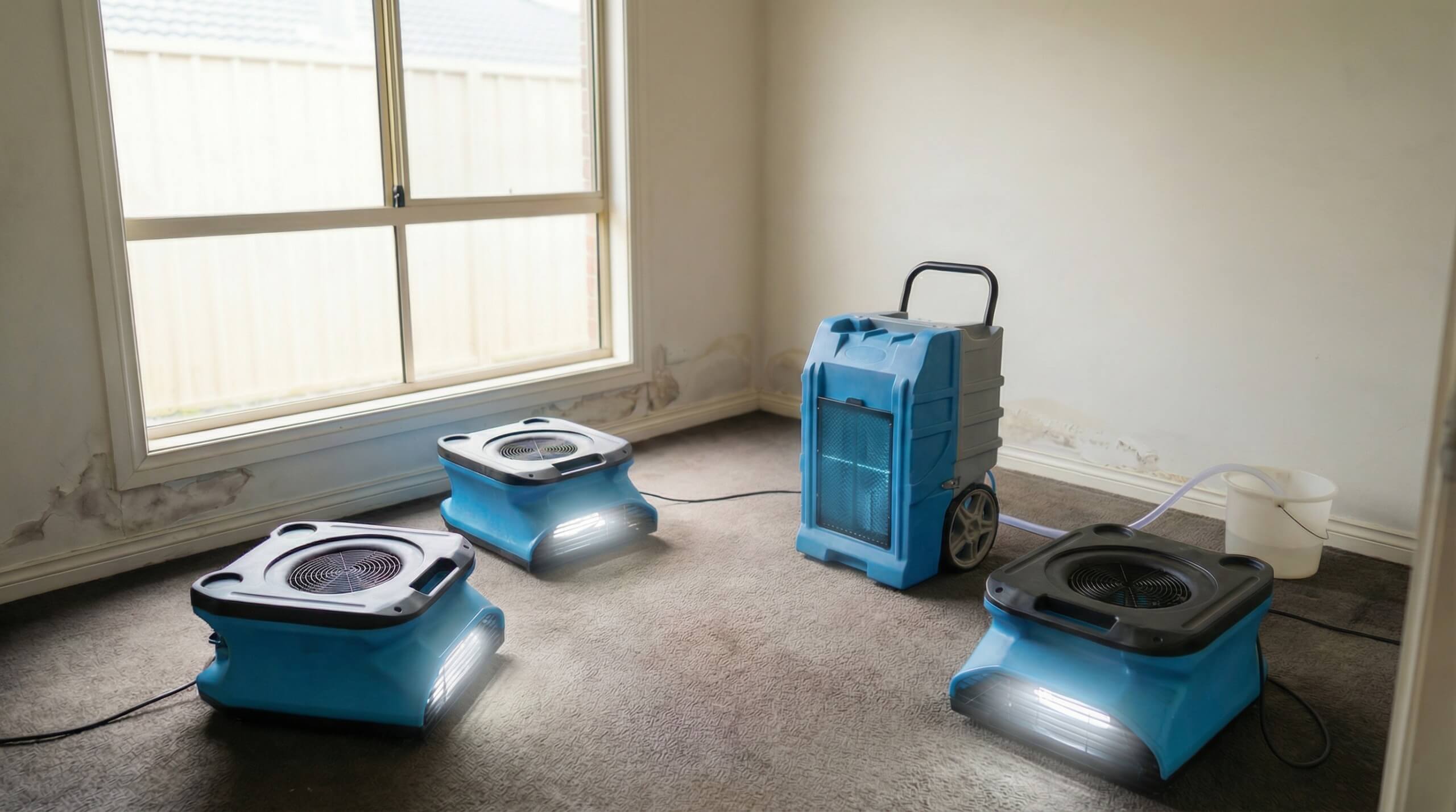
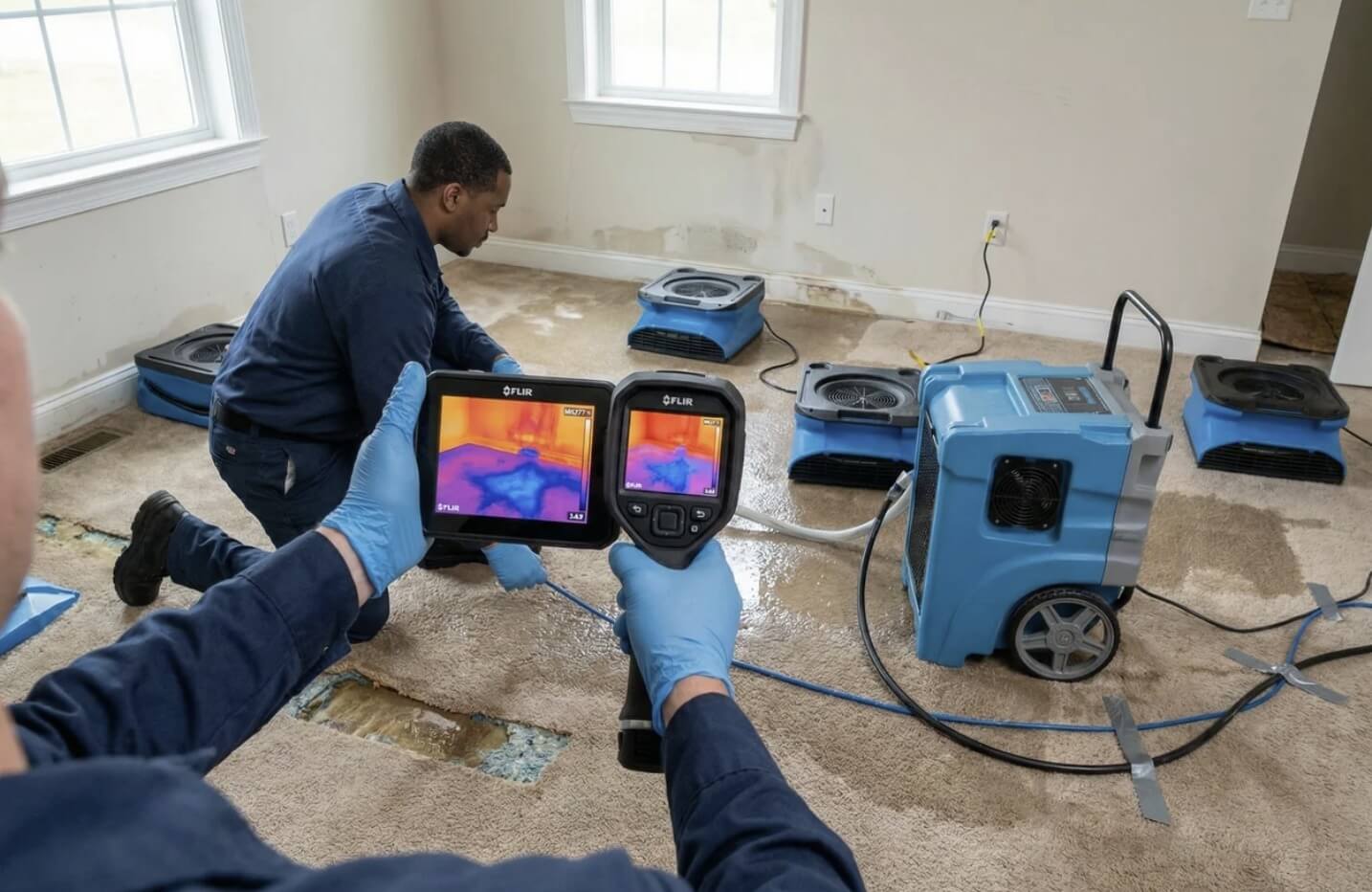
Extraction removes bulk water. Evaporation handles the rest. Position air movers to create airflow across the carpet surface, and run a dehumidifier to pull moisture from room air. Continue for 48 to 72 hours minimum.
Common Mistakes to Avoid
Mistake 1: Pouring Cleaning Solutions Into the Wet Area
Extraction removes whatever’s present. Adding chemicals, detergents, or “flood treatments” before vacuuming just creates chemical-laden wastewater and increases the risk of carpet damage. Extract first, clean later.
Mistake 2: Assuming a Dry Surface Means Dry Underneath
Carpet fibres dry quickly once airflow hits them. The underlay beneath can remain saturated for days. Moisture meters (available from equipment hire shops) provide objective readings. Anything above 16% moisture content in underlay demands continued drying.
Mistake 3: Using Heat to Accelerate Drying
Brisbane’s warmth is already working in your favour. Adding heater bars or leaving the room sealed with a space heater running creates conditions ideal for mould growth. Warm, humid, stagnant air is the enemy. Cool, moving, dry air is the goal.
Mistake 4: Neglecting the Skirting Boards
Water wicks up plasterboard and MDF skirting. Extract along wall edges thoroughly, pull back carpet from tack strips, and direct airflow into the gap where flooring meets wall.
Mistake 5: Stopping Too Soon
Impatience destroys more carpet than floodwater. Extraction and drying feel complete long before they actually are. Trust moisture readings, not touch.
When a Wet Vacuum Isn’t Enough
Extraction buys you time. It doesn’t guarantee restoration. Some situations exceed what any consumer-grade or rental wet vacuum can handle, and recognising those limits prevents compounding the damage.
Sewage-contaminated water (Category 3, or black water) requires professional remediation regardless of volume. Pathogens penetrate carpet, underlay, and subfloor. No amount of vacuuming makes contaminated materials safe. Removal and disposal are the only correct approaches.
Water that’s sat for more than 24 hours has already begun supporting microbial growth. Extraction removes moisture but not established bacteria or mould spores. Antimicrobial treatment and controlled drying become necessary.
Carpet installed over particleboard subflooring absorbs water at the structural level. Particleboard swells, crumbles, and loses structural integrity when saturated. Extraction from above can’t reverse subfloor damage.
Multi-room flooding overwhelms DIY approaches. When water has migrated under walls into adjacent spaces, professional-grade truck-mounted extraction units and commercial dehumidification arrays become cost-effective compared to piecemeal equipment rental stretched over weeks.
For situations beyond extraction, our water damage restoration services provide comprehensive assessment, extraction, drying, and restoration. If you’re managing a wet carpet situation and need to accelerate the process, our guide on how to dry wet carpet quickly covers the equipment and techniques that produce results.
Frequently Asked Questions
Can I use a wet vacuum on any carpet type?
Most carpet types tolerate wet extraction without issues, but exceptions exist. Natural fibres (wool, sisal, jute) absorb significantly more water than synthetics and take longer to dry. Over-wetting wool carpets during cleaning can cause browning, shrinkage, and dye bleeding. Berber and loop-pile carpets trap water between loops, making extraction less efficient than on cut-pile styles. If your carpet is natural fibre or antique, consult a professional before applying any wet extraction method.
How long does it take to dry carpet after using a wet vac?
Under ideal conditions with air movers and dehumidifiers running, carpet reaches acceptable moisture levels within 24 to 48 hours after thorough extraction. Without drying equipment (relying on open windows and ceiling fans), expect 72 to 96 hours, and accept that underlay may never fully dry. Brisbane’s summer humidity extends drying times regardless of equipment; running a dehumidifier becomes non-negotiable during wet season.
Is it better to rent or buy a wet vacuum?
Buy if you own your home, have storage space, and want immediate access during emergencies. Rent if you’re in an apartment, moving within a year, or facing what you’re confident is a one-off situation. The crossover point sits around three uses. If you’ll use it three times or more over the machine’s lifespan, purchasing a quality unit costs less than repeated rentals.
Can a wet vacuum remove all the water from flooded carpet?
No vacuum removes all water. Extraction reduces moisture content from fully saturated (30% or higher) to damp (15-20%). Evaporation handles the remainder. This is why drying equipment matters. Air movers and dehumidifiers complete what extraction starts. Carpet that feels dry to touch may still hold 12% moisture, which is enough to support mould growth over time. Moisture meters provide certainty that touch cannot.