Water Damage on Walls and Ceilings: Signs, Causes and What to Do
TL;DR: A stain, a soft wall, a musty smell. These are surface signals of something deeper. Water damage in Brisbane homes moves fast through walls, ceilings, and floors, and the visible signs almost always understate the real extent of the problem. Mould can colonise within 24 to 48 hours, and painting over a stain without drying the structure behind it guarantees it returns. If you can see, smell, or feel the signs, act within 48 hours. Testing is the only way to know what is actually happening inside the wall.
In This Article
- What Does Water Damage in Walls and Ceilings Actually Look Like?
- Common Causes of Water Damage in Brisbane Homes
- How to Detect Water Damage: What to Check and When
- Water Damage Under Floorboards: A Hidden Problem
- Why the Visible Damage Is Rarely the Full Story
- What to Do If You Find Water Damage
- How We Can Help
A brown stain on the ceiling. A soft patch on the wall. A door that suddenly sticks in its frame. These are the kinds of things Brisbane property owners brush off or add to the “I’ll deal with it later” list. But here’s the problem: by the time those signs appear on the surface, the damage inside is already well advanced.
In Brisbane’s humid subtropical climate, moisture moves fast. It saturates plasterboard, feeds mould inside wall cavities, swells timber framing, and quietly undermines structural integrity, all before a single visible crack or stain appears. The visible damage is rarely the full extent of the problem.
This guide explains what to look for, where water damage hides, and what to do if you find it.
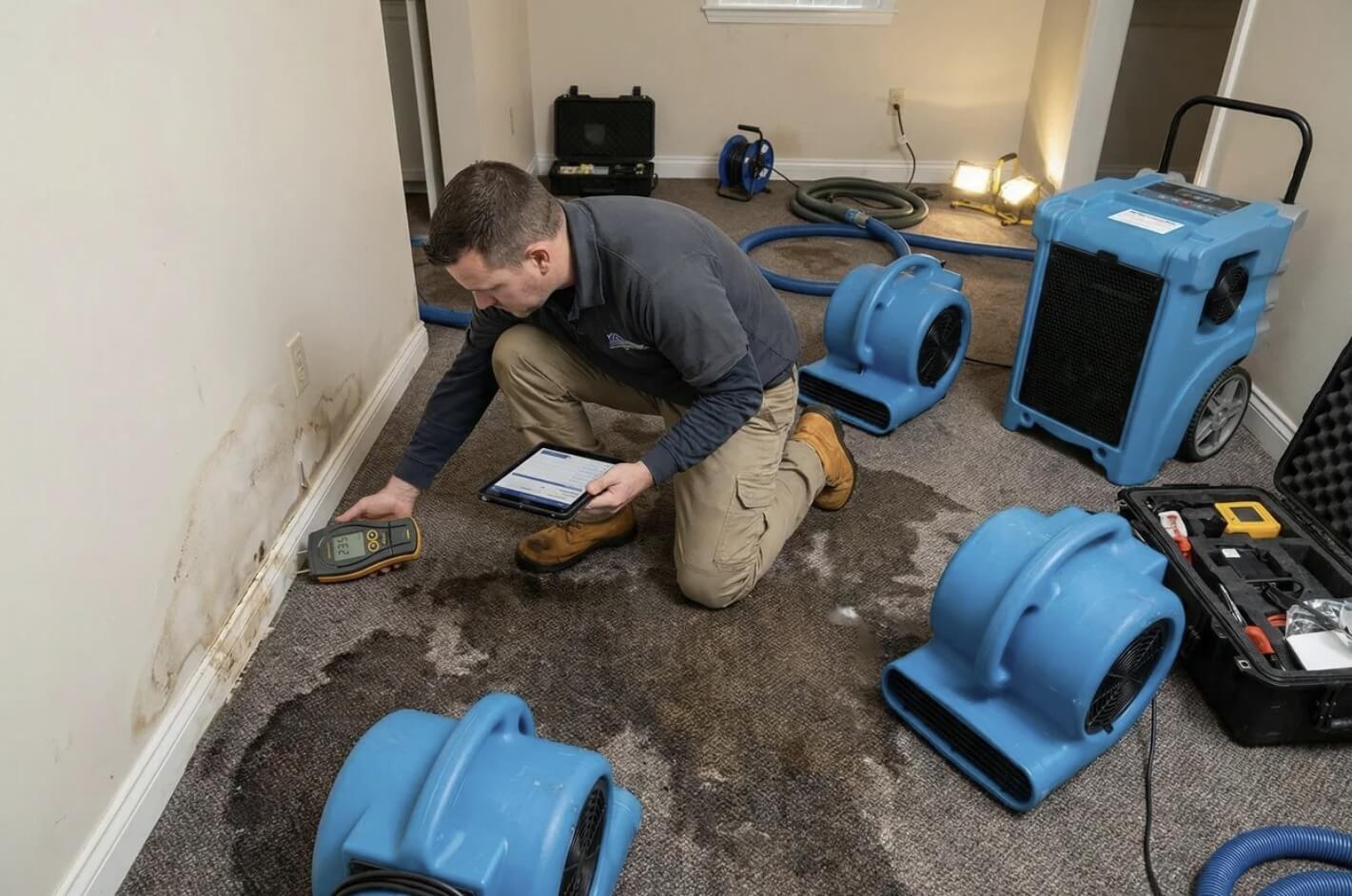
What Does Water Damage in Walls and Ceilings Actually Look Like?
Water damage in walls and ceilings presents differently depending on how long it has been there, where the moisture is coming from, and what building materials are involved. Some signs are immediate. Others develop over weeks or months.
Surface Staining and Discolouration
Yellow, brown, or rust-coloured stains on walls and ceilings are among the first visible signs of water intrusion. These stains form as water evaporates through plasterboard or plaster, leaving behind dissolved minerals and tannins from the timber framing behind them.
A common mistake is to paint over these stains without addressing the source. The stain comes back. The underlying material continues to degrade.
Even when a stain appears dry, it does not mean the structure behind it is dry. If the moisture source is still active, or if the area was never fully dried after a previous event, the damage continues to progress beneath the surface.
Peeling, Bubbling, or Flaking Paint
Paint peels and bubbles when moisture becomes trapped behind the substrate. The bond between the paint and the surface breaks down as water vapour pushes outward. This is particularly visible on walls adjacent to bathrooms, kitchens, and external walls, or on ceilings where a slow roof leak has been building up for some time.
Peeling paint is not a cosmetic issue. It is a signal that moisture levels in the wall or ceiling material have increased beyond what the surface coating can tolerate.
Soft or Spongy Plasterboard
Healthy plasterboard is rigid. When it becomes waterlogged, it softens. Press gently against a stained or suspect area. If the wall gives, feels flexible, or crumbles under light pressure, the board has absorbed significant moisture and its structural integrity is compromised.
Warping or bowing of plasterboard is a late-stage sign. By the time a wall is visibly bowing, the material has usually been wet for an extended period, and mould growth inside the wall cavity is very likely.
Sagging Ceilings
A sagging ceiling is serious. When water pools above a ceiling panel, it adds weight to plasterboard that is already losing structural strength from moisture absorption. The ceiling can hold that weight for a period, but given enough time and enough water, it will give way.
Watch for nail pops appearing around a stain, visible bowing between joists, or cracks running along joint lines. Any of these signs warrant immediate professional assessment. Do not ignore a ceiling that is holding water, and do not stand directly beneath it.
Mould Growth
Mould grows fast in Brisbane’s climate. In the right conditions, mould can begin colonising within 24 to 48 hours of water contact. You do not need a flood for this to happen. A slow drip behind a wall or a poorly dried wet patch is enough.
Mould appears as dark patches (black, green, or brown) in corners, along skirting boards, around window frames, or in bathrooms. If you can see mould on a surface, there is almost always more of it inside the wall. Surface cleaning does not solve a mould problem if the moisture source remains active.
Musty Odours
A persistent musty or earthy smell in a room with no obvious source is one of the most reliable early indicators of hidden moisture. Mould growing inside wall cavities or ceiling spaces produces this odour before it becomes visible. If a smell concentrates near a particular wall or corner and does not go away, treat it as evidence of a problem until proven otherwise.
Efflorescence on Masonry
On brick or concrete walls, efflorescence appears as white, chalky powder on the surface. It forms when water moves through the masonry, dissolves salts within the material, and deposits them on the outside as it evaporates. It is a reliable sign that water is actively moving through the wall.
Sticking Doors and Windows
Timber frames absorb moisture. As they do, they swell. A door or window that suddenly sticks in its frame, or no longer sits square, can indicate that the surrounding timber structure has taken on water. This is one of the more indirect signs of water damage in walls, but it is worth taking seriously.
Common Causes of Water Damage in Brisbane Homes
Understanding where the water is coming from is just as important as recognising the signs. Brisbane’s weather patterns, housing stock, and plumbing infrastructure each contribute to a specific set of common causes.
Roof Leaks
Roof leaks are a leading cause of ceiling water damage in Brisbane. A low-pitched roof without sarking, cracked roof tiles, damaged valley flashing, or blocked gutters can all allow water to enter the ceiling cavity during heavy rain. Because the ceiling cavity is hidden, a roof leak can drip into insulation and saturate ceiling plasterboard for months without a visible stain appearing inside the home.
After a storm, if you notice new staining on a ceiling, particularly near the centre of a room or running along a joist line, a roof leak should be your first consideration.
Burst or Leaking Pipes
Plumbing failures account for a large proportion of water damage inside walls. Pipes that run inside walls, under floors, or through ceiling spaces can develop slow leaks that remain undetected for weeks or months. A sudden spike in your water bill with no change in usage habits is one indirect sign worth investigating.
Common plumbing sources include burst water supply lines, leaking hot water systems, washing machine hose failures, and dishwasher connections. Bathroom waterproofing failures, particularly in tiled wet areas, are another frequent cause of water damage in walls.
Air Conditioning Condensation
In Brisbane’s climate, ducted and split-system air conditioning units are nearly universal. Blocked condensate drain lines cause water to back up and overflow. Depending on where the unit is located, this overflow can saturate ceiling plasterboard or run into wall cavities before it becomes noticeable.
Stormwater Intrusion and Poor Drainage
Heavy rainfall in Brisbane overwhelms drainage systems. Water can enter beneath flooring, into crawl spaces, and through foundation gaps when site drainage is inadequate or when gutters and downpipes are blocked. Properties in low-lying areas of Brisbane are particularly vulnerable after significant rain events.
Rising Damp
Rising damp occurs when moisture from the ground moves upward through masonry walls. It is more common in older Brisbane homes, particularly those with low subfloor clearance or inadequate damp-proofing. Signs include efflorescence, bubbling paint at the base of walls, and a persistent damp smell at floor level.
How to Detect Water Damage: What to Check and When
Knowing how to detect water damage early can make the difference between a straightforward drying job and a full structural repair. Here is a practical checklist for Brisbane property owners.
After Heavy Rain or a Storm
- Check all ceilings, particularly in rooms directly below the roof, for new staining or soft patches.
- Inspect skirting boards at floor level for swelling, discolouration, or mould.
- Check subfloor areas if your property has accessible crawl spaces.
- Look at the junction between external walls and ceilings for dampness.
- Check window reveals and frames for water entry.
Regularly Around Wet Areas
- Inspect grout lines and silicone seals in bathrooms, laundries, and kitchens. Cracked or missing sealant is a direct water entry point.
- Check beneath sinks and around appliance connections for slow drips.
- Look at the base of toilet pans and around shower screens.
General Property Checks
- Press against any stained or discoloured wall sections to test rigidity.
- Sniff. Musty smells in enclosed spaces are a reliable early warning.
- Walk your floors. Soft spots, springiness, or unexpected squeaking under timber floors can indicate moisture below.
- Monitor your water meter. Read it before and after a period when no water is being used. Any movement indicates a leak somewhere.
Water Damage Under Floorboards: A Hidden Problem
Water damage under floorboards is one of the most underestimated problems in Brisbane homes. What appears as a minor surface issue can conceal significant moisture trapped inside the subfloor structure, where it causes swelling, rot, mould, and structural deterioration without any visible surface signs.
Signs to Look For
- Warped, cupped, or buckling floorboards
- Soft spots or springiness underfoot
- Gaps opening between boards
- Persistent musty smell at floor level
- Dark staining on floorboards
- Mould growth along skirting boards
Water under floorboards will not dry on its own in most cases. In an enclosed subfloor space with limited airflow and Brisbane’s ambient humidity, moisture remains trapped and creates ideal conditions for mould and timber decay.
How to Dry Wet Floorboards
If you are dealing with wet floorboards after a leak, appliance failure, or flooding, the steps below apply to minor incidents. Anything beyond a small, contained area warrants professional assessment.
- Stop the water source first. Turn off the water supply if a pipe or appliance is involved.
- Remove standing water. Use a wet-dry vacuum to extract as much water as possible from the surface.
- Increase airflow. Open windows and doors, and run fans directed at the affected area.
- Use a dehumidifier. Running a commercial-grade dehumidifier in the affected space accelerates moisture removal from the air and the surface.
- Lift accessible floor coverings. If carpet or rugs are covering the affected boards, remove them to allow airflow.
- Monitor with a moisture meter. Timber should read below 16% moisture content before any repairs or refinishing are attempted.
Do not attempt repairs or refinishing before the flooring is fully dry. Locking in moisture beneath a new surface coating or replacement boards traps the problem and guarantees further damage.
How to Dry Hardwood Floors
Hardwood floors are particularly sensitive to moisture. Timber absorbs water and expands as it does. The result is cupping (edges rising above the centre), crowning (the centre sitting higher than the edges), or buckling (boards lifting off the subfloor entirely).
How to dry hardwood floors depends on the degree of saturation.
For minor surface moisture, a combination of airflow, fans, and dehumidification applied quickly can restore the boards to acceptable moisture levels without permanent deformation.
For significant saturation where cupping or crowning has occurred, the drying process needs to be managed carefully. Rushing it by applying heat directly to hardwood can cause cracking. Professional drying uses targeted airflow and dehumidification at measured rates to bring moisture levels down gradually.
Even after the surface appears dry, moisture may remain inside the timber and in the subfloor structure beneath. This is why moisture meter testing is essential before any assessment of permanent damage is made. Boards that appear warped at peak moisture levels may partially recover once fully and correctly dried.
Why the Visible Damage Is Rarely the Full Story
This is the part that catches property owners off guard.
A small brown stain on a ceiling does not mean a small amount of water damage. Water follows the path of least resistance. It moves laterally along ceiling batts, tracks along timber framing, wicks upward and sideways through plasterboard, and can travel a significant distance from the original entry point before it becomes visible on a surface.
By the time you see a stain, feel a soft patch, or smell something musty, the moisture has been present long enough to cause damage to multiple layers of building material. In Brisbane’s subtropical humidity, mould can establish inside a wall cavity in under 48 hours of sustained moisture contact.
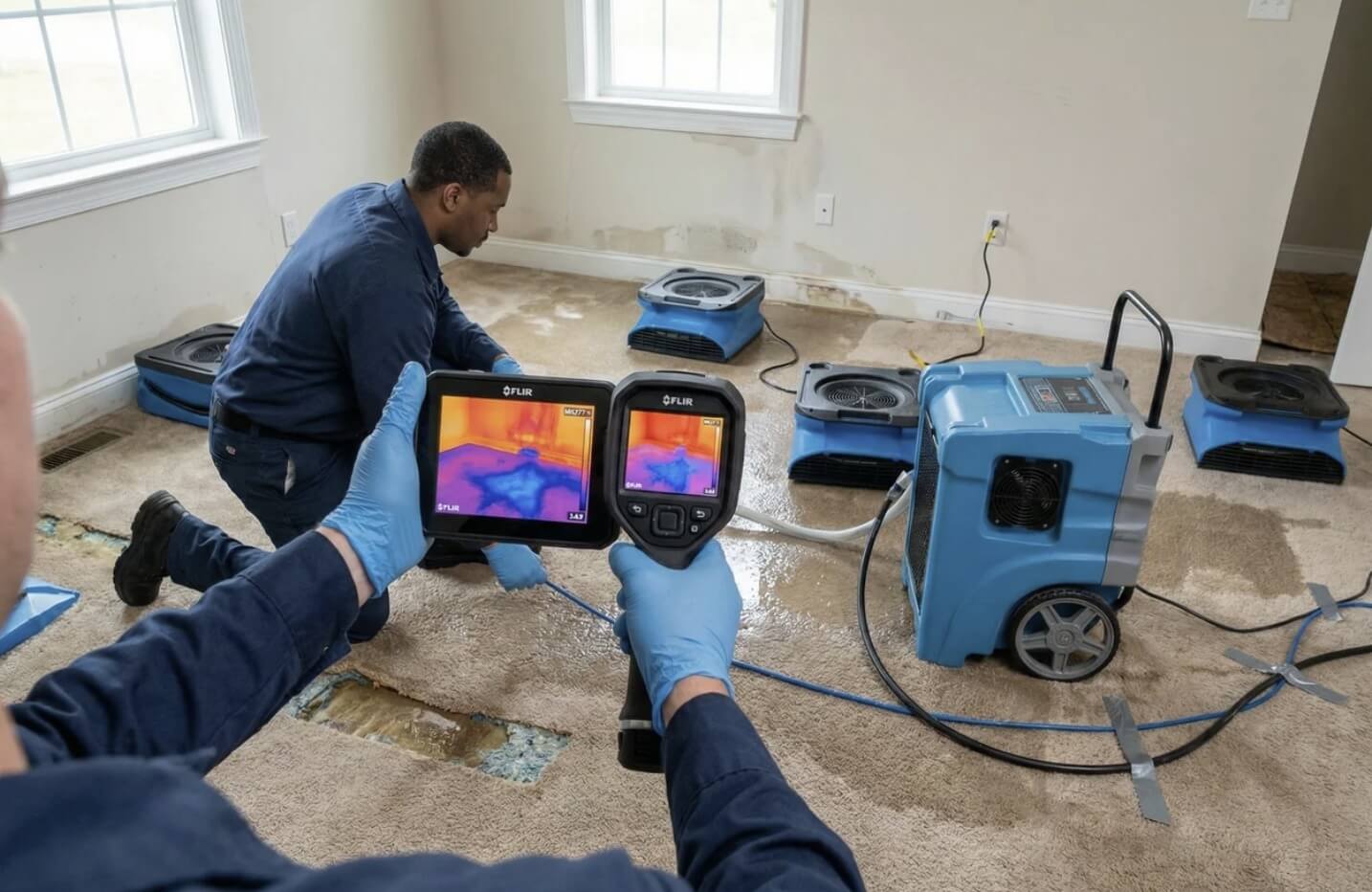
This is why surface repairs without professional drying produce the same result every time: the problem comes back, because the underlying moisture was never fully resolved.
What to Do If You Find Water Damage
Do Not Ignore It
Water damage does not resolve itself. Even a stain that appears to have dried out can indicate active moisture in the structure behind it. The only way to know is to test it.
Do Not Paint Over It
Painting over a water stain without drying and treating the area first will not fix the problem. The stain will reappear, and the structure behind will continue to degrade.
Do Not Assume It Is Minor
A small visible sign can represent a large concealed problem. Hidden water damage behind walls is one of the most commonly underestimated issues in Brisbane properties, because the extent of damage is invisible until the structure is opened up or tested with professional moisture detection equipment.
Act Within 24 to 48 Hours
In Brisbane’s climate, the window for cost-effective remediation is short. Mould can begin colonising within 24 hours. Plasterboard begins losing structural integrity rapidly with sustained moisture exposure. The sooner the drying process begins, the greater the likelihood that materials can be saved rather than replaced.
How We Can Help
At Flood Services Brisbane, water damage restoration is what we do every day. We attend properties across Brisbane with a 24/7 emergency response, arriving within the hour for urgent jobs.
Our approach addresses the full extent of the damage, not just what is visible on the surface. Using thermal imaging cameras and moisture metres, we locate water that cannot be seen, inside wall cavities, beneath flooring, above ceiling panels, and inside subfloor structures. We then apply commercial-grade extraction, industrial air movers, dehumidifiers, and structural drying systems to bring your property back to safe moisture levels.
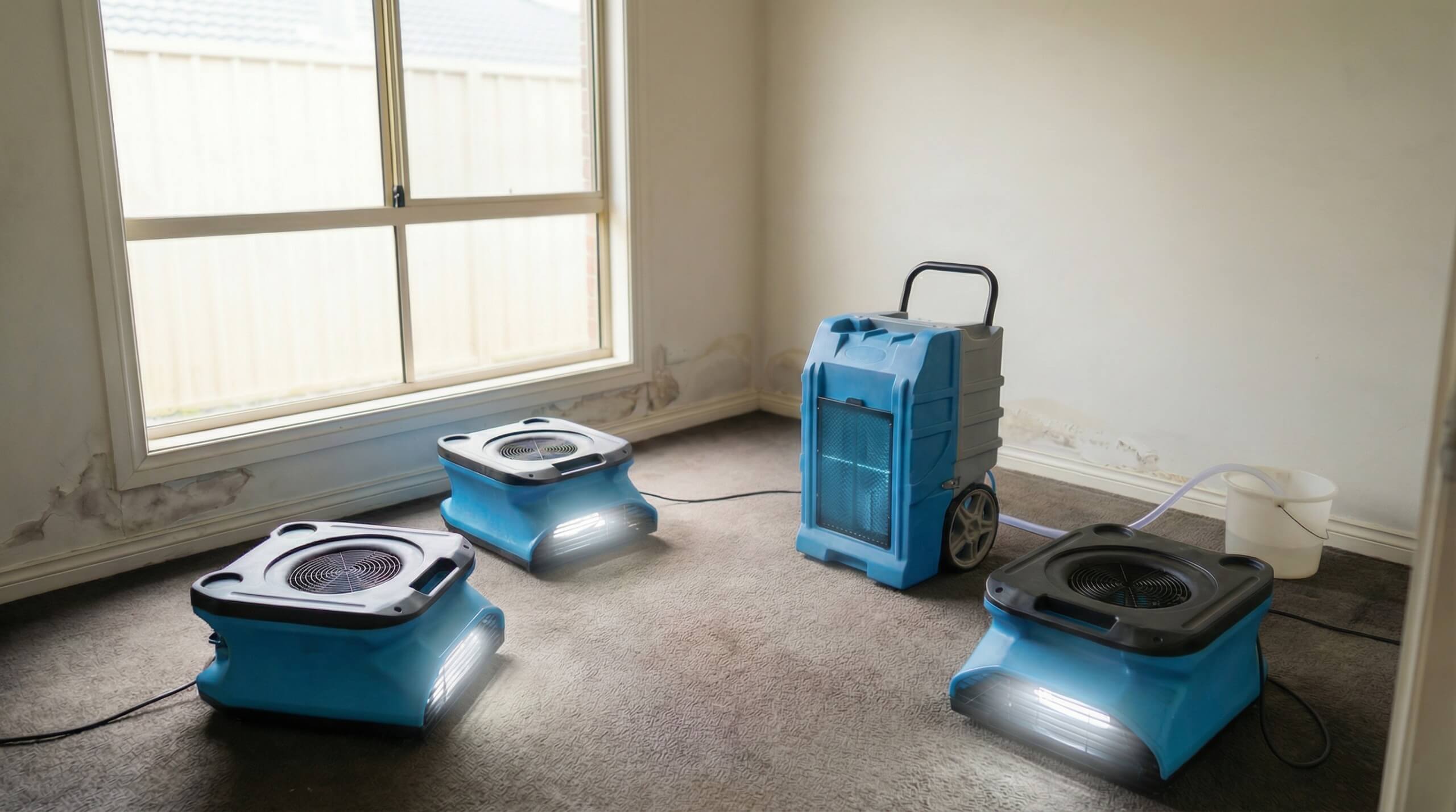
Every job includes a free damage assessment, transparent pricing, and documentation to support your insurance claim. Our technicians are fully certified and insured.
If you can see, smell, or feel any of the signs described in this guide, do not wait. Call us on 07 3185 0987 and we will help you understand what you are dealing with before the damage goes any further.
Learn more about hidden water damage signs and how to identify them early, or explore our full water damage restoration service for Brisbane properties.
Flood Services Brisbane provides 24/7 emergency flood and water damage restoration across Brisbane and South East Queensland. Free assessments, insurance support, and on-site within the hour.