Brisbane Flood Season Survival Guide: How to Prepare Your Home
TL;DR
- Brisbane flood season runs October to March. Prepare in August and September.
- Check your risk on Brisbane City Council’s Flood Awareness Map — risk profiles have changed since 2011 and 2022.
- Free pre-filled sandbags are available 24/7 from five BCC depots: Darra, Lota, Morningside, Newmarket, and Zillmere.
- Floodwater is Category 3 (black water) — do not clean it up yourself. Mould begins within 24 to 48 hours.
- Confirm your policy actually covers flood, not just storm damage. Read the PDS, not the summary.
Brisbane homeowners who lived through 2011 and 2022 know the feeling. The rain keeps coming, the creek behind the suburb swells, and by the time it’s serious, there’s very little time to act. The best flood protection is the work you do months before a storm rolls in.
This guide covers everything you need to do before, during, and after a flood event, specific to Brisbane’s climate, building types, and flood risks.
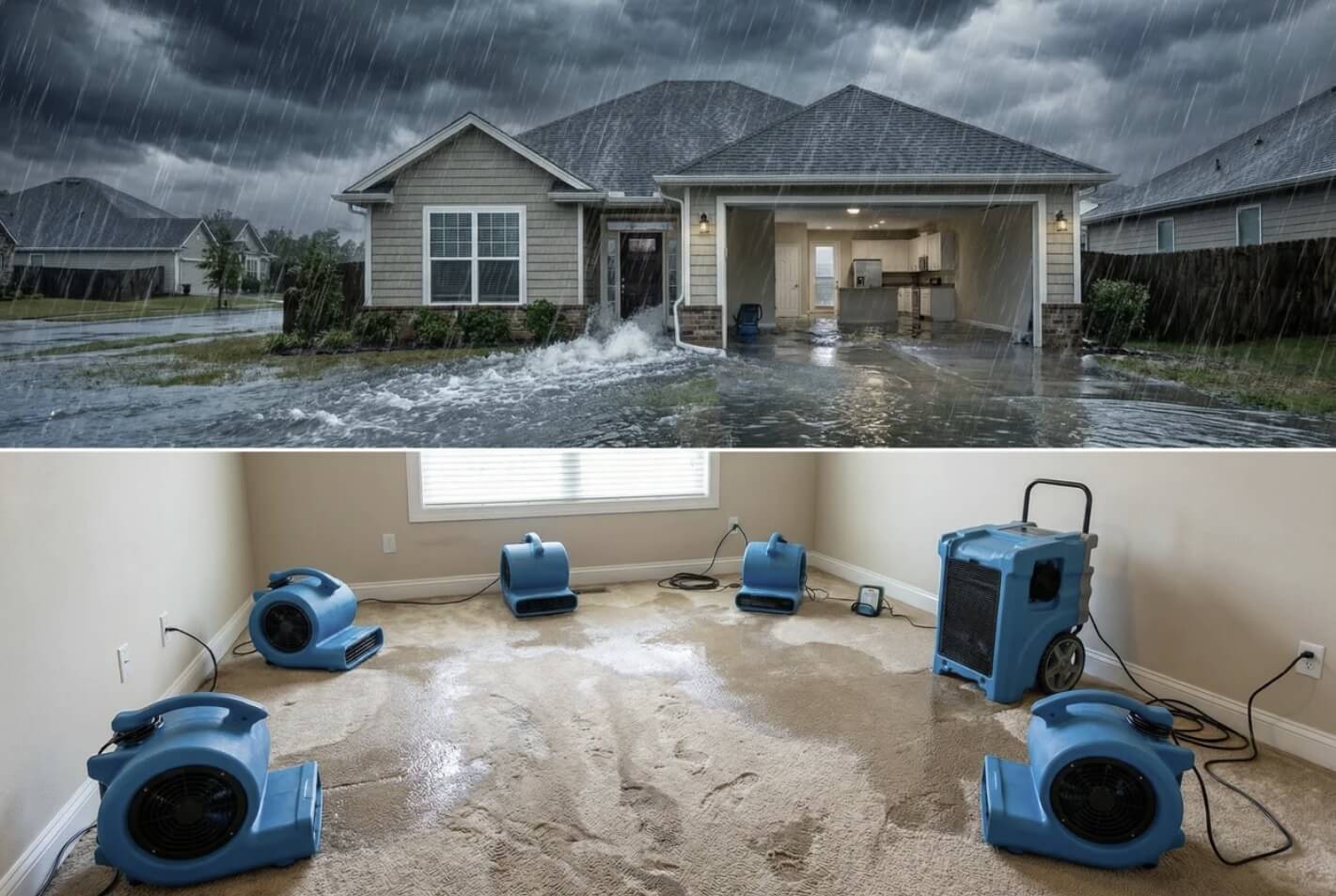
When Is Flood Season in Brisbane?
Brisbane’s storm and flood season typically runs from October through to March. This is when the subtropical climate delivers its heaviest rainfall: warm, humid air from the north, intense thunderstorms, and extended periods of rain that can saturate catchments quickly.
That said, significant rain events can occur outside this window. The advice from Brisbane City Council is to prepare your home in August and September, before the season opens.
Brisbane is exposed to four distinct flood types:
- Creek flooding: Fast-rising water caused by heavy rainfall over or near a creek catchment. Common in western and southern suburbs.
- River flooding: Slower to rise, caused by prolonged rain upstream in the Brisbane River catchment. Can arrive hours or days after the rain has stopped.
- Overland flow: Stormwater running across land when drainage systems are overwhelmed. The most common flood type during summer storms. Less predictable.
- Storm tide flooding: Affects low-lying suburbs near the river, Moreton Bay, and tidal creeks.
Understanding which flood types affect your property is the starting point for any preparation.
Brisbane Suburbs Most at Risk of Flooding
Not every Brisbane property faces the same risk. Brisbane City Council’s Flood Awareness Map lets you enter your address and view flood likelihood from creek, river, overland flow, and storm tide sources. This tool is based on the latest flood modelling data endorsed by Council. Use it.
Suburbs that have historically experienced significant flood impact include Rocklea, Oxley, Jindalee, Chelmer, Graceville, Fairfield, and St Lucia along the river corridor. Bulimba, New Farm, and Yeronga have also been affected. Bayside suburbs including Wynnum and Lota face storm tide risks.
BCC flood prone suburbs Brisbane are mapped and updated as new flood studies are completed. A suburb that flooded in 2011 may have a different risk profile now due to updated modelling, infrastructure changes, or dam management protocols. Check the current map rather than relying on a memory from a previous event.
If you’re unsure about your risk level, check your disaster risk using Brisbane City Council’s online tools. The map is free, requires no login, and takes a few minutes.
Pre-Season Home Preparation Checklist
The work you do before the season starts determines how much damage your home sustains if floodwater arrives. Most of these tasks are straightforward and inexpensive. Leaving them until a storm is forecast is often too late.
Stormwater Drainage and Gutters
Blocked gutters and downpipes are among the most common causes of preventable water damage during heavy rainfall events. Water backs up, overflows, and finds its way into roof cavities, wall frames, and along slab edges.
Before storm season:
- Clear all gutters and downpipes of leaves, debris, and sediment.
- Check that downpipes discharge well away from the building’s foundation.
- Inspect subfloor vents on raised Queenslander homes. Blocked vents trap moisture and prevent cross-ventilation, which is critical during and after wet weather.
- Make sure stormwater drains in the yard are free and discharge to the street or stormwater system, not toward the house.
- Check low-lying areas of the yard for pooling water during a hose test. Pooling near the slab or subfloor is a warning sign.
If your property uses a backflow device on its stormwater drainage, confirm it’s operational. Brisbane City Council notes that these devices reduce the risk of stormwater backing up through drainage systems during flood events, though they don’t eliminate all flood risk from other sources.
Flood Barriers and Sandbag Placement
Sandbags are not waterproof barriers. They work by slowing and diverting water, not stopping it completely. For best results, they need to be used correctly with plastic sheeting underneath.
During storm season (October to March), Brisbane City Council provides pre-filled sandbags free of charge from five depot locations around the city, available 24 hours a day. These locations include Darra, Lota, Morningside, Newmarket, and Zillmere. Know your nearest depot before you need it.
Sandbag placement tips:
- Lay plastic sheeting first, then place sandbags on top.
- Place bags with long edges facing the flow of water.
- Stagger rows like brickwork so joins don’t align.
- Focus on doorways, roller doors, and drainage entry points.
- A single row stands approximately 10 centimetres high. Build multiple rows if flood depth is expected to be greater.
- Consider drain cover plugs for shower drains and toilet drains, which can backflow during severe flooding.
If you live in a flood-prone area, it’s worth storing a folded tarpaulin and a small supply of sandbag materials or drain plugs at home so you’re not reliant on depot availability during a major event.
Protecting Your Contents
Water damage to contents is often the most financially painful outcome of a flood, and much of it is avoidable.
Before the season:
- Move irreplaceable items (documents, photos, electronics, sentimental objects) to the highest available point in the home, or off-site.
- Store important documents (insurance policies, passports, titles) in a sealed, waterproof container.
- Take a full photographic or video inventory of your home’s contents. Upload it somewhere off-site. This will matter if you need to make a contents claim.
- Confirm your emergency kit includes: bottled water for at least three days, first aid supplies, a battery-powered radio, torch with spare batteries, medications, cash, and phone chargers.
Register for the Brisbane Severe Weather Alert Service through Brisbane City Council. You can receive alerts by SMS, email, or phone call in multiple languages. This is your early warning signal.
What to Do During a Flood Event
Once a significant event is underway, the priority is safety. Property can be repaired; the decisions made during an active flood can have consequences that cannot.
Immediately:
- Monitor the Bureau of Meteorology warnings and tune in to 612 ABC Radio Brisbane for local emergency information.
- Turn off electricity at the main switchboard if water is approaching electrical outlets, appliances, or sub-board panels. Do not touch electrical equipment in standing water.
- Do not walk through floodwater. Even shallow, slow-moving floodwater can carry debris, concealed hazards, and contamination from sewage overflows and chemicals.
- Move to higher ground within the home. Do not shelter in sub-floor areas or basements.
- Disconnect gas appliances if instructed by emergency services.
- Do not attempt to drive through flooded roads.
If you have time before water enters the property:
- Move portable valuables to the highest level of the home.
- Deploy sandbags at doorways if you have them and it is safe to do so.
- Photograph all damage as it occurs if it is safe.
- Call your insurer to notify them of an imminent or occurring event.
Stay off bridges and waterways, and follow all evacuation instructions from Queensland Fire and Emergency Services or local emergency services without delay.
What to Do After the Flood: Professional Cleanup
Floodwater is not clean water. Stormwater and river flood water is classified as Category 3 (black water), the highest contamination level. It carries bacteria, chemical runoff, sediment, and often sewage from overloaded municipal sewer systems. It is not safe to clean up without appropriate protective equipment.
Once floodwater has receded and it’s safe to return to the property:
- Photograph all damage before touching anything. This is essential for insurance purposes.
- Do not re-enter the property if there is any risk to structural stability or if electricity has not been confirmed safe by a licensed electrician.
- Open windows and doors to ventilate, but do not run fans or ducted air conditioning through a contaminated property. This can spread contaminated particles through the air system.
- Remove standing water as quickly as possible. Every hour matters in Brisbane’s subtropical climate.
Why speed matters: Mould can begin growing within 24 to 48 hours of water exposure in Brisbane’s warm, humid conditions. Once mould establishes inside wall cavities, subfloor timbers, and carpet underlay, the remediation cost rises significantly. Surface drying with household fans does not remove moisture from structural materials; it dries only the visible surface, leaving hidden moisture behind.
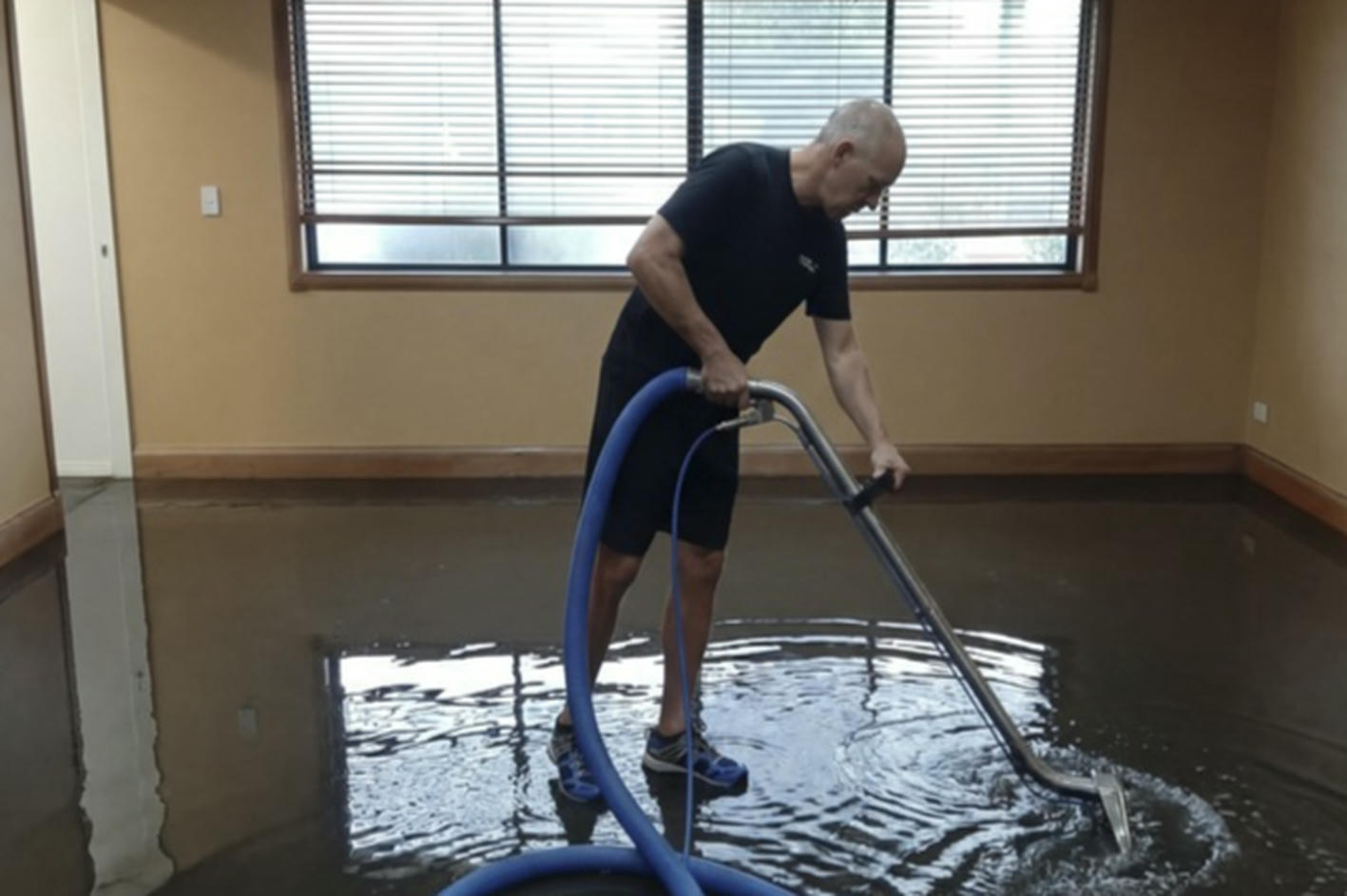
This is where professional flood cleanup in Brisbane becomes important. Certified technicians use commercial-grade equipment to:
- Extract water using truck-mounted units capable of removing thousands of litres per hour.
- Detect hidden moisture in wall cavities, subfloors, and behind skirting boards using thermal imaging cameras.
- Dry structural materials (timber frames, plasterboard, concrete) using industrial LGR dehumidifiers and high-velocity air movers.
- Apply antimicrobial treatment to prevent mould colonisation.
- Issue a certified Dry Certificate as documentation for your insurer.
A household fan cannot replicate any of these steps. Structural materials that appear dry to touch often contain moisture readings well above safe thresholds. Without measurement, you cannot confirm they are dry.
Surface damp versus active water ingress: There is an important distinction to understand here. Surface dampness caused by condensation, high indoor humidity, or poor ventilation is a common Brisbane issue during summer and does not require flood restoration. It needs ventilation improvement and potentially a dehumidifier. Active water ingress from flooding, a storm event, or a plumbing leak is a different problem entirely. It involves water that has moved through structural materials and requires extraction and structural drying, not just ventilation. If you’re unsure which you’re dealing with, a professional moisture assessment will identify the difference clearly.
If floodwater has entered subfloor areas of a Queenslander home, professional intervention is especially critical. The raised subfloor design traps water and humid air, and the porous timber used in older construction absorbs moisture deeply. Mould remediation becomes necessary quickly if drying is delayed.
If you notice sewage odour after a flood event, treat the property as contaminated and call for professional sewage cleanup services. Heavy rainfall frequently overwhelms municipal sewer systems, causing backflow through household drain connections. This is a biohazard situation requiring certified response, not a DIY cleanup.
Flood Insurance: What Brisbane Homeowners Need to Know
The 2011 Brisbane floods exposed a major problem: many homeowners discovered their policies did not cover flood damage from rising river water, even though they assumed they did. The Insurance Contracts Act was subsequently amended and standard flood cover definitions were updated. However, policy terms still vary.
Key things to confirm with your insurer before storm season:
- Does your building policy cover flood? Most standard home building policies now include flood cover by default, but some policies require it to be added. Read your Product Disclosure Statement, not just the summary.
- What about contents? Contents cover for flooding is often a separate item or sub-limit. Confirm what is included.
- What is the definition of flood in your policy? Most policies now distinguish between defined flood events and storm damage. Stormwater and overland flow may be covered differently from river flooding.
- Does your policy cover emergency water extraction and professional flood cleanup? Most building insurance policies in Australia cover professional emergency mitigation services following a sudden and accidental flood event. This includes professional emergency flood cleanup Brisbane services such as water extraction, structural drying, and mould prevention.
If you are making a claim, call your insurer promptly and begin documenting everything before cleanup starts. Professional restoration companies can work directly with insurers, provide the moisture reports and drying logs insurers require, and communicate directly with assessors on your behalf. This reduces the documentation burden during an already stressful period.
Do not wait until a flood occurs to read your policy.
Frequently Asked Questions
When does Brisbane flood season start?
Brisbane’s storm and flood season typically begins in October and runs through to the end of March. Brisbane City Council recommends preparing your home in August or September, before the season opens.
How do I check if my property is in a flood zone?
Use Brisbane City Council’s Flood Awareness Map at brisbane.qld.gov.au. Enter your property address to view flood likelihood from creek, river, overland flow, and storm tide sources. The map is based on current flood modelling data endorsed by Council and is free to use.
What is the flooded house cleanup process in Brisbane?
After floodwater recedes and your property is safe to enter: photograph all damage, ventilate the property, and call a professional restoration company immediately. Certified technicians extract standing water, dry structural materials using industrial equipment, apply antimicrobial treatment, and issue a Dry Certificate for your insurer. Delaying cleanup increases mould risk and restoration costs.
Is mould after flooding covered by home insurance?
Mould that results directly from a sudden, accidental flood event is typically covered by building insurance. Mould caused by long-term neglect, gradual moisture, or inadequate ventilation is usually excluded. Document the flood event clearly and call your insurer before cleanup begins.
Can I clean up floodwater myself?
For minor, clean water events (a burst indoor pipe with no contamination), careful DIY cleanup with appropriate protective equipment is possible for surface areas. Floodwater from storms, creek flooding, or river flooding is classified as Category 3 black water and should not be cleaned up without professional equipment and training. The health risks are serious, and household equipment cannot achieve the drying thresholds needed to prevent mould.
What is the difference between surface damp and flood damage?
Surface damp caused by condensation or high indoor humidity appears on walls and windows, typically in poorly ventilated rooms, and does not indicate structural moisture. Flood damage involves water that has penetrated structural materials including subfloors, wall frames, and plasterboard. The two problems require different responses. A professional moisture assessment using thermal imaging and calibrated moisture metres will identify which is present.
How quickly does mould grow after flooding in Brisbane?
In Brisbane’s warm, humid climate, mould can begin colonising damp materials within 24 to 48 hours of a water event, sometimes faster during summer. This is why professional water extraction and drying should begin as quickly as possible after a flood.
What should I do before a flood arrives?
Deploy sandbags at doorways, move valuables to the highest level of the home, turn off electricity if water is approaching electrical systems, monitor emergency alerts, and follow evacuation instructions from emergency services. Prepare in August and September: clean gutters, check drainage, register for Brisbane Severe Weather Alerts, and confirm your insurance cover.

Flood Services Brisbane provides 24/7 emergency flood cleanup, water extraction, and structural drying across Greater Brisbane. Onsite within 60 minutes. No upfront payment required.
Call 07 3185 0987 or book a free assessment online.